
Results: 3058

For: Populations and settings

“The patient is the single most important safety barometer” according to roundtable discussion

shutterstock_75252007

 Introduction Patient safety has featured heavily in the news recently, with the Mid Staffordshire inquiry, childrens heart surgery in Leeds and the investigation into deaths of babies at Furness General Hospital.  It is a top priority for commissioners.  The Health Foundation recently published an evidence review Involving patients in improving safety (1).  This report follows [read the full story…]

Are you really at risk of attack by someone with schizophrenia?

Do not cross

By Rebecca Syed, King’s College London.  A violent attack by someone who is mentally ill quickly grabs the headlines. And it’s usually implied that mental illnesses are a preventable cause of violent crime. Tackle that and we can all sleep safer in our beds. But by pressuring mental health services to focus on the risk [read the full story…]

Info request re women with learning disabilities in criminal justice system especially community alternatives

There is sparse evidence for the efficacy and safety of antipsychotics in people with learning disabilities.

We have posted previously about people with learning disabilities in the criminal justice system and the work of the Prison Reform Trust in this area. Colleagues in the Prison Reform Trust are undertaking some research about provision specifically for women with learning disabilities in the criminal justice system. The researcher is carrying out a comparative [read the full story…]

Reducing variation in prescribing activities in primary care

Doctor holding up a prescription form

  Introduction This study, carried out in Scotland, is relevant to commissioners and general practitioners, as it demonstrates why there are variations in prescribing practice, and how these can be managed. The authors have noticed that there is “significant variation in the quality of prescribing” and they have carried out an ethnographic study into why [read the full story…]

The latest evidence from NICE on depression in children and young people

Young boy on roundabout

The NICE guideline for depression in children and young people was published way back in September 2005.  Any elf worth his salt will tell you that a whole heap of evidence has been published since then, so it’s good to see an evidence update appear this week from NICE, which brings together research published from 17th [read the full story…]

Pay for performance improves treatment implementation, not outcomes, for adolescent substance use disorders

Money in the spotlight

The NHS has entered the era of GP-led commissioning of services, and providers will be required to submit data on key indicators such as quality of care and survival rates. This echoes some aspects of a 2001 report by the Institute of Medicine in the USA Crossing the Quality Chasm, which emphasised the need to [read the full story…]

Breaking bad news to people with learning disabilities website full of practical guidance

hands

Earlier this week, we posted about a study by Dr Tuffrey-Wijne and her colleagues which described the process of the development of guidelines to support decision making about disclosure or non-disclosure of bad news about life limiting illness to people with learning disabilities. That study was part of a broader programme of research that has [read the full story…]

Healthy Active Lives (HeAL): tackling premature death in young people with psychosis

Teenage girl holding up her hand

The Healthy Active Lives (HeAL) international consensus statement aims to reverse the trend of people with severe mental illness dying early by tackling risks for future physical illnesses pro-actively and much earlier. The statement is being launched today by the Royal College of Psychiatrists, at a special event focusing on achieving parity between mental and [read the full story…]

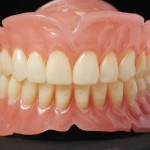
Simplified technique for complete denture fabrication had no adverse effect on Patient satisfaction or quality of life

shutterstock_24108289

Back in February of this year we reported on the rests of a trial that compared he masticatory performance and ability of a simplified technique for complete denture fabrication with a conventional technique.(Dental Elf 25th Feb 2013). This paper presents the oral health-related quality of life (OHRQoL) including patient satisfaction and denture quality. 42 patents [read the full story…]

Guidelines for disclosure of bad news to people with learning disabilities developed

Comfort1

In recent years, there has been a shift in clinical practice in relation to breaking bad news in favour of openness and the provision of information to patients. However, there is a small body of evidence that suggests that this shift in attitude has not impacted on people with learning disabilities, who appear still mainly [read the full story…]