
Results: 3058

For: Populations and settings

Results of human-dog relationships studies on social reciprocity in children with autism encouraging but further research needed

Dog_cuddle

Given that autism spectrum disorders are characterised by deficits in social reciprocity and communication, there is a school of thought that suggests that exploiting the emotional aspects of human-dog relationships may hold potential to overcome some difficulties of people with ASD to relate and interact effectively with others. The authors of this review set out [read the full story…]


Effective support from health and social services could improve carer well-being, study suggests

Pile of stones balanced

This paper is particularly pertinent to commissioners of both health and social care, as it addresses the needs of informal carers of people suffering from long-term neurological conditions (LTNCs), such as Parkinson’s disease (PD), Motor Neuron Disease (MND), and Multiple Sclerosis (MS). Implications of long-term neurological conditions LTNCs get progressively worse, with sufferers becoming more and [read the full story…]

Moderate intensity exercise programmes do not improve depressive symptoms in elderly care home residents: results from the OPERA trial

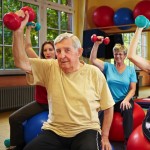
Elderly patients exercising

Depression is a common problem in older adults with some data suggesting significant symptoms are present in over 40% of nursing home residents (Teresi, 2001). Clearly physical exercise has a number of benefits particularly with regards to cardiovascular health. Some of you may remember the Mental Elf blog back in September 2012 with positive results from [read the full story…]

New guides to improving support for people with profound intellectual and multiple disabilities published

Positive relationship found between mood, total emotion score and frequency of emotion when stimuli were positive

In 2010, the Department of Health published Raising our Sights, Professor Jim Mansell’s report into services and supports for people with profound intellectual and multiple disabilities. The Government’s response was to broadly welcome the report’s recommendations and “its central message that the major obstacles to wider implementation of policy for adults with profound intellectual and [read the full story…]

Maternal antidepressant use in pregnancy may be associated with a small increased risk of autism

Pregnant woman with drugs

The prevalence of autistic spectrum disorders has risen dramatically in the last thirty years, with recent estimates suggesting that 1 in 88 children in the United States have an autistic spectrum disorder. This increasing prevalence could simply be due to changes in the diagnosis of such disorders and so be of little interest. However, there [read the full story…]

Study did not find fluoridated salt effective for caries reduction in 12-14yr olds

shutterstock_110320859

Fluoridated salt has for many years been proposed as a vehicle for the prevention of caries. A 2010 systematic review by Yengopal et al indicated that salt fluoridation could reduce caries. The aim of this study was to evaluate the effect of school-based and domestic distribution of fluoridated salt on caries increment in schoolchildren residing [read the full story…]

Severity of challenging behaviour for young people in transition did not correlate with cost of care

argue

Young people with learning disabilities with behaviour that presents a challenge to services will usually have significant and complex needs which present additional challenges for planning transition from support from children’s to adult services. The authors of this paper carried out a survey of all the young people, between 16 and 18 years of age [read the full story…]

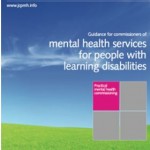
Guidance for commissioners of mental health services for people with learning disabilities

joint commissioning mental health

People with learning disabilities have an increased prevalence of mental health problems compared to the general population, however, in the absence of an agreed model there is currently a wide variety of provision, including community and bed-based services. The Joint commissioning panel for mental health have produced a guide for commissioners to describe the current [read the full story…]

New mental health commissioning guides from JCPMH

Some doctors are reluctant to talk to patients about reducing their use of prescription drugs, even if they know there is no longer a medical reason for continued use.

Those lovely people at the Joint Commissioning Panel for Mental Health (JCP-MH) have published four new guides to help those of you involved in commissioning community specialist services, older people’s services, inpatient and crisis home treatment and services for people with learning disabilities. These guides are short (around 20 pages), readable and nicely summarised with ten [read the full story…]

Are the current approaches to treating traumatised kids actually making them better?

Teddy bear in war zone

More and more research is telling us about the long-term negative consequences of trauma and adversity in childhood with correlations between childhood trauma and poor mental and physical health outcomes across the lifespan. So, it makes sense that there should be a good evidence base for treating the effects of childhood trauma. In February this [read the full story…]