Results: 3058

For: Populations and settings

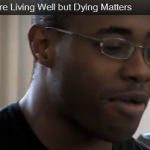
New film aims to enable people with learning disabilities to talk about death and dying

Capture

Last week we posted about a study looking at end of life are for people with learning disabilities through the experiences of the staff supporting them. This week, we would like to draw your attention to a new film that has been produced by CHANGE for Dying Matters and the National End of Life Care [read the full story…]
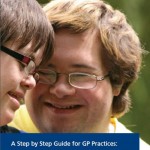

Lack of strategic commitment to annual health checks threatens to widen health inequality for people with learning disabilities

RCGP annual health check guidance

We have posted previously about health checks for people with learning disabilities, for example, the work of My Life My Choice, who looked at why it was that so few people with learning disabilities in their locality were getting access to annual health checks. We have also posted about the findings of a systematic review [read the full story…]

Schizophrenia Commission report highlights what we can all do to improve care and understanding

shutterstock_72816634

The research and campaigns relating to life outcomes for people with schizophrenia and psychosis are truly shocking. It seems unbelievable that people with schizophrenia face a lifespan 15-20 years shorter than the general population and that only 7% are able to hold down a job. Paul Jenkins from Rethink Mental Illness sums it up nicely: [read the full story…]

New NHS Confederation briefing on the future of liaison psychiatry

shutterstock_45616342

The NHS Confederation have published a new report on liaison psychiatry services that has been written by the Centre for Mental Health. Liaison psychiatry is concerned with the interface between medicine and psychiatry and typically involves patients with medical conditions that also result in psychiatric or behavioural symptoms, such as delirium. The study set out [read the full story…]

End of life care for people with learning disabilities explored through experiences of support staff

Support

In the late 1990s, a group of people concerned about the quality of palliative care being offered to people with learning disabilities started a voluntary organiation now known as the PCPLD Network. The work of the network has raised awareness of the issue and also supported the research agenda into this topic. This current qualitative [read the full story…]

A public health approach to violence prevention: new report from the Department of Health

shutterstock_2460474

The Department of Health have commissioned the North West Public Health Observatory (NWPHO) to produce a high level report to provide information and evidence for policy makers, public health staff and commissioners to use in developing preventative approaches to violence. The report entitled ‘Protecting People, Promoting Health – A public health approach to violence prevention [read the full story…]

Teaching GPs about depression and suicide can help reduce the risk of suicide in depressed older adults, says new RCT

shutterstock_38631157

A great deal of time and money has been spent on improving the diagnosis and management of depression and self-harm in primary care. The evidence tells us that collaborative care and case management can be effective approaches, which is all well and good, but these complex interventions are not always feasible. This new cluster randomised [read the full story…]

Multi-sensory environment reduced stereotyped behaviour for young people with learning disabilities

support

Multi-sensory environments or snoezelen rooms are used in a variety of services supporting people with learning disabilities although there has until recently been a paucity of critical evaluation of their effectiveness. Although there are a number of examples in the literature of a wide range of positive outcomes when Snoezelen and  non-Snoezelen environments are contrasted, there [read the full story…]

New QIPP case studies from NICE

shutterstock_78619720

If you work in the NHS, public health or social care, you’ve probably heard of QIPP (Quality, Innovation, Productivity and Prevention), but have you heard of the QIPP collection? It’s a website run by NICE that contains: QIPP case studies – examples of how health and social care staff are improving quality and productivity across [read the full story…]

Cochrane review finds weak evidence for early intensive behavioural intervention for autism spectrum disorders

shutterstock_107801354

Early intensive behavioural intervention (EIBI) involves 20-40 hours of individualised instruction each week for children with autism. The therapy usually begins at age 4 or younger and continues for 2-3 years.  The technique was pioneered by Dr. Ivar Lovaas and colleagues in the 1970s. A new systematic review from the Cochrane Developmental, Psychosocial and Learning Problems [read the full story…]