

This new Cochrane review update finds no evidence to clearly identify one superior pulpotomy medicament and technique for primary molars.
[read the full story...]
This new Cochrane review update finds no evidence to clearly identify one superior pulpotomy medicament and technique for primary molars.
[read the full story...]
Regular daily toothbrushing plays an important part in preventing periodontal disease and caries but is there consensus on how this should be carried out. The main aim of this study was to assess the methods of toothbrushing recommended for both adults and children by dental associations, toothpaste and toothbrush companies and professional dental sources such [read the full story…]

Treatment of class III malocclusions frequently involves the use of functional appliances. The Fränkel regulator type III (FR-3) is a wire and acrylic appliance developed to treat class III malocclusions but there is controversy over its effectiveness. The aim of this review was to evaluate the effectiveness of the FR-3 in patients with Class III [read the full story…]

This updated Cochrane review on statins for the treatment of dementia contains worrying adverse effects data, but Caroline Struthers has to do a significant amount of digging to root it all out.
[read the full story...]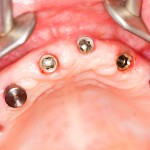
While the use of dental implants has become more routine there is still discussion around the most appropriate time for loading implants. The aim of this review was to compare annual failure rates and marginal bone level changes of implants loaded within 24 hours compared with conventional loading. Searches were conducted in Medline and the [read the full story…]
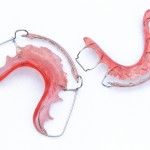
Fixed and removable functional appliances are used in the management of class II malocclusions. The Twin-block consists of upper and lower acrylic bite blocks with occlusal inclined planes that interlock at a 70 degree angle and guide the mandible forward and downward. It is considered that the twin-block is better tolerated by patients. The aim [read the full story…]
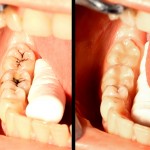
Dental amalgam has been the filing material for choice for more than 150 years. However, because of their aesthetics and concern over their mercury content their use has been declining. The Minamata Convention on Mercury has also proposed that their use be phased down according to local needs. The development of tooth-coloured resin composites from [read the full story…]
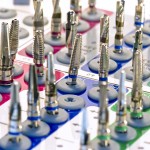
Dental Implants now in regular use in dental practice. However they come in an almost bewildering array of sizes and materials and with a range of surface characteristics and modifications. Many of these modifications have been developed with the aim of improving clinical performance. This update of a Cochrane review which was last refreshed in [read the full story…]

A number of different regenerative techniques, guided tissue regeneration (GTR), bone grafting (BG) and the use of enamel matrix derivative (EMD) have been used to try and regenerate periodontal tissues. The aim of this review was to assess the effectiveness of EMD in the treatment of periodontal pockets of suprabony defects. Searches were conducted in [read the full story…]

Obstructive sleep apnoea (OSA) can result in day-time sleepiness, neurocognitive decline and, in the long terms cardiovascular problems. While nasal continuous positive airway pressure (CPAP) is the standard treatment for OSA oral appliances (OAs) have been used as an alternative approach. The aim of this review was to assess the effectiveness of OAs that advanced [read the full story…]