



Well this was an interesting review for all sorts of reasons. I have to admit I had never considered statins as a possible treatment to improve cognitive function in dementia.
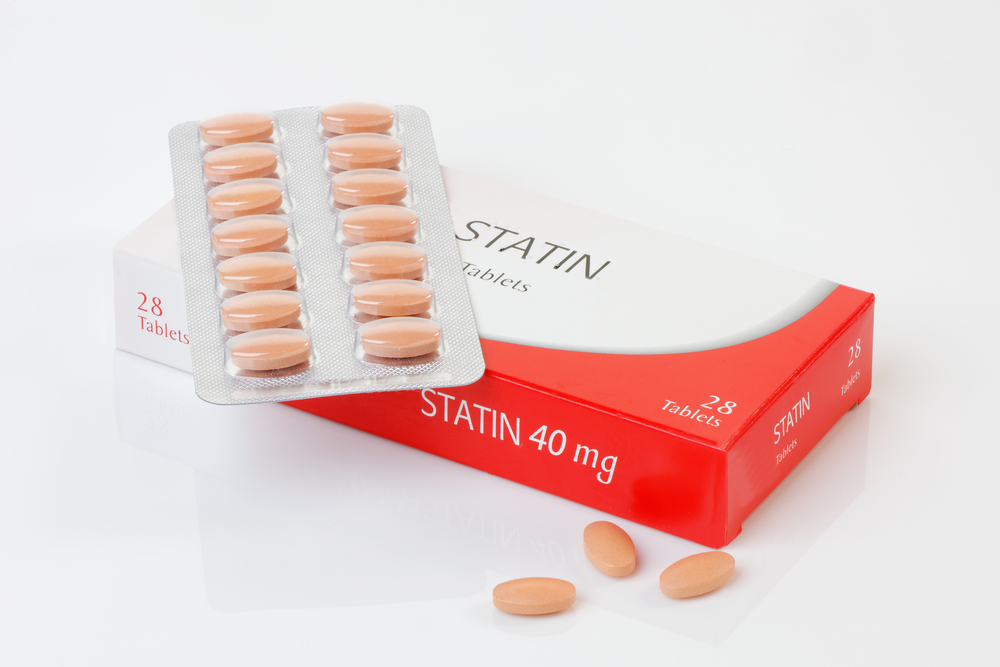
Statins are of course the cholesterol-busting drug of choice which seem to be heading inexorably for our water supply (I am only slightly exaggerating….). Personally I am right behind Ben Goldacre in my scepticism about what proponents say is a “harmless” life-saving preventative treatment.
Correct me if I’m wrong, (it does happen) but in the general population your risk of having a heart attack is reduced by 0.5% if you take statins. For me personally, that’s not a great reason to take a very powerful drug every day for ever. I don’t think many of the people taking or prescribing statins know that statistic.
However, some people who are at increased risk of heart disease and stroke will reduce their risk a great deal more than this by taking statins, but because we’re not quite sure who these people are, statins are now the most widely prescribed drug in the developed world. Millions and millions of people take them every day. Despite this, there has been no coordinated effort to systematically identify and document the effect, positive or otherwise, these drugs are actually having in routine clinical practice.
As Ben Goldacre says, it’s a mess.
I also have a bit of a problem with vulnerable dementia sufferers being used as a potential new market for just about any drug going. Perhaps I am being cynical.

Statins for the treatment of dementia is an update of a Cochrane Review originally published in 2010. Its primary objective is to assess the clinical efficacy and safety of statins in treating Alzheimer’s Disease and Vascular Dementia.
Methods
As with all Cochrane Reviews, the researchers used the extremely rigorous systematic review methodology to ensure that all trials ever conducted on the subject were identified and assessed for inclusion and analysis. I had a quick look at the Cochrane Dementia Review Group’s online specialised register of controlled dementia studies – ALOIS, and as you would expect, most of the studies were looking at statins for prevention, rather than as a treatment. Interestingly, I noticed there was a study record of a commercially-sponsored “ongoing” treatment study which was due to finish in 2011. There are still no published results for this trial. Non-publication of trial results happens all too often (see all about this on the AllTrials Campaign website), particularly if the trial sponsor is disappointed with the results. This is a very serious problem, particularly as it could mean that important data about side effects never see the light of day.
The Cochrane researchers identified four studies (one more than the 2010 review) meeting the inclusion criteria of randomised double-blinded placebo-controlled trials with cognition measured as an outcome. All four studies were judged to be of high quality and at low risk of bias, but two of them were quite small (63 and 37 participants). The two larger studies had 640 and 406 participants. There were no studies found on the effect of statins on people with vascular dementia.
Results
The included studies measured the primary outcome of cognition with the Alzheimer’s Disease Assessment Scale – cognitive subscale (ADAS-Cog) and the Mini Mental State Examination (MMSE). The pooled data from the four trials found no evidence that statins help in the treatment of cognitive decline in dementia on either of these cognitive scales:
- For ADAS-Cog, the mean difference was -0.26 with a confidence interval of -1.05 to 0.52 (P value = 0.52)
- For MMSE, the mean difference was -0.32 with a confidence interval of -0.72 to 0.06 (P value = 0.10)
A secondary objective of the review was to see if a treatment effect was dependent on cholesterol level, ApoE genotype or cognitive level. The studies did not report any differences depending on ApoE or cognitive level. However, patients with elevated cholesterol levels were excluded from the two larger studies for safety and ethical reasons, and one of the smaller studies reported that people with higher cholesterol level at baseline experienced most cognitive benefit. However, this study was too small to show clinical significance.
Safety concerns
The other primary objective of the review was to assess the safety of statins in the treatment of dementia. Due in part to the poor reporting of adverse events in the included studies, this important issue seems to have taken a bit of a back seat. The review concludes that:
The statins were well tolerated and the incidence of adverse events was low. The statins group did not have a significantly higher rate of adverse events requiring discontinuation of treatment when the data were combined.
Hmm. Well earlier on in the review a couple of sentences relating to side-effects in one of the included studies rather jumped out at me:
There were 60 (19.1%) atorvastatin-treated and 69 (21.2%) placebo-treated patients who experienced serious adverse events (SAEs), six of which in the atorvastatin group and one in the placebo group were considered to be treatment related by the investigator or sponsor. The SAEs considered to be treatment-related in the atorvastatin group were hepatitis, acute renal failure/rhabdomylosis/pancreatitis, abdominal pain/nausea/chest discomfort, transaminases elevation, liver disorder and gastrointestinal haemorrhage.
Is it me, or is that pretty shocking? I really don’t think it should be chucked into a pool of data without making a ripple. What do you think?

Link
McGuinness B, Craig D, Bullock R, Malouf R, Passmore P. Statins for the treatment of dementia. Cochrane Database of Systematic Reviews 2014, Issue 7. Art. No.: CD007514. DOI: 10.1002/14651858.CD007514.pub3.





The Mental Elf
11 years agoOlivia Cialdi
11 years agotherealbarreto
11 years agoDFamer
11 years agoHealthwatchTame
11 years agoscharrlib
11 years agoPiFonline
11 years agoMedLinkNeurol
11 years agoIain_caldwell
11 years agodementiares
11 years agoMeBeckett
11 years agoEmroblesv
11 years agoTShealthpolicy
11 years agoedouriez
11 years agoMarianneJoronen
11 years agoalemorales67
11 years agod_llanten
11 years agonyraksniktaw
11 years agoOlivia Cialdi
11 years agoAddictionNotDis
11 years agohelensemporium
11 years agoMental_Elf
11 years agodystopia47
11 years agoBleakHLM
11 years ago121Therapy
11 years agoAlisonBeck5
11 years agoNHSWatch
11 years agocochraneINJ
11 years agoMental_Elf
11 years agoBabberdigaggle
11 years agoPhilipInsall
11 years agoTohellinahandca
11 years agoDFamer
11 years agoCaroline Struthers
11 years agodawn_craig
11 years agoHeartMedNews
11 years agoHarrietAHunt
11 years agoJohnEJefferson
11 years agoSysReviews
11 years agoMental_Elf
11 years agoSysReviews
11 years agoiridodonesis81
11 years agoSameiHuda
11 years agohants_hippy
11 years agoRoyTindle
11 years agoNoveleffect
11 years agoDrAlisonHill
11 years agohants_hippy
11 years agoLucy Bailey
11 years agohants_hippy
11 years agoThe Mental Elf
11 years agopully8
11 years agoCodeRedShell
11 years agoMrsEmmaWoolley
11 years agosenseaboutsci
11 years agoWilliam_Dunn
11 years agoaghoury79
11 years agoMental_Elf
11 years agoMental_Elf
11 years agoMental_Elf
11 years agoMental_Elf
11 years agoMaryP58
11 years agoDCPWales
11 years agopash22
11 years agovincristine
11 years agoAddictionNotDis
11 years agogarwboy
11 years agoMental_Elf
11 years agoscharrlib
11 years agoHHLibService
11 years agoneuroraf
11 years agoLucy Bailey
11 years agoneuroconscience
11 years agolypftlib
11 years agoMental_Elf
11 years agoLucy Bailey
11 years agoThe Mental Elf
11 years agoMental_Elf
11 years agoMental_Elf
11 years agoEPAKneurologg
11 years agoMental_Elf
11 years agoCCareStandards
11 years agoBen Kinsey-Jones
11 years agoSDenegri
11 years agoALOISCommunity
11 years agopully8
11 years agoCozmoDogfart
11 years agoMental_Elf
11 years agoThe Mental Elf
11 years agozante14081950
11 years agoaghoury79
11 years agoNautiNev
11 years agoMagsielodge
11 years agoJuneinHE
11 years ago