Zygomatic implants for maxillary rehabilitation

shutterstock_91877978

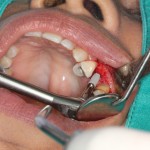
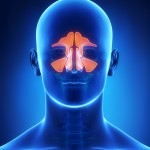
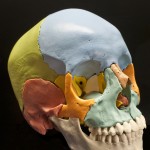
The use of zygomatic implants have been suggested for severely atrophic fully and partially edentulous maxillae to avoid use of sinus lifts, or other bone augmentation procedures and also for maxillary reconstruction after partial or total maxillectomy. The aim of this review was to evaluate clinical studies on the follow-up survival of implants inserted in [read the full story…]


Does staying in hospital longer make you better?

shutterstock_127396787

De-institutionalisation, the advent of community care and development of psychotropic medicines are implicated in the reduction in hospital bed numbers and mean length of stay. There remains a huge variance in length of stay and outcomes across the UK and beyond (NHS Confederation, 2011). Figures on length of stay and service configuration are difficult to [read the full story…]

Higher failure rates for narrow dental implants suggested by review

shutterstock_79298812-implant placement

The use of dental implants is increasing and small diameter implants are being seen as having potential to restore small edentulous spans without the need for bone augmentation. The aim of this review was to compare the survival rates of narrow diameter to standard or wide diameter implants Searches were conducted in the PubMed, Medline, [read the full story…]

Mandibular advancement devices for obstructive sleep apnoea – ADA-EBD critical summary

shutterstock_172959194

Another new critical summary form the ADA-EBD Center looks at a 2011 systematic review by  Ahrens et al.  The aim of the original review was to compare the effectiveness of different design features of mandibular advancement devices (MADs) in reducing the severity of obstructive sleep apnea (OSA). The appraiser notes that some relevant studies may [read the full story…]

What impact do guidelines actually have on patient outcomes for people with schizophrenia?

shutterstock_137493509

Using research findings to improve care in mental health should be easy. Notice an understudied area, do a study on it, write a guideline based on your results and watch mental health professionals modify their practice accordingly. Hooray for science. But in reality, this process is convoluted and murky. Though we’re fairly good at churning out [read the full story…]

Interventions for drug using offenders: What works in reducing drug use and criminal activity?

aaaa

It is estimated that between 10% (Gunn 1991) and 39% (Brooke 1996) of prisoners in the UK are dependent on illicit drugs; and that 14.5% of male and 31% of female prisoners have serious mental health problems (Steadman 2009). Drug use can be associated with many health, social and criminological consequences; and when mental health [read the full story…]

Physical health monitoring in serious mental illness is a priority in psychiatry, but where is the evidence that it works?

shutterstock_helath monitoring

It is widely acknowledged that individuals with serious mental illnesses (SMI) such as schizophrenia, bipolar disorder and severe depression have increased rates of mortality, due to poor physical health. As well as reducing quality of life and function and decreasing life expectancy, physical illness can worsen these mental illnesses. The reasons for this include lifestyle [read the full story…]

Trial showed similar oral health improvements in nursing-home residents with manual and powered toothbrushes

shutterstock_2345735-powered toothbrush

The 2010 Cochrane review of powered toothbrushes (Deacon et al) provided some evidence that rotational oscillation powered toothbrushes are more effective than other designs. However, the available evidence was based on short-term studies and the differences were small, so the clinical importance was unclear.  The aim of this study was to investigate the effect of [read the full story…]

Review finds only a small benefit from antibiotic use in patients with acute sinusitis

shutterstock_166610171

Sinusitis is one of the commonest reasons for visiting the doctor accounting for 15% to 21% of all adult outpatient antibiotic prescriptions. Patients may also present at dental practices, as pain from upper posterior teeth can be indistinguishable from sinusitis.  Typical signs and symptoms are purulent nasal discharge, postnasal drip, sinus pain at palpation, nasal [read the full story…]

Latest Cochrane Protocol

shutterstock_14460496

A new Cochrane protocol has just been published by the Cochrane Effective Practice and Organisation of Care group. With increasing emphasis on the links between general an oral health the adoption of a common risk factor approach is being encouraged.  The underlying principle being that general health promotion in dental health-care favours the control of [read the full story…]