Results: 3058

For: Populations and settings

Cognitive dissonance and positive health behaviours: a systematic review shows dissonance-based interventions can be successful

shutterstock_106733447

Most of us have heard of cognitive dissonance although the term is often used incorrectly. I’m sure when you find out you thought you were using it correctly but weren’t, you’ll feel bad. Cognitive dissonance refers to a state of psychological discomfort that arises from conflicting attitudes or beliefs. For example you may have a [read the full story…]


Positive public attitudes found in Irish survey to the expression of sexuality in people with learning disabilities

Couple_hug2

Supporting adults with learning disabilities to express their sexuality and form intimate relationships is an area that continues to challenge provider organisations. One of the factors that impacts on this is public attitudes. This study reports on the findings of the attitudes of the general public in Ireland. The researchers looked at the data from [read the full story…]

What sort of therapy helps children affected by sexual abuse? New Cochrane Review finds that more research is needed

shutterstock_92705170

Childhood sexual abuse has a devastating impact on many of the children and adolescents who are affected by it. It is a significant problem worldwide and has the potential to have serious negative impacts on mental health and physical health. Experiencing childhood sexual abuse often has negative impacts on the individual’s ability to function socially, [read the full story…]

Mental Health & Learning Disabilities in the Criminal Courts Information for magistrates, district judges and court staff

court

The 2009 Bradley Review espoused a new approach to dealing with mentally ill offenders and those with learning disabilities to prevent this vulnerable group being caught in the revolving door of the criminal justice system. One of the recommendations was to develop awareness training for criminal justice staff and members of the judiciary to help [read the full story…]

Integrated care for mental health needs new thinking, according to inquiry report

Good integrated care for people with mental health needs remains the exception rather than the rule

Integrated care is seen as critical to delivering better quality services for patients and service users  and a key element of health policies in the UK.  However, the evidence base suggests a fragmented picture, with variations in definitions and implementations limiting what can be learned and applied elsewhere.  This new report, Crossing Boundaries: Improving integrated [read the full story…]

Barriers experienced by dentists in delivering care to older people

shutterstock_73696819

An increase in the proportion of older people in the population is evidence, with those aged 65 years of age and above expected to increase from 19 to 25 % in Europe by 2025.  Coupled with an improvement in oral health over the past 30 years this means a higher proportion of these older people [read the full story…]

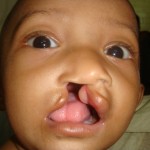
Does vomer or palatal flap have less adverse effect on maxillary growth in cleft patients? – No good evidence available

cleftlip

Cleft lip (CL) and cleft palate (CP) are common birth defects that affect around 1 in 700 children born.  Surgery to repair the palate is thought to affect maxillary growth. The vomer flap is assumed to cause less scarring and therefore have less impact on growth. The aim of this review was to investigate the [read the full story…]

Alliance urges providers of support to people with learning disabilities to sign up to quality code

driving up quality

The Driving up Quality Alliance is an alliance of people and organisations (listed below) committed to ensuring that the kind of abuse of people with learning disabilities uncovered at Winterbourne View can never happen again. They have developed a Code which they are inviting all providers that support people with learning disabilities to sign up [read the full story…]

Oral cancer support needs are highly subjective and varied in severity across the cancer continuum

shutterstock_17409700

Worldwide oral and oropharyngeal cancer is the 6th most common cancer. Treatment often affects the individuals’ ability to eat, speak and interact with others and so is associated with significant physical and psychological burdens.  This review aimed to describe the quality of life (QoL) outcomes and support needs in patients with oral cancer along the [read the full story…]

“Decision-makers need to think differently about how to commission long-term condition services” says study

shutterstock_123055360

The aim of this paper, written for commissioners, managers, and health decision-makers, was to look at how commissioning works for people with long-term conditions such as dementia. The authors carried out a multisite mixed methods case study research, involving three ‘commissioning communities’ and using interviews, documents, and meeting observations to reach their conclusions. A commissioning [read the full story…]