The NHS in England has introduced a system of budgets for general practices covering hospital expenditure for the patients on their lists. Calculating a needs-based target allocation This report from the Centre for Health Economics describes a procedure for calculating a needs-based target allocation for general practices. The approach differs from previous utilisation based modelling [read the full story…]
As long ago as 1994 Emerson and Hatton produced a review of UK literature on the outcomes for people with learning disabilities leaving long stay institutions (Emerson E & Hatton C (1994); Moving Out: Relocation from Hospital to Community) which involved 2,350 service users. The findings of this review of international studies nearly twenty years [read the full story…]
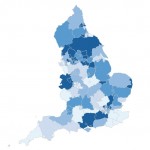
The second issue of the NHS Atlas of Variation in Healthcare has been published by the Department of Health as part of the QIPP (Quality, Innovation, Productivity and Prevention) programme. The aim of the Atlas is to reduce unwarranted variation in healthcare, increase value for money and improve quality of care. The idea behind this [read the full story…]
This study of older people’s wishes and experiences of commissioning health and personal care services published by the Joseph Rowntree Foundation was conducted by researchers from the London School of Economics. Key aims of the research: The aim was to understand how far, and with what effect, older people were involved in commissioning: 1. to [read the full story…]
We posted last week about the challenges faced by people with learning disabilities and diabetes. This New Zealand study looked at the additional challenges associated with self-management, which for people who do not have learning disabilities is encouraged. As the authors point out, this requires understanding of the disease and the implications of the actions [read the full story…]
The researchers in this UK study set out to look at empathy in sex offenders with learning disabilities, with a view to exploring the differences between this group and non offenders with learning disabilities. They used specific measures of the components of empathy. They compared the scores of 21 sex-offenders and 21 non-offenders with learning [read the full story…]
Parents who have a child with autism are understandably often very keen to find out the risk of subsequent children also having the condition. Until now, research studies estimated the risk to be between 3-10%, but this evidence was regarded as quite unreliable. This cohort study conducted by researchers in California is the largest prospective [read the full story…]
Learning Disability Partnership Boards were established as a result of the Valuing People White Paper to work within the overall framework of local strategic partnerships to oversee inter-agency planning and service development. Crucial to the success of partnership boards was that the membership should be multi stakeholder, to include service users, carers, senior representatives from [read the full story…]
There is a risk that the new national NHS systems for payment by results are being developed in ways that will clash with the delivery of personalisation, according to a new discussion document published this week by the National Development Team for Inclusion. The report describes how, if the aims of both the payment by [read the full story…]
Following on from my post yesterday about screening tools for depression in later life, here is a new meta-analysis that explores the efficacy of antidepressants for the treatment of major depressive disorder (MDD) in patients aged ≥ 55 years. The researchers from the University of Modena and Reggio Emilia in Italy just searched PubMed for [read the full story…]