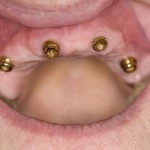
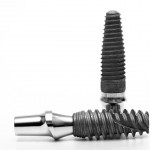
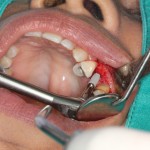
With the increasing popularity of dental implants and the difficulties of managing infections around them it is important to know whether the use of prophylactic antibiotics is beneficial or not. This review is an update of a Cochrane review originally published in 2008 and last updated in 2010. The aim of the review was to [read the full story…]
Composite resin restorations are becoming a regular element of restorative dental care. Usually they are photo-polymerised, and polymerization protocols are considered to be one potential factor in the marginal quality of these restorations. The aim of this study was to compare the marginal quality of composite restorations employing two polymerisation protocols, namely regular versus high [read the full story…]
The aim of this review was to compare, the success rate of dental implants placed simultaneously or as a second surgery following ridge augmentation by means of guided bone regeneration (GBR) or onlay graft regeneration technique. Searches were conducted in Medline and Embase and screening conducted independently by two reviewers. Both prospective and retrospective study [read the full story…]
Dental implants are being used increasingly and some implant failures may be due to bacterial contamination at insertion. Prophylactic antibiotic regimens have been proposed to minimise infection. The aim of this review was to address the question, does the use of antibiotics, when compared with a control group, reduce the frequency of implant failure and [read the full story…]
Amelogenesis imperfecta (AI) is a genetic disorder that presents as an abnormal formation of enamel. AI can have a range of inheritance patterns and the exact incidence is uncertain with estimates ranging from 1:700 to 1:12-14,000. Clinically, AI can be classified into four categories: hypoplastic (type I), hypomaturation (type II), hypocalcified (type III), and hypomature [read the full story…]
The use of the face-bow record during complete denture construction is recommended in most prosthodontic text books and taught in many UK and US dental schools. The aim of this review was to compare the outcomes of the construction of dental prostheses and occlusal splints with and without the use of face-bow transfer. Searches were [read the full story…]
Crown-root and cervical root fractures present a restorative challenge due to sub-gingival position of the fracture margin. . A number of treatment approaches have been proposed, crown lengthening, intentional re-implantation, re-attachment of the coronal fragment to root surface, root extrusion (orthodontic or surgical) or extraction. Two reviews have recently been published ( Das et al [read the full story…]
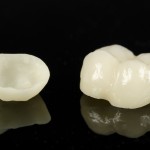
The aim of this study was to evaluate the clinical outcome of shrinkage-free ZrSiO4-ceramic full- coverage crowns on premolars and molars in comparison with conventional gold crowns over a 5-year period. Invited patents who required posterior crowns were randomised to receive either a shrinkage-free ZrSiO4-ceramic crown (test group) or a gold crown (control group). The [read the full story…]
The placement of prosthetic restoration finish line is the subject of much interest and debate. The aim of this review was to assess the effect of prosthetic margin placement on caries susceptibility of abutment teeth Searches were conducted in PubMed, Embase, Google Scholar, Cochrane Central Register of Database of Systematic reviews, Cochrane Central Register of [read the full story…]
Insertion of dental implants is commonly associated with bone remodeling. A number of biological, technical and biomedical factors are considered to affect the degree of remodeling. The aim of this review was to assess the impact of implant– abutment configuration and the positioning of the machined collar/microgap on crestal bone level changes? PubMed and the [read the full story…]