

Neurodivergence, including Attention Deficit-Hyperactivity Disorder (ADHD), remains an area of great interest across social media, with high levels of misinformation being spread on different online platforms (Carter et al., 2026), as blogged recently by Higson-Sweeney (2026). Despite this, there have been no elves blogging on the treatment of ADHD since our last adventure into the woodland earlier this year (Budgen & Suetani, 2026; Zhang et al., 2025).
Not to be discouraged, we have returned to discuss an exciting network meta-analysis from Nourredine et al. (2026). Pharmacological treatment is effective for ADHD, but specific guidance on dosing is limited. Sometimes we don’t know if the dose is too little or too much. On one hand, there is concern that clinicians may be engaging in therapeutic inertia – prescribing suboptimal doses where increasing may be more effective. On the other hand, we may risk increasing the dose beyond what is safe or necessary for maximal efficacy. Previous dose-effect studies examined licensed doses in specific age groups without a network meta-analysis, meaning it was only possible to explore direct comparison with placebo.
This is the first dose-effect network meta-analysis across age groups for ADHD. The authors examined a broad dataset, including data beyond licensed doses, to estimate efficacy and tolerability across dosages and age groups. This study attempts to shed some much-needed light on the Goldilocks zone – the doses ‘just right’ for people with ADHD.

The results of this study assist clinicians in weighing the risks and benefits when adjusting doses for medication treatment of ADHD.
Methods
Eligible articles were obtained through the MED-ADHD database, a comprehensive repository of double-blind randomised controlled trials (RCTs). RCTs with parallel-group or crossover designs using pharmacological monotherapy for at least 1 week were included. Participants were aged ≥5 with a diagnosis of ADHD based on Diagnostic and Statistical Manual of Mental Disorders, Third Edition (DSM-III) or later, or equivalent International Classification of Diseases (ICD) criteria. Notably, studies that combined pharmacotherapy and psychotherapy were excluded.
Eligible medications included amphetamines, atomoxetine, bupropion, clonidine, dexmethylphenidate, guanfacine, methylphenidate, modafinil and viloxazine. The dosages for amphetamines were converted to dextroamphetamine-equivalents and methylphenidate was converted to immediate-release methylphenidate hydrochloride based on the conversion factors from Farhat et al. (2022). The reported doses are the maximum intended target dose in the study, not necessarily the dose received by participants.
To assess the severity of ADHD symptoms, the authors extracted rating scale measures (e.g. SNAP or Conners) and expressed these as a standardised mean difference (SMD). To assess tolerability, the risk of dropout was calculated and expressed as an odds ratio (OR). Because this was a Bayesian analysis, uncertainty is reported as 95% credible intervals (CrI) rather than confidence intervals: the range within which we can be 95% certain the true effect lies.
Results
15,096 references were found on initial screening, with 164 studies included in the systematic review and 113 studies (68 for children and adolescents and 45 for adults) were included in the network meta-analysis. There were a total of 14,138 children or adolescents with a mean age of 11 (70.6% male) and 11,016 adults with a mean age of 36 (54.0% male). The main findings are summarised below:
Children and Adolescents
Eighteen fixed-dose RCTs with a total of 4,159 children or adolescents were included in the efficacy analysis. The tolerability analysis included data from 65 RCTs with a total of 13,972 individuals.
- Methylphenidate reached peak efficacy at 45mg/day (SMD −0.89; 95% CrI −1.18 to −0.60).
- Maximum risk of discontinuation was 2.7% (95% CrI 1.4 to 5.1) at 50mg/day. Interestingly, increasing the dose beyond the licensed maximum did not raise the discontinuation risk, but precision was low.
- Amphetamines reached peak efficacy at 25mg/day (SMD -1.06; 95% CrI -1.35 to -0.78).
- There was a linear discontinuation risk with the risk exceeding placebo at doses above 25mg/day.
- Lisdexamfetamine was separated with a peak efficacy at approximately 55mg/day (SMD -1.05; 95% CrI -1.4 to -0.69). Based on the conversion factors, this is roughly equivalent to 25mg/day of amphetamines.
- Guanfacine reached peak efficacy at 4mg/day (SMD -0.66; 95% CrI -0.99 to -0.31)
- Discontinuation risk increased up to 4mg/day, reaching a median risk of 9.8% (95% CrI 4.4 to 20). Although the risk appeared to decrease following this, with very low certainty.
Inclusion of flexible-dose trials yielded similar results. These trials included data for dosing at an equivalent 93mg/day methylphenidate with a suggested decline in efficacy.
Adults
11 fixed-dose RCTs with 2,450 individuals included in the efficacy analysis. The tolerability analysis included data from 42 RCTs with a total of 10,463 adults.
- Amphetamines reached a plateau at 50mg/day (SMD -0.74; 95% CrI -1.26 to -0.2).
- Note that the maximum licensed dose by the FDA is 40mg/day
- Risk of discontinuation exceeded placebo (2.6%; 95% CrI 1.8 to 3.6) at 50mg/day and continued to increase with dose.
- Methylphenidate efficacy appeared to increase with escalating doses, but there were marginal gains above approximately 50mg/day.
- Risk of discontinuation exceeded placebo at 50mg/day
- At the maximum FDA licensed dose of 60mg, the risk of discontinuation increased to 7.3% (95% CrI 4.3 to 12).
Inclusion of flexible-dose trials expanded the dataset to 5,025 adults, and the dose-effect profiles remained unchanged, albeit with narrower credible intervals.

The findings suggest that for many ADHD medications, the most effective dose may be below the licensed maximum and going beyond this point was not well-tolerated.
Conclusions
The authors concluded:
Our findings challenge both therapeutic inertia — accepting suboptimal response without further dose titration — and uncritical dose escalation beyond licensed limits, when potential harms outweigh expected benefits.
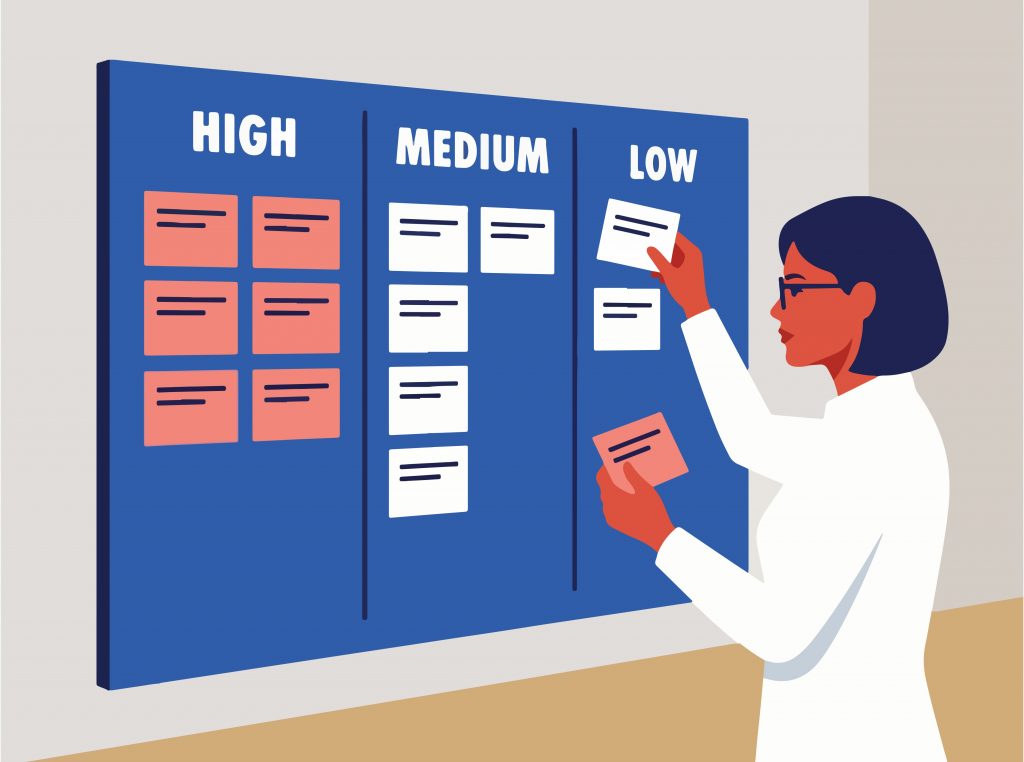
This research suggests that the most effective ADHD medication dose often sits below the licensed maximum, and going higher tends to add risk, not benefit.
Strengths and limitations
There are many strengths in this study due to its robust design. Most importantly, the inclusion criteria were rigorous in the requirement for double-blind RCT studies with diagnosis of ADHD based on recognised standards (DSM & ICD) and a focus on fixed-dose trials. This narrow definition has resulted in a population less reflective of those seen in clinical settings. However, it is an appropriate starting point to reduce the risk of bias and aid in the interpretation of results. While many included trials had a high risk of bias, sensitivity analysis excluding these did not change the results, supporting the robustness of the findings.
The authors identify several limitations with their study and discuss the limited range of doses (particularly in adult studies), heterogeneous rating scales for efficacy, lack of ability to conduct subgroup analyses, inability to assess the impact of severity, short duration of studies and limited generalisability to clinical populations. In particular, the authors stress that the results from the study are valid at a group level, but should not be used to inform decision-making at the individual patient level due to variability in response to medications. We would highlight the short durations of the included studies (a mean of 7 weeks for adults) as a prominent limitation of this paper. ADHD is a lifelong condition, and many people choose to continue pharmacological treatment long-term. Adverse effects with long-term use of psychostimulants are not well defined, particularly for adults, where there will be increasing concerns for cardiovascular side effects with longer use at higher doses. These risks are not captured in the included studies due to the short durations.
We also stress the limitations due to the relatively limited data for adults. There were far fewer individuals in the adult analysis in comparison to children and adolescents, resulting in less precision in the dose-effect curves, with widening credible intervals at higher doses. In particular, the amphetamine dose-effect analysis consisted of data from 459 individuals, with almost half (225) receiving a dosage above 40mg/day dextroamphetamine-equivalent. If there were more individuals included in the analysis, it would be interesting to see how the dose-effect curves would change and if these would reflect the U-shaped curves seen in the child and adolescent cohort. The use of dose conversion to dextroamphetamine-equivalents was necessary due to the limited dataset; however, the conversions may have affected the results, as different formulations may not have comparable efficacy at those doses. It should also be noted that of the 459 individuals exposed to amphetamines, 437 received mixed amphetamine salts in an extended-release formulation and 22 received dextro-amphetamine in an immediate release formulation. No individuals received lisdexamfetamine or dexamfetamine; two medications commonly prescribed in Australia.

The rigorous study design strengthens the findings, though the short study durations and limited adult data may restrict its clinical applicability at present.
Implications for practice
This study builds on the dose-effect responses seen in the meta-analyses by Farhat et al. (2022 & 2024) through incorporating indirect evidence with the methodology of a network meta-analysis. The results are fascinating and challenge common clinical practice where prescribers may stop increasing dosages when mild adverse effects are encountered, potentially missing out on peak efficacy. Simultaneously, it cautions against venturing too far into the danger zone, prescribing higher doses that may not provide increased benefit for people with ADHD. Many clinical guidelines tend to support an individualised approach of increasing dosages as long as there is symptom improvement and no intolerable adverse effects. This study adds to this through finding that further increases beyond 45mg for methylphenidate and 25mg for amphetamines are unlikely to convey benefit and may in fact increase the risk of harm. For adults, a similar dose-dependent increase in efficacy is seen, reaching a plateau at approximately 50mg for both methylphenidate and amphetamines, with increasing risks beyond this. Notably, the dose of amphetamines is above the FDA-licensed maximum dose, possibly raising the notion that doses above those licensed for amphetamines may convey increased benefit at the population level.
This study takes a step further towards a greater understanding of effective dosing in the treatment of ADHD. In starting to define the response across doses, we are moving much closer towards the goal of informed prescribing and practice. How far away are we from having clear guidelines akin to those for antidepressants and antipsychotics with defined minimum effective doses and suggested limits above which there is unlikely to be benefit for most patients? We have a wealth of this information for other psychotropic medications; it is time that we develop this for ADHD medications.
At a local level, in Australia, it is difficult to know how to translate this data into practice, particularly for adults. Here, lisdexamfetamine is the second most commonly prescribed psychostimulant (AIHW, 2025). Converting the results from this study, maximal efficacy may be seen with lisdexamfetamine at approximately 110mg. This dose is far beyond the 70mg maximum approved in most jurisdictions in Australia (AADPA, 2026). Should we then be increasing the dosage for all adults, as far as tolerated, to the maximum allowed? At this stage, the evidence does not support this practice, given the clear lack of long-term tolerance data in adults and the absence of lisdexamfetamine formulations in the analysis.
Ultimately, this study from Nourredine et al. (2026) paves a new path towards increasing precision with ADHD pharmacological management and increases our knowledge of effective dosing. Further research is now needed to address the gaps in long-term tolerance and to provide more data across a broader range of medications and doses. One day in the future, we hope that it will be easier to find the medication dose ‘just right’ for people with ADHD without the need for trial and error like Goldilocks searching for her porridge.

The results from Nourredine et al. (2026) pave the way to an improved understanding of the dose-effect models for ADHD medications.
Statement of interests
Jordan Budgen has no conflicting interests with respect to the content of this blog post.
Shuichi Suetani is a member of the Royal Australian and New Zealand College of Psychiatrists ADHD Network, and Australasian ADHD Professionals Association.
Links
Primary paper
Mikail Nourredine, Lucie Jurek, Tasnim Hamza, Andrea Cipriani, Fabien Subtil, Valeria Parlatini, Luis Farhat, Guilherme Fusetto Veronesi, Orestis Efthimiou, Georgia Salanti, Samuele Cortese (2026) Pharmacological interventions for ADHD: a systematic review and dose–effect network meta-analysis. The Lancet Psychiatry, 13, 485-495.
Other references
Australasian ADHD Professionals Association (AADPA) (2026). ADHD Medication Prescribing Regulations & Authorities in Australia & New Zealand.
Australian Institute of Health and Welfare (AIHW) (2025). ADHD Medications dispensed 2004-05 to 2023-24.
Budgen J & Suetani S. Medication impact on non-core ADHD symptoms and harm prevention. The Mental Elf, 21 Jan 2026.
Farhat L.C., Flores J.M., Behling E. et al. (2022) The effects of stimulant dose and dosing strategy on treatment outcomes in attention-deficit/hyperactivity disorder in children and adolescents: a meta-analysis. Mol Psychiatry 27, 1562–1572.
Farhat, L. C., Flores, J. M., Avila-Quintero, V. J., Polanczyk, G. V., Cipriani, A., Furukawa, T. A., Bloch, M. H., & Cortese, S. (2024). Treatment Outcomes With Licensed and Unlicensed Stimulant Doses for Adults With Attention-Deficit/Hyperactivity Disorder: A Systematic Review and Meta-Analysis. JAMA psychiatry, 81(2), 157–166.
Higson-Sweeney N. Scrolling for answers: how reliable is mental health and neurodivergence-related information on social media? – National Elf Service. The Mental Elf, 22 Apr 2026.
Photo credits
- Photo by Myles Bloomfield on Unsplash
- Photo by Myriam Zilles on Unsplash
- Illustration by Alghozy on Unsplash
- Photo by Docusign on Unsplash
- Photo by sq lim on Unsplash