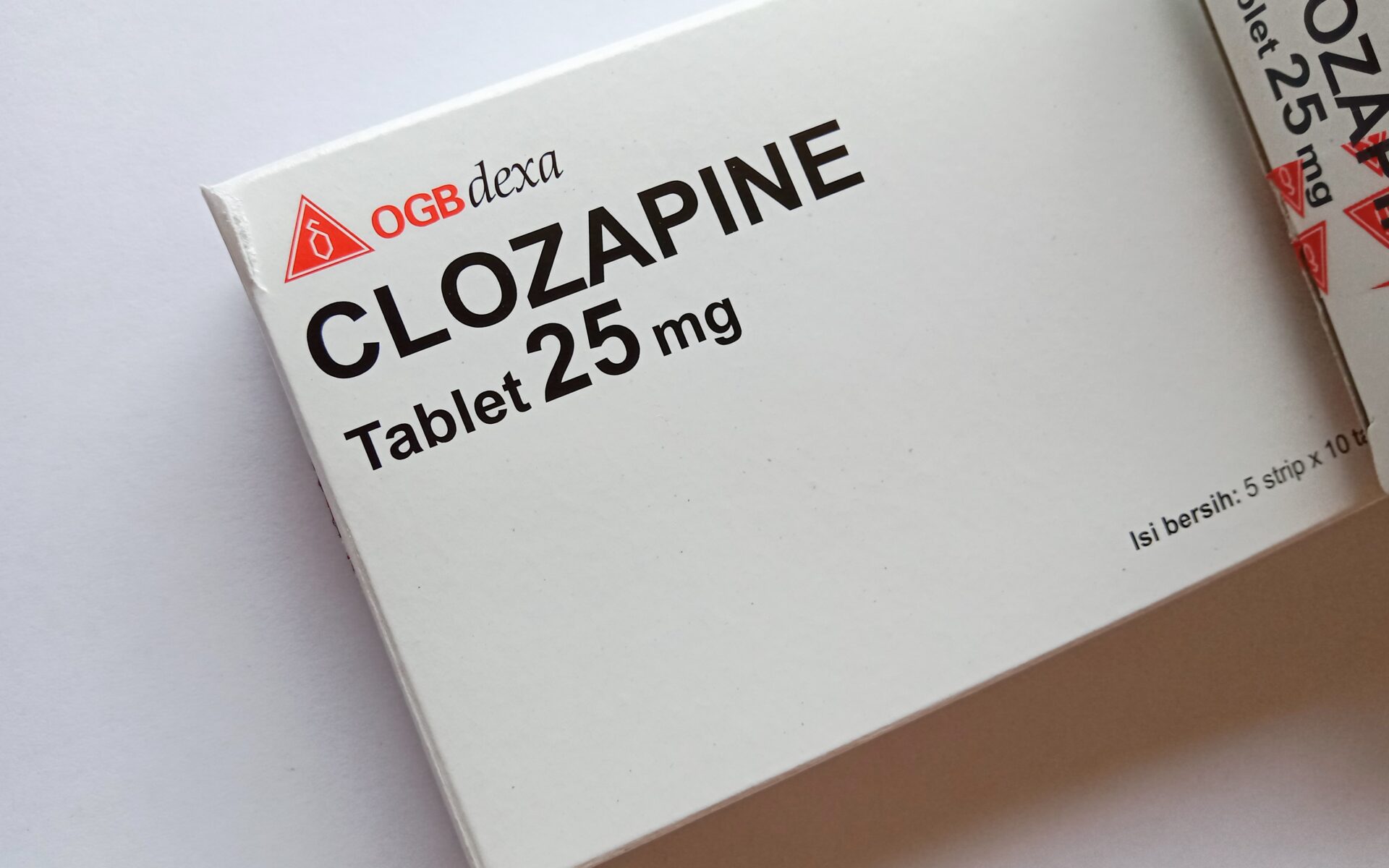



Clozapine is widely regarded as the gold standard antipsychotic for treatment-resistant schizophrenia (Silva et al., 2025) and is a treatment approach that has been covered widely here in the past. However, benefits of clozapine treatment beyond this indication are widely unknown.
This large-scale study examines whether clozapine may offer benefit across multiple psychiatric disorders, including bipolar disorder, depression, and borderline personality disorder. Using national registry data from Finland and Sweden, the research evaluates outcomes such as psychiatric hospitalisation, treatment adherence, and mortality rates. By comparing clozapine with other antipsychotics and mood stabilisers, the study aims to clarify the efficacy and safety of clozapine to assess whether its use could extend beyond current recommendations.

Methods
This study used large sets of data derived from national health records in Finland and Sweden. It included people aged 16 and older who had been diagnosed with serious mental health conditions such as schizophrenia, bipolar disorder, depression requiring hospital treatment, or borderline personality disorder. The researchers used existing registry data, meaning they did not contact patients directly.
The main outcome they examined was all cause psychiatric hospitalisation with secondary outcomes including mortality and wider hospitalisation with each assessed using an adjusted hazard ratios statistical measure. The study employed what is known as a within-individual design where each person in the data set acts as their own control.
Ethical approval was obtained in both countries, and patient consent was not required because the study relied entirely on anonymised data records.

Results
The study included over 500,000 people with psychiatric disorders from Finland and Sweden. Just over half were women, and the average age was around 42 years. Participants were followed for several years, and many experienced at least one psychiatric hospitalisation during this time.
Not surprisingly, clozapine was used most often in people with schizophrenia and schizoaffective disorder, and much less often in conditions such as depression, bipolar disorder, and borderline personality disorder. Those who received clozapine generally were more psychiatrically unwell, as shown by higher rates of previous hospitalisations and disability.
Overall, clozapine was associated with a lower risk of psychiatric hospitalisation compared with other antipsychotic medications in most disorders studied. The strongest and most consistent effects were seen in schizophrenia and schizoaffective disorder, where clozapine clearly reduced hospital admissions. It also reduced hospitalisations specifically due to psychosis in these conditions. For delusional disorder, the findings were less certain, as the results were not statistically conclusive.
In bipolar disorder, clozapine was linked to a lower risk of overall psychiatric hospitalisation compared with other treatments. However, results for specific outcomes (such as mania and depression) were mixed and varied between countries. Clozapine also appeared more effective than mood stabilisers overall, although the advantage was smaller when compared specifically with lithium.
For depression and psychotic depression, clozapine was associated with reduced risks of both overall hospitalisation and hospitalisation due to depressive episodes.
All in, these findings suggest potential benefits beyond psychotic disorders in reducing psychiatric hospitalisation.
When looking at broader outcomes (wider hospitalisation or death from any cause), clozapine was associated with lower risks in several disorders. However, the differences between disorders could not be clearly ranked from the results. There was no clear evidence of benefit for bipolar disorder or borderline personality disorder from the data analysis.
The study also found that people taking clozapine were less likely to stop treatment compared with those taking another antipsychotic, such as olanzapine, suggesting better long-term adherence.
In summary, the paper demonstrates that clozapine can be more effective than other treatments in reducing hospitalisation risk across several psychiatric disorders, particularly schizophrenia-spectrum conditions, although results are less certain for some disorders such as bipolar disorder and borderline personality disorder.

Conclusions
In conclusion, this is a large and well-designed study with reliable results. It shows that clozapine is linked to fewer psychiatric hospital admissions and lower rates of stopping treatment compared with other oral psychotropic medications across different mental health conditions.
However, because the study was not randomised, there may still be other factors influencing the results. Some groups of people were underrepresented, and the study mainly focused on hospital-based outcomes. Therefore, the findings support the use of clozapine, but are not strong enough on their own to strongly recommend using it more widely than current guidelines suggest.
This evidence could be strengthened by further research addressing the inequalities and gaps identified in this text.

Strengths and limitations
Strengths
The study used well-defined populations, treatments, and outcomes, which aligned to a clear research question. A specific strength was the inclusion of large nationwide cohorts from two countries, involving over half a million patients with long follow-up periods, which improved the reliability of the results and the possibility of result applicability to a global population.
An additional strength of this study was its use of a within-individual design, meaning each participant was compared to themselves over time. This reduced the impact of fixed factors such as sex, initial diagnosis, and genetic background, helping to minimise selection bias. The study also considered important factors that can change over time, such as the use of other psychotropic medications in the treatment journey within psychiatry. Key outcomes, including psychiatric and other hospital admissions and mortality, were collected from large national registers, which increased confidence the data were objective.
Limitations
Despite these strengths, the study has several limitations that affect the generalisability of its findings. As treatment was not randomly assigned, it is hard to know if the treatment caused the outcome, or if the patient’s condition, which influenced the treatment choice, is the real reason for the outcome seen. In other words, we can’t be clear about cause and effect here.
In addition, the registry-based design data collection provides no information on symptom severity, functional status, adherence to treatment, reasons for starting or discontinuing treatment, or less obvious adverse effects. This significantly limits the ability to fully assess the balance between benefits and risks.
The lack of ethnicity data, combined with the focus on relatively homogeneous Nordic populations (low ethnic variation), reduces confidence in applying the findings to more diverse populations such as those in the United Kingdom. This is becoming an increasingly important factor to consider in relation to the emerging focus on pharmacogenomics and resulting medication efficacy understanding, which may guide future treatment choice more than population led clinical guidance going forward (Khoodoruth and Khoodoruth, 2026).
The primary outcome for this study focuses on all cause psychiatric hospitalisation. Although this is clinically important to understand, there is influence across health and social care systems that also influence need for admission. This study does not capture outcomes such as community-managed relapse, social functioning, or quality of life.
In this study, some diagnostic groups, including delusional disorder, psychotic depression, and particularly borderline personality disorder, include very few patients treated with clozapine. This may impact the power of the results in being able to justify clozapine use and improved outcomes across a wide diagnostic group.
Implications for practice
The findings of this paper have demonstrated clozapine can be a highly effective treatment for schizophrenia, as well as schizoaffective disorder, with evidence also suggesting potential benefits for bipolar disorder, delusional disorder, and psychotic depression. However, several clinical, regulatory, and practical considerations limit the translation of these findings into routine practice.
Current clinical guidance, including National Institute for Health and Care Excellence (NICE, 2025) and American Psychiatric Association (2020) consistently recommend clozapine as a third-line treatment for schizophrenia, after patients have trialled at least 2 other antipsychotic medications. Additionally, Clozapine is not licensed for use in psychotic depression, delusional disorder, bipolar disorder, or borderline personality disorder, making its use in these patients strictly ‘off-label’ and typically requiring additional approval procedures before initiation as a result. This provides a challenge, as the study’s recommendations may be difficult to implement within existing prescribing frameworks.
In the UK, NICE guidelines (2025) no longer require that clozapine initiation take place in an inpatient setting. Despite this, many health boards currently lack the resources to safely initiate clozapine in the community, given the rigorous blood monitoring and clinical supervision for possible adverse reactions that is required. This creates a practical barrier to community initiation particularly in areas with limited community resources. In areas where inpatient clozapine initiation is recommended, inpatient bed availability can also pose a barrier to wider use of clozapine in psychiatric illnesses. Consequently, clinicians will often opt to trial alternative oral antipsychotics in the community before considering clozapine.
Treatment adherence can often present another challenge. Clozapine requires re-titration if doses are missed for more than 48 hours (NHS Greater Glasgow and Clyde, 2023), unlike many other oral antipsychotics. This makes clozapine more difficult to manage in patients with adherence difficulties. Furthermore, while other antipsychotics such as olanzapine and risperidone are available in depot long-acting formulations, clozapine lacks this option. This limitation may restrict its use in real-world settings despite its potentially superior efficacy as highlighted in this study.
The side effect profile of clozapine is also a major consideration (Silva et al., 2025). Some potential complications of clozapine use include agranulocytosis, myocarditis, sedation, and significant metabolic effects (NICE, 2026). In contrast, medications such as aripiprazole are often better tolerated (Khanna et al., 2013), which may make them preferable in certain populations.
Despite these challenges, the study contributes to growing evidence suggesting that clozapine may have transdiagnostic benefits beyond treatment-resistant schizophrenia. Future research should aim to determine whether earlier initiation or broader use across diagnostic categories is both safe and effective, with evidence for the gaps identified in this study. Such studies could inform updates to local clinical guidelines, as well as support the development of resources and infrastructure to improve clozapine accessibility and safe community use.

Statement of interests
Kirsten Little, Anam Kazmi and Laura Karanikoli declare no conflicts of interest.
Editor
Edited by Simon Bradstreet.
Links
Primary paper
Luykx JJ, Colgan M, Vieta E, Hamina A, Schulte PFJ, Correll CU, Mittendorfer-Rutz E, Siskind D, Lieslehto J, Tanskanen A, Tiihonen J, Taipale H. Transdiagnostic effectiveness and safety of clozapine in individuals with psychotic, affective, and personality disorders: nationwide and meta-analytic comparisons with other antipsychotics. The Lancet Psychiatry. 2025 Dec;12(12):921-931.
Other references
American Psychiatric Association (2020) The American Psychiatric Association practice guideline for the treatment of patients with schizophrenia.
Khoodoruth M, Khoodoruth M. Clozapine and pharmacogenomics testing: opportunities and challenges for personalized treatment in schizophrenia. Can J Physiol Pharmacol. 2026 Jan 1;104:1-6.
Khanna P, Komossa K, Rummel-Kluge C, Hunger H, Schwarz S, El-Sayeh HG, Leucht S. Aripiprazole versus other atypical antipsychotics for schizophrenia. Cochrane Database Syst Rev. 2013 Feb 28;(2):CD006569.
National Institute for Health and Care Excellence (NICE) (2025) Psychosis and schizophrenia in adults: prevention and management (CG178). Available at: (Accessed: 17 March 2026).
National Institute for Health and Care Excellence (NICE) (2026) Clozapine. Available at:
NHS Greater Glasgow and Clyde (2023) Re-titration following a treatment break.
Silva, E., Legge, S., Casetta, C., Whiskey, E., Oloyede, E. and Gee, S., (2025). Understanding clozapine‑related blood dyscrasias. Developments, genetics, ethnicity and disparity: it’s a CIN. BJPsych Bulletin, 49(3), pp.163–168.
Photo credits
Photo by Jingming Pan on Unsplash
Photo by Михаил Секацкий on Unsplash
Photo by Martha Dominguez de Gouveia on Unsplash
Photo by Markus Winkler on Unsplash
Image by Fuse809 on Wikimedia Commons