



What springs to mind if I ask you to define homelessness? A guy selling the Big Issue outside the station? A faceless shape in a sleeping bag, lying on some cardboard in a shop doorway?
What if I was to tell you that the legal definition of homelessness does not necessitate you not having a home? Under the law, even if someone has a roof over their heads, they can still be homeless. Put simply, they may not have the right to stay where they are or their home may be unsuitable. Homelessness is sneaky in its definition and potentially devastating in its effects; even if you have a roof over your head.
Research carried out for Shelter (Anderson and Thomson, 2005) found that young homeless people do not identify with the stereotypical notion of homelessness as sleeping on the streets; instead, they recognise that what they are going through, sleeping on a different person’s sofa every week, living out of a bag. This is the other, more hidden definition of homelessness. It may seem to be a ‘better’ version of homelessness, it may involve having access to shelter but it is no less catastrophic in its effects, particularly on mental health.

Prevalence of homelessness and mental illness in children and young people
Kate Hodgson and colleagues have undertaken a follow-up study, exploring the prevalence of psychiatric disorder and comorbidity among a UK sample of young people with experience of homelessness. Their aim was to examine the longitudinal relationship between psychiatric conditions and different types of health service use.
The mental health risks to young homeless people are well established, with particularly high rates of conduct disorder, PTSD, major depression and substance misuse reported. Poor physical health and high rates of personal injury are also common. It goes without saying that to be young and homeless is usually caused and compounded by circumstances which fundamentally affect how and whether individuals are willing and able to access primary care and other appropriate health services.
The researchers examined the relationship between specific forms of mental disorder and health, and mental health service use at follow-up.

Methods
- Young people were recruited between January 2011-January 2012 via Llamau, a homelessness charity covering southern Wales
- In line with the UN definition of ‘youth’, participants were eligible if they were between 16-24 years of age
- A prospective, longitudinal design was used with 8-12 months between 2 interview-based assessments
- Contact was maintained via a newsletter, birthday cards and personal contact with a relative/friend
- Structured interviews included a full psychiatric assessment (MINI PLUS Neuropsychiatric Interview 5.0) and questions about recent health service use (mental health, emergency room, general practitioner, hospital for physical problems, drug or alcohol services)
- A brief systematic review was conducted in parallel in order to examine the relationship between mental health service use among young homeless people
Key findings
- 121 young people with experiences of homelessness undertook an initial assessment. All were legally defined as being homeless
- 90 were traced at follow-up and re-interviewed (74.4% retention)
- There were no significant differences between the 2 groups in terms of age, sex, ethnicity or sexuality
- The overall prevalence of any psychiatric disorders within the young homeless sample was very high at 87.8% for the current disorder (n=79)
- Over 70% of the sample (73.3%, n=66) met the criteria for two or more current psychiatric conditions
- Over half of the sample had visited their general practitioner (GP) in the previous 3 months (60%) while a high proportion had also accessed hospital services (42.2%) in the past 3 months
- Approximately 10% had used drug and alcohol services
- Almost a third (31.1%) had accessed mental health services
- A quarter had visited an emergency department (24.4%) in the past 6 months

Mental health conditions were significantly associated with mental health service use:
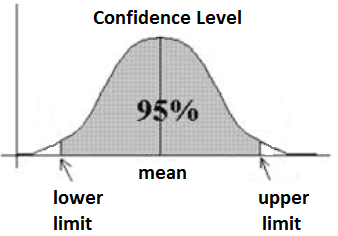
- Mood disorders (Odds Ratio (OR) 5.21, 95% Confidence Interval (CI) 1.64 to 16.58)
- Psychosis (OR 10.0, CI 1.58 to 94.58)
- Suicide risk (OR 6.25, CI 1.82 to 21.43)
Emergency department use was predicted by:
- Mood disorders (OR 5.19, CI 1.68 to 16.0)
- Psychosis (OR 7.33, CI 1.24 to 43.29)
- Anxiety disorder (OR 2.88, CI 1.04 to 7.97)
- High-suicide risk (OR 3.42, CI 1.86 to 13.67)
- Comorbidity (OR 1.41, CI 1.05 to 1.90)
GP service use was predicted by:
- PTSD (OR 2.80, 95% CI 1.08 to 7.25)
- Suicide risk (OR 4.57, 95% CI 1.60 to 13.06)
Increased drug and alcohol service use at follow-up was associated with:
- Substance dependence (OR 13.60, 95% CI 1.62 to 114.12)
- Psychosis (OR 13.0, 95% CI 2.14 to 78.87)
Discussion, limitations and clinical implications
This is the first study to examine the links between psychiatric disorder and service use in young people with experiences of homelessness, over time. The prevalence of psychiatric disorder in the sample was extremely high, much higher than that reported for this age group in the general population and is clearly indicative of the need for appropriate mental health services.
However, despite 87.8% of the sample meeting diagnostic criteria for a psychiatric condition, only 31.1% had accessed any form of mental health service. In addition, complex needs involving comorbidity and addiction (even if not meeting clinical thresholds) created barriers to accessing care. For many, the symptoms of individual conditions did not meet diagnostic criteria but the combined effects of low-level conditions were no less debilitating.
None of the participants were accessing Child and Adolescent Mental Health services, despite more than 50% being under the age of 18. Many of the participants were unable to access child and adolescent mental health services because they were not in full-time education, a fact which highlights a shocking gap in service provision disproportionately more likely to affect young homeless people.
The authors acknowledge certain limitations with the study, including generalisability to both other ethnic groups and other ‘types’ of homeless young people (e.g. those sleeping rough). Wide confidence intervals were produced by low incidence of some conditions and low levels of access to some forms of services. Self-report may also have been problematic; research on agreement between young homeless people and case managers on contact with services indicates low levels of agreement for certain forms of service use.
This study highlights just how difficult it is for socially excluded young people to negotiate an already complicated mental healthcare system. The barriers to care are often arbitrary, exclusive and, most importantly, unfair.
Links
Hodgson K, Shelton KH, Van Den Bree MB. (2014) Mental health problems in young people with experiences of homelessness and the relationship with health service use: a follow-up study. Evidence-Based Mental Health 2014 Jul 3. pii: ebmental-2014-101810. doi: 10.1136/ebmental-2014-101810 [PubMed abstract]
Anderson I, Thomson S. More priority needed: The impact of legislative change on young homeless people’s access to housing and support (PDF). Shelter, 2005.
Llamau – http://www.llamau.org.uk/





Parental homelessness linked to increased risk of mental illness in offspring
7 years agoThe Mental Elf
11 years agolillieputian
11 years agoHealthwatchTame
11 years agoRealSystems1
11 years agoADRomney
11 years agokatekarban
11 years agoSWHINet
11 years agoFrustrated_HV
11 years agoFouGen
11 years agoAmbassadors_HC
11 years agohomelessrugby
11 years agorachielizabeth
11 years agoBlondenanja
11 years agoSPEARLondon
11 years agoMHF_tweets
11 years agolissy109
11 years agoDune9
11 years agoAcornProjectUK
11 years agonolimitshelp
11 years agoHomelessLink
11 years agoFinolaColgan
11 years agoPeer_Power
11 years agoOffalyMH
11 years agoJondelman
11 years agoevolvingfamily
11 years agoH_Atherton
11 years agosteve_furber
11 years agoPippavs
11 years agoLayneArlina
11 years agos8kyy
11 years agonikkinewhouse
11 years agoHallyMk1
11 years agoCatcalledFish
11 years agoPartizanmeister
11 years agoMental_Elf
11 years agoWeSchoolNurses
11 years agooakleighRover
11 years agocaroldimon
11 years agoFrustrated_HV
11 years agoWendyJNicholson
11 years agoDW_CSPolicy
11 years agoTommo6952
11 years agothe_otc
11 years agodcopuk
11 years agoJournalofCHC
11 years agoJournalofCHC
11 years agoNHS_KS
11 years agoLindaMilnes_UOM
11 years agoLindaMilnes_UOM
11 years agoCYPSNEP
11 years agoCYPSNEP
11 years agoJohnEJefferson
11 years agomatthefish2012
11 years agoPsychReg
11 years agoMassage01
11 years agoequalitytoolkit
11 years agoMHFEwhatsnew
11 years agoAcornProjectUK
11 years agorjimmy663
11 years agoJ123P456S
11 years ago121Therapy
11 years agoMental_Elf
11 years agoMariaCozens
11 years agoCCareStandards
11 years ago99MurrayRoad
11 years agoMAFTC
11 years agoVKParkash
11 years agoSharonHolford
11 years agoAddictionNotDis
11 years agocharitybegin1
11 years agoMental_Elf
11 years ago121Therapy
11 years agoKK_CW_Sams
11 years agoAcornProjectUK
11 years agoSameiHuda
11 years agomorrisKOT
11 years agoNeuronet64
11 years agoSouthdownHA
11 years agohilton3685
11 years agoBPSOfficial
11 years agosteve_furber
11 years agoMental_Elf
11 years agoTherapyRes
11 years agoinnes_helen
11 years agoMESchlagel
11 years agoHan_Antoniades
11 years agoRealDavidCarter
11 years agoK. Frearson
11 years agonuwandiss
11 years ago121Therapy
11 years agoalbertmorrison
11 years agohelenlp
11 years agoMental_Elf
11 years agoaghoury79
11 years agoNeuronet64
11 years agoAbelGorman
11 years agoPhew1000
11 years agoFloBaing
11 years agomadgifts
11 years agoDebtCamel
11 years agoAddictionNotDis
11 years agoMental_Elf
11 years agosiobhan_oconn
11 years agopsych_cypf
11 years agoLovingSanders
11 years agoMental_Elf
11 years agoAcornProjectUK
11 years agodrbould
11 years agoHHLibService
11 years agodestinysmcw
11 years agoZettaThomelin
11 years agomy_shuktara
11 years agoiamboylan
11 years agoZettaThomelin
11 years agoMHcarers
11 years agoChooBekker
11 years agoMHNEtweets
11 years agomcostaenf
11 years agoMikeLomas_
11 years agoMegUnderdown
11 years agoThe Mental Elf
11 years agoDrGTalkingCures
11 years agoBABCP
11 years agoLlamauUK
11 years agoMental_Elf
11 years agolypftlib
11 years agoLiaisonLawson
11 years agoNatalieMHN
11 years agoian_hamilton_
11 years agoHollie0206
11 years agoaghoury79
11 years agoSamSCBailey
11 years agohelpinghoping
11 years agolacanlune
11 years ago121Therapy
11 years agoukidcp
11 years agoSaraRich_SA
11 years agoDIDCarol
11 years ago