


Schizophrenia is perhaps the most contentious mental health problem: its biological basis has been denied, and the validity of the diagnosis itself questioned.
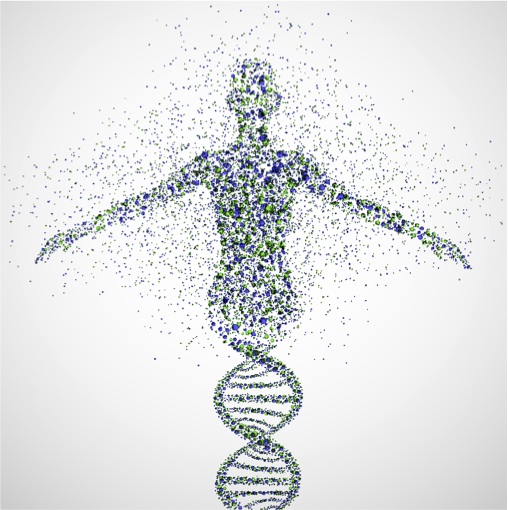
However, a recent paper by the Schizophrenia Working Group of the Psychiatric Genomics Consortium provides the best evidence yet that there is a genetic basis to schizophrenia.
In a large genome-wide association study (GWAS), almost 10 million genetic variants were tested to see if they were associated with schizophrenia.
GWAS has proved to be a remarkably successful technique, identifying numerous genetic variants associated with a variety of anthropometric and disease traits. However, until recently, progress has been limited for psychiatric conditions.

Methods
The authors collected data from 49 ancestry-matched, non-overlapping case-control samples (comprising 34,241 people with schizophrenia and 45,604 controls), and 3 family-based samples (comprising 1,235 parent and affected-offspring trios). These together comprised the primary data set.
Genome-wide association data were available for all contributing samples, imputed using the 1000 Genomes Project reference panel. After applying various quality control procedures, this meant that 9.5 million genetic variants across the genome were tested for association with schizophrenia case status.
For the subset of linkage-disequilibrium independent (i.e., uncorrelated) single nucleotide polymorphisms (SNPs) with a P-value less than 1 × 10⁻⁶, the primary data set was augmented by a further 1,513 cases and 66,236 controls from deCODE genetics, and the results combined.
Results
In the final combined analysis of 36,869 cases and 113,075 controls, 128 uncorrelated SNPs exceeded genome wide significance (i.e., a P-value smaller than 5 × 10⁻⁸). Of these, 108 represented physically distinct loci (i.e., not within close proximity to each other on the genome).
Most excitingly, 83 of these 108 associated loci had not been previously implicated in schizophrenia. The authors argue that these associations might therefore provide novel insights into the aetiology of the disease, and potentially lead to new treatments for schizophrenia.
Some of the genes implicated confirm what was already known or suspected. For example, the identification of a variant in the dopamine D2 receptor gene is consistent with the evidence that antipsychotic drugs that block these receptors are effective for treating schizophrenia.
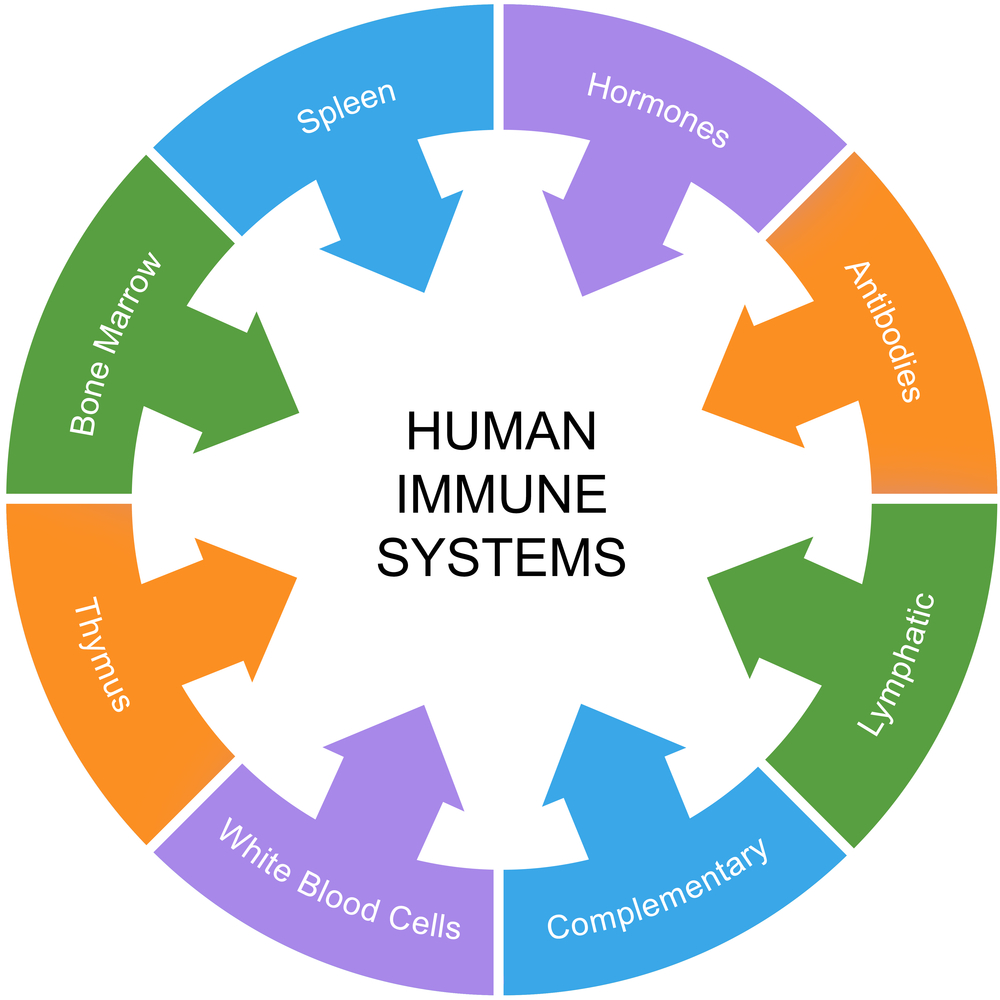
Other findings were more surprising. For example, a number of associations are in regions involved in acquired immunity. This raises the possibility that schizophrenia might be in part a disorder of acquired immunity, although this is certainly not definitive evidence.
Conclusion
The study is remarkable because the number of loci identified, and the proportion of variation explained, is comparable with traits such as height and body mass index. The contribution of each individual genetic variant is tiny, but the cumulative effect is substantial. It’s worth noting that there is considerable genetic overlap between schizophrenia and other psychiatric conditions, suggesting that some genetic associations may not be specific to schizophrenia.
Genetic studies can provide clues as to the underlying mechanisms of disease, but how variations in genes impact on biological functions to increase schizophrenia risk cannot be answered by genetics alone. More work will be required to answer these questions. Genetic studies also don’t rule out an important role for the environment. GWAS might even help identify other causes of disease, by identifying loci associated with, for example, tobacco use.

Summary
This is a ground-breaking study which demonstrates the advances that can be made by sharing data on a large-scale, via international consortia. It is too early to say if and how these findings will translate into clinical applications (it will be several years before we know this) but our understanding of schizophrenia has certainly taken a major step forward.
Links
Schizophrenia Working Group of the Psychiatric Genomics Consortium (2014). Biological insights from 108 schizophrenia-associated genetic loci. Nature, 511, 421-427. doi: 10.1038/nature13595 [Abstract]
Anti-psychiatry. Wikipedia, last accessed 31 Jul 2014.
Psychiatric Genomics Consortium. UNC School of Medicine, last accessed 31 Jul 2014.
Genome-wide association study. Wikipedia, last accessed 31 Jul 2014.
1,000 Genomes. Last accessed 31 Jul 2014.
deCODE Genetics. Last accessed 31 Jul 2014.





Risk factors and peripheral biomarkers for schizophrenia
8 years agoPsychiatric genomics: an update and an agenda
8 years agoGenetics of depression: risk factors and protective factors
8 years agoSchizophrenia risk and the complement C4 gene
10 years agoGenetic denialism is unhelpful - genes participate in a job in who we are
10 years agoTARG Blog » Smoking and risk of schizophrenia: new study finds a dose-response relationship
10 years agoSmoking and risk of schizophrenia
11 years agoAddiction is a brain disease…but does it matter?
11 years agoEfficacy of high vs. low-potency first-generation antipsychotics - The Mental Elf
11 years agoIlario Mammone
11 years agoSusanne Hart
11 years agoDag T. Hanoa
11 years agoLisa Eden
11 years agoThe Mental Elf
11 years agoLydia Watson
11 years agoAilish O Brien
11 years agoJackie Mcdonald
11 years agoJoão Leal
11 years agoJayne Lavender
11 years agotapchat
11 years agoCenterstone
11 years agoTheSandlings
11 years agojulie_doughty
11 years agoGCBarnwell
11 years agocurran_evelyn
11 years agoNAMIAustin
11 years agoag2460
11 years agoJayne Lavender
11 years agoDarrenJPrior
11 years agoneilleetraining
11 years agoLDCcommunity
11 years agoborromeannot
11 years agosugarloaf147
11 years agopetervhale
11 years agoverityjw
11 years agoLindaBauld
11 years agoNorthernBlowwk
11 years agomelb4886
11 years agoMandyware
11 years agoMarcusMunafo
11 years agonuwandiss
11 years agoMental_Elf
11 years agoJoão Leal
11 years agoDrGTalkingCures
11 years agoRosaAvino
11 years agoBABCP
11 years agoLightbulbPsych
11 years agoCjoyceMQ
11 years agoJackie Mcdonald
11 years agoHaVeN_Dundee
11 years agopaulsutcliffewe
11 years agosiobhan_oconn
11 years agoyusraHanif86
11 years agoautismcornwall
11 years ago121Therapy
11 years agoMental_Elf
11 years agoCarousel_Rugby
11 years agosteve_furber
11 years agoSchrebersSister
11 years agochristoclifford
11 years ago121Therapy
11 years agoMental_Elf
11 years ago121Therapy
11 years agoAilish O Brien
11 years agoaghoury79
11 years agoMeandmymhmatter
11 years agozante14081950
11 years agoOPDI
11 years agolypftlib
11 years agoMental_Elf
11 years agojoannamphd
11 years agojim2beta
11 years agoMental_Elf
11 years agoaghoury79
11 years agoNovembervivi
11 years agoNeuronet64
11 years agoNeuronet64
11 years agoLydia Watson
11 years agoBPSOfficial
11 years agodeevybee
11 years agoniadla
11 years agoLynRomeo_CSW
11 years agoDovelie
11 years agoNorthgatePsych
11 years agosdriver_tweet
11 years agoNWPPN
11 years agodscl81
11 years agoxtraspirit
11 years agoBPSOfficial
11 years agostnov8
11 years agotherecycla
11 years agoHeatherBake
11 years agohubgodalming
11 years agojenna__bird
11 years agoThe Mental Elf
11 years agoCjoyceMQ
11 years agoSarahMMcKay
11 years agoalvarez_mya
11 years agoMarcusMunafo
11 years agolypftlib
11 years agoMental_Elf
11 years agoCarlotta_raby
11 years agoOPGSPsychology
11 years agoIlario Mammone
11 years agoSusanne Hart
11 years agoDag T. Hanoa
11 years agoLisa Eden
11 years agoDavidJohnBaker
11 years agoRuthWishart
11 years agoUoDMHN
11 years agoMicheleH20
11 years agoBTSUKLTD
11 years agocaptainsnackbar
11 years agonathanfiler
11 years agoaskintoofew
11 years agobristolbiking
11 years agoaghoury79
11 years agojtrevmhn
11 years agosoozaphone
11 years agoBPDFFS
11 years agoJimmyscambridge
11 years agonhslowsecure
11 years ago