

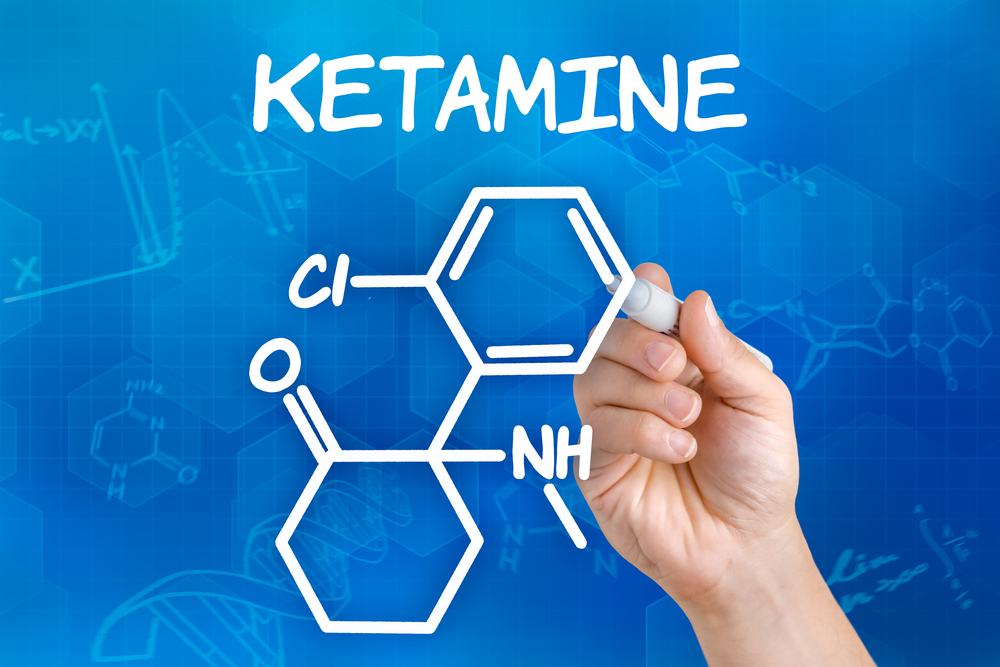

Last week the media reported widely on a study of ketamine for depression (McShane et al, 2014). As usual the headlines made bold assertions, the Telegraph running with “Horse tranquilliser Ketamine could cure severe depression” (Knapton, 2014). But what did the paper authored by an Oxford group and published in the Journal of Psychopharmacology really claim?
Firstly, the authors noted that considerable work has been done in the area already. In fact, six randomised controlled trials of a single dose of ketamine for depression have been undertaken since 2000:
- Five RCTs tested ketamine against a dose of placebo, finding an average response rate at 72 hours of 29% versus 7% in favour of ketamine
- The sixth RCT tested a dose of ketamine against a dose of an active control (the benzodiazepine midazolam), finding response rates of 60% and 46% at 3 and 7 days respectively for ketamine, compared to just 21.5% and 17.5% for midazolam
- And a further two studies have even examined the effects of giving patients six doses of ketamine over two weeks, finding that they improved for an average of 19 days afterwards
However, the patients in these previous studies had been weaned off their antidepressant medication in order to take part. This study was doing something new – giving multiple doses of ketamine to patients still taking their antidepressants. The team from Oxford led by Rupert McShane were looking into the following areas in particular:
- Safety: How safe is giving repeated doses of ketamine to this group? Memory was studied specifically because ketamine is a potential alternative to ECT (Electroconvulsive Therapy), for which there is small but significant evidence for memory loss
- Efficacy: How much does ketamine reduce depressive symptoms in this group?
- Setting: Is an ECT suite a suitable place to give ketamine?

Methods
Patients were recruited via secondary care referrals or via self-referral through advertisements in the media and on a website. The only inclusion criteria were:
- Treatment resistant unipolar or bipolar depression
- Current or past history of lack of response to two antidepressants
The exclusion criteria were schizophrenia/schizoaffective disorder, dementia/mild cognitive impairment, closed angle glaucoma, pregnancy/planning pregnancy, renal/hepatic failure, planned elective surgery, terminal illness, uncontrolled hypertension, poor spoken English and known hypersensitivity to ketamine.
Initially, suicide risk was an exclusion criterion, but new evidence for ketamine being helpful for suicidality led to this restriction being lifted.
This was an open label study with two groups:
- Once-weekly doses of 0.5mg/kg ketamine for 3 weeks
- Twice-weekly doses of 0.5mg/kg ketamine for 3 weeks
The doses were given as intravenous infusions lasting around 40 minutes in the ECT suite at the Warneford Hospital in Oxford.
Patients gave informed consent and their diagnoses were confirmed using the SCI-D interview and a clinical history. Patients were then subject to a variety of tests during the infusions, at the end of each of the 3 weeks in the study and at 2, 4, 6, 8, 12 and 26 weeks afterwards.
The Hamilton Depression Rating Scale, Beck Depression Inventory, Brief Psychiatric Rating Scale and a visual analogue scale were used to quantify depressive symptoms. Response was deemed as a drop of over 50% on the BDI and remission was deemed as a score below 10. Length of response was deemed to be the time from initial response until a patient no longer showed a >25% drop in BDI scores.
Multiple measures were used to assess memory:
- Autobiographical Memory Interview and the Autobiographical Fluency Task both assessed autobiographical memory
- The Story Recall Test assessed episodic memory
- The ECT Memory Questionnaire assessed subjective memory
A five point Likert scale was used to assess the patient’s opinions of the ECT suite as a suitable place to give the infusions.

Results
Forty four patients were screened, of whom 28 were accepted to take part in the trial.
- 16 were male, 12 female
- Average age of 47 (SD 15)
- 6 were bipolar, 22 unipolar
- Baseline BDI was 34.91 (SD 9.67) (severe)
- They were taking an average of 3.2 psychotropic medications (SD 2.1)
15 were assigned to receive ketamine once a week and 13 to receive it twice a week.
Safety: general side effects
8 of the 28 participants dropped out before having their last infusion:
- 1 had a panic attack during an infusion
- 1 fainted during an infusion
- 1 got an unrelated chest infection
- 5 became more anxious; one of whom became suicidal as the lack of response made him lose hope
Other side effects occurred, but didn’t lead to dropouts:
- 1 bipolar patient became hypomanic
- 3 patients experienced lower mood and increased suicidal ideation
- 1 patient had a manic episode 4 days after her last infusion
- 1 had a panic attack during an infusion
- 2 vomited during infusions
- Most patients felt more tired, some got mild headaches
- 1 got (probably unrelated) cystitis
- 1 had a hypnagogic hallucination after an infusion
Most patients experienced the expected transient effects of detachment, nausea, perceptual distortions and confusion. Some got dissociative symptoms.

Safety: memory
The study was exploratory and therefore not powered to detect statistically significant change, but none of the measures raised any concern about memory impairment.
On the Autobiographical Memory Interview, participants could remember 92% (range 76.8 to 100) of what they remembered prior to treatment in the weekly dose group and 94% (range 71.4 to 98) in the twice weekly dose group.
On the Autobiographical Fluency Task, participants actually remembered more after the infusions. Increases in scores were 5.1 (SD 9.1), 2.7 (SD 7.91) and 0.9 (SD 8.93) in the once weekly dose group and 10 (SD 7.45), 5.7 (SD 4.15) and 7.8 (SD 5.63) in the twice weekly dose group for personal semantic, personal episodic and impersonal semantic information respectively.
Scores on the Story Recall Test improved too. Mean increases were +2.5 (SD 5.2) points and +3.4 (SD 3.82) for immediate and delayed recall respectively in the once weekly dose group, and +3.7 (SD 3.16) and +3.2 (SD 3.87) in the twice weekly dosing group.
On the ECT Memory Questionnaire, participants felt that their memories had subjectively improved, with increased scores of +11.1 (SD 14.27) in the once weekly dose group and +12.4 (SD 10.92) in the twice weekly dose group.

Efficacy
- Three days after the final infusion, depression scores had halved in eight (29%) patients and four of these had gone into remission
- Only three of the eight patients who responded reported a positive response within six hours of the first infusion, but all eight had responded by the start of the third infusion
- The duration of response after the third infusion varied from 25 to 168 days, with a median of 70 days
Setting
17 of the 23 patients who rated the ECT suite said it was “suitable” or “very suitable” for being given the infusions. The others commented that it was too noisy, busy or upsetting.

Discussion
This paper should be critiqued for what it is. It doesn’t claim to be a flawless, definitive multi-centre RCT, just an exploratory open label study; the first to use multiple doses of ketamine in patients still taking antidepressants.
The absence of memory deficit on all four measures was encouraging, suggesting that if effective, ketamine might be a worthy substitute for ECT in this regard.
The prominence of other adverse effects was more worrying though. Two patients had panic attacks during an infusion, two vomited, one fainted and another had a manic episode suspiciously soon after completing his infusions. Four more dropped out due to worsening anxiety. Headaches, detachment, nausea and confusion were commonplace. Overall suicidality decreased but three patients became markedly worse, making lengthy observation after infusions seem an appropriate recommendation for the future. Compared to other antidepressant treatments, even to ECT, ketamine seems far more likely to backfire.
But are the side effects worth it – does ketamine work? That’s very hard to discern from this study. The authors openly admit that the lack of control group and blinding make ruling out a placebo effect impossible, especially with a drug that has such noticeable effects. Likewise, regression to the mean is still a strong possibility no matter how long the patients had been depressed.
Still, the authors cautiously suggest that benefit was seen. 14% of their chronically depressed cohort had remitted by their last infusion, with 29% having reached the level of responder. This seems to match up well with previous studies.
Also, the patients that responded in this study did so for far longer than those in previous studies; a median of 70 days. This could be because they were kept on their antidepressants, which acted to maintain their mood after a boost from the ketamine.
Another useful finding was the fact that everyone that responded did so by the time they had their third infusion; suggesting that a prolonged treatment course of ketamine would only add more side effects compared to a shorter course.
Finally, an ECT suite seemed like a suitable place to give the infusions, which is a bonus practical finding.
Conclusions
In summary, this study wasn’t the ground breaking discovery that some in the media made it out to be. Ketamine has been known to have an antidepressant effect for over a decade, but this study does make some novel progress. In exchange for finding that ketamine didn’t adversely affect memory in their group, the authors found that it has a range of other unpalatable and uncomfortably common adverse effects. Its effect on mood was hard to discern due to substantial methodological issues, but seemed to be in line with previous research.
As an aside, I am sure professionals and laymen alike will question whether ketamine’s effect is genuinely ‘antidepressant’ or simply a drug high with a value-added placebo effect. Could there even be concerns that endorsing ketamine for depression might lead depressed patients to seek it out illegally?
The next step forward appears to be a well controlled, randomised and blinded trial of a series of ketamine infusions versus an active placebo in patients maintained on other antidepressants. The cohort would have to be large enough to power comparison of response rates to a follow up point of 3 to 6 months and homogenous enough to reveal an effect if one truly exists. This will take some effort (and some funding).
Until then, the jury is very much still out on whether a “horse tranquilliser could cure depression”.

Links
Diamond PR, Farmery AD, Atkinson S, Haldar J, Williams N, Cowen PJ, Geddes JR and McShane R. Ketamine infusions for treatment resistant depression: a series of 28 patients treated weekly or twice weekly in an ECT clinic (PDF). J Psychopharmacol, 0269881114527361, first published on April 3, 2014.
Knapton, S. Horse tranquilliser Ketamine could cure severe depression. The Telegraph, 3 Apr 2014.
First UK study of ketamine for people with severe depression. University of Oxford press release, 3 Apr 2014.





Noah Wiles Sweat
10 years agoJulia Wheeler
10 years agoLydia Watson
10 years agoAnna Boulton
10 years agoBethan Davies
10 years agoAbbie Jay Tunstall
10 years agoHelge Ha
10 years agoKetamine for depression - The Mental Elf
11 years agobrainyloma
12 years agoDaraCannon
12 years agomikedelic
12 years agodana_fdn
12 years agoGabrielCSGavin
12 years agoNarcomania
12 years agoIrisKV
12 years agoBerkeleyBrett
12 years agoAmandaGreenUK
12 years agoaaronepinozajr
12 years agomocost
12 years agorjimmy663
12 years agofooshtie
12 years agoPsychiatrySHO
12 years agodrkencarter
12 years agoEllenMigo
12 years agojsandi27
12 years agoMental_Elf
12 years agoStoryingShef
12 years agoRecoverySheff
12 years agoSteven J Hanley, Ph.D., PC
12 years agowestcape
12 years ago121Therapy
12 years agoiVivekMisra
12 years ago444blackcat
12 years agoLexie_Thorpe
12 years agoCliterati1
12 years agoCliffAskey
12 years agopsychwatch2
12 years agotgd1982
12 years agomacordero
12 years agoAlainah_NTR
12 years ago121Therapy
12 years agoDrShirleyLock
12 years agoKeith_Laws
12 years agocroc1001
12 years agoHelge Ha
12 years agocariad_mawr
12 years agoDovelie
12 years agoAllenFrancesMD
12 years agohubgodalming
12 years agodysfunctwizard
12 years agoRatbag51
12 years agoukidcp
12 years agoMental_Elf
12 years agoAlistair1965
12 years agoBobbyBarker87
12 years agoDerickYates1
12 years agobebsmith
12 years agobdogrunner
12 years agobdogrunner
12 years agoPreciousThing
12 years agoMental_Elf
12 years agoNessMonster88
12 years agoRatbag51
12 years agoBoudi
12 years agosandycann2
12 years agoGandalfTheDrab
12 years agobdogrunner
12 years agoAbbie Jay Tunstall
12 years agoAndré Tomlin
12 years agoKatie
12 years agoNurseLisa_RN
12 years agoMental_Elf
12 years agoERuaneMcAteer
12 years agoBPSOfficial
12 years agoMental_Elf
12 years agotonymercerphe
12 years agoVitaNovaUK
12 years agoJack_bartonUK
12 years agoThorvid_HoliCow
12 years agoThorvid_HoliCow
12 years agoNovembervivi
12 years agoMental_Elf
12 years agoAnna Boulton
12 years agoBethan Davies
12 years agoT00llI0
12 years agolypftlib
12 years agoNPS_at_CRI
12 years agoCoyneoftheRealm
12 years agoNHFTNHSLibrary
12 years agoaghoury79
12 years agoalejoalberdi
12 years agoLydia Watson
12 years agoMegEliz_
12 years agoalteredworlds
12 years agommmarcic
12 years agoprofhrs
12 years agomoftasa
12 years agoJuneinHE
12 years agoMental_Elf
12 years agoidhdp
12 years agoKevinD_P
12 years agosuzypuss
12 years agoLivveyKirtley
12 years agodr_fi
12 years agofatattacknow
12 years agoNoah Wiles Sweat
12 years agoNoah Wiles Sweat
12 years agoThe Mental Elf
12 years agoJulia Wheeler
12 years agoaghoury79
12 years agokmachin
12 years agoIain_caldwell
12 years agoPsychiatrySHO
12 years ago