


Accurately estimating the prevalence of type 2 diabetes in the population of adults with learning disabilities is difficult, as diabetes can go unrecognised and undiagnosed. When looking at figures on diabetes from GP registers, it may be very difficult to identify people with learning disabilities in those figures as they may not be flagged on GP information systems.
It is reasonable to assume though, that people with learning disabilities may be more at risk of developing type 2 diabetes, given that there are high levels of obesity in this population, which is a key risk factor.
There is little research available on the actual numbers however. Emerson et al in 2012, when looking at health inequalities faced by people with learning disabilities looked at a Dutch study which suggested that whilst 6% of a matched control group had diabetes, this was 11% in the group with learning disabilities. An earlier US study which looked at the health status of ‘working-age adults with cognitive limitations’ and compared this with adults with no disability found those with cognitive limitations had significantly higher prevalence of diabetes than adults with no disability (19.4% vs. 3.8%,)

We have posted previously about the challenges faced by people with learning disabilities and diabetes and approaches to supporting people with the self management of their diabetes, including the use of a “buddy” system to encourage exercise and other personalised plans to ensure bespoke education and support.
A current project called OK Diabetes, run from the Leeds Institute of Health Sciences, has been looking at developing a manualised intervention to aid supported self-management of diabetes and then evaluating the effectiveness of this approach through carrying out a randomised controlled trial (RCT). The manualised approach will include information materials; procedures for determining and recording capacity and obtaining consent
They are currently in phase 2 of the programme, which is looking at a feasibility Randomised Controlled Trial of manualised supported self-management versus treatment as usual.
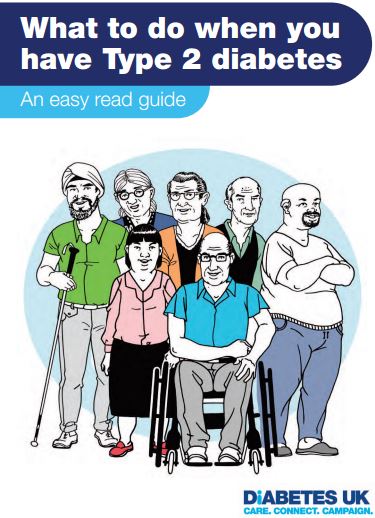
Normally of course, we would look at the results of the research when published, but part of this process has been for the researchers, with partners from Change UK to produce an updated easy read booklet on what to do if you are diagnosed with type 2 diabetes and we thought it would be helpful to draw attention to this booklet and provide some links to other useful resources.
The booket covers information on
- What diabetes is and the difference between Type 1 and Type 2
- What to expect at the Doctor’s appointment to discuss diabetes
- What hep to expect from a dietitian
- Information on blood sugar levels
- Symptoms of high and low blood sugar levels
- Medications
- Diet and exercise
- Insulin and insulin injections
- The importance of regular meals
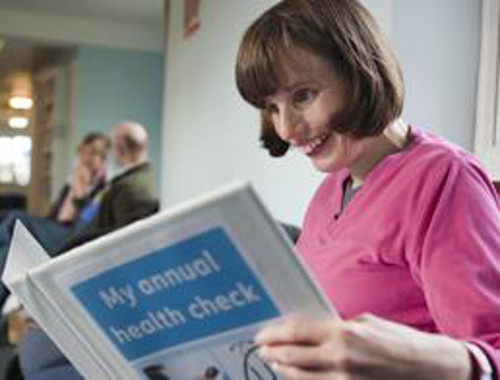
- The importance of regular medical check-ups
Tracy Kelly, Head of Care at Diabetes UK, said about the publication of the booklet:
We are pleased that the booklet is current and is tailored for people who have learning disabilities to use as part of their standard diabetes care. We hope it will provide them with the information they need to manage their condition well.”
Dr Amy Russell, OK Diabetes Research Co-ordinator, said:
The people with learning disabilities we interviewed struggled to understand technical language and detailed explanations about things like their pancreas. They wanted a physical booklet they could hold on to that told them what diabetes meant to them in their lives in clear terms.”
Links
What to do when you have Type 2 diabetes: An easy read guide, Diabetes UK
Easy Health Videos on diabetes
A film about diabetes by Speakup Advocacy
Reference
Emerson E, Baines S, Allerton L & Welch V (2012) Health Inequalities and People with Learning Disabilities in the UK. Durham: Improving Health and Lives Learning Disabilities Observatory.




Jonathan Beebee
11 years agoJen Shrek
11 years agoMaureen Phillip
11 years agoCheryl Hillis
11 years agoSam Tomlinson
11 years agoIan Penfold
11 years agoMary Reidy
11 years agoLinda Turner
11 years agoDoreen Rowlandson
11 years agoDCHLib
11 years agohealthybrum
11 years agoArfanSamina
11 years agolindapedia
11 years agoManchesterCCGs
11 years agoDoreen Rowlandson
11 years agoMary Reidy
11 years agoLinda Turner
11 years agoresearchmh
11 years agoDebDMA
11 years agoSJaneBernal
11 years agoMark_Sheldon
11 years agolockgj
11 years agoSamantha Tomlinson
11 years agoIan Penfold
11 years agoLDMacnews
11 years agoHHLibService
11 years agohelpdiabeates
11 years agoJonathan Beebee
11 years agoJen Shrek
11 years agoMaureen Phillip
11 years agoCheryl Hillis
11 years agoitsmydiabetes
11 years agoSarah Duffin
11 years agoMaddenTrevor
11 years agoLDPForumCSR
11 years ago7worldscollide
11 years ago