

For many staff on mental health wards, the introduction of a new wellbeing initiative can be met with a familiar reaction: “oh no, not another new thing!”. But an important question remains, do these interventions actually work?
A well-intentioned ward manager notices the team is struggling with fatigue and stress and introduces a peer-review programme where staff assess each other’s practice against agreed standards. Six months later, burnout scores have gone up, not down. Some staff feel scrutinised, others are overwhelmed by the preparatory work. The programme is quietly discontinued. This is not hypothetical. It is one of the real findings of a new systematic review by Maddox and colleagues (2026), which examined interventions designed to reduce staff empathy-based stress and improve compassionate care on mental health wards.
Mental health ward staff work in some of the most challenging environments in healthcare, regularly managing trauma, self-harm, violence and the ethical complexities of compulsory treatment. Around 40% of mental health professionals experience emotional exhaustion (O’Connor et al. 2018).
Staff wellbeing is closely linked to patient care in mental health services, with poorer staff wellbeing and higher burnout associated with reduced quality and safety of care (Johnson et al., 2018).
Staff wellbeing has recently been embedded within national regulatory and workforce priorities, including the Care Quality Commission’s “well-led” framework (Care Quality Commission, 2024) and the NHS Long Term Workforce Plan (NHS England, 2023).
Despite this emphasis, it remains unclear what actually works and whether some well-intentioned interventions might have unintended consequences.
This review attempts to address that gap.

Mental health ward staff work in challenging environments with poor wellbeing associated with poorer care.
Methods
The authors conducted a systematic review of interventions delivered within mental health ward settings to either reduce empathy-based stress (including burnout, secondary trauma and compassion fatigue) or improve compassionate care.
Six major databases were searched, including MedLine, PsychInfo, CINAHL and Cochrane alongside grey literature from NHS England, NICE and the King’s Fund. There were no language or date restrictions. Searches were conducted in 2023 and were updated in September 2024.
Only studies that compared an intervention to a control group were included, to ensure any changes were attributable to the intervention.
The review used what is known as a convergent meta-integration design, synthesising programme theory papers with randomised controlled trials (RCTs), non-randomised studies, process evaluations and one economic evaluation. Quality was assessed using appropriate tools: ROB2 for RCTs, ROBINS-I for non-randomised studies, and the Drummond checklist for economic evaluation. Two independent reviewers conducted quality assessment throughout.
A Patient and Public Involvement Research Advisory Group (PPIRAG), consisting of eight members including ward staff, managers, service users and carers, contributed to informing the review scope and were involved throughout the review process.

Only interventions tested with a control group were included in the review.
Results
Eighteen study reports describing eleven interventions were included, mostly from Western countries (UK, Canada, USA, Norway, Australia, Switzerland, Sweden and Spain). All included studies were published between 1976 and 2019, despite searches being updated in 2024, highlighting a lack of recent evidence.
Interventions were clustered into five groups:
- Staff skills training, including mindfulness, and therapeutic skills
- Changes to ward approach, and continuity models
- Professional peer review / support networks
- Participatory action research, focused on therapeutic relationships
- Environmental redesign.
Evidence of benefit was mixed. Four interventions showed some improvement in compassionate care outcomes, and one skills-training intervention reported reductions across Maslach Burnout Inventory subscales, but effect sizes were rarely reported and where available were small (e.g., standardised effect size 0.18 for therapeutic group training). Economic evidence was limited and no intervention demonstrated convincing cost-benefit.
Two interventions were associated with unintended harm of increased burnout. A peer-led quality improvement network, linked to feelings of scrutiny and additional preparatory workload. Relocation to rebuilt wards, associated with increased burnout, with authors highlighting design-related unintended consequences and increased staff isolation.
Process data, from four studies, suggested four factors that improved implementation and acceptability:
- Adequate organisational resources and infrastructure
- Staff readiness for change
- Clear roles and inter-team relationships
- Flexibility, allowing staff agency in how interventions were delivered.
All were multi-level, focused on individual, interpersonal and community levels more often than leadership, organisational or policy levels. All the interventions aimed to increase staff resources e.g. skills, support, or improved environments. None explicitly aimed to reduce job demands, such as workload, administrative burden, or staffing pressures. This is a notable omission, given the emphasis on the balance of interventions between demands and available resources in burnout theory (Bakker & Demerouti, 2007).
Overall confidence is limited due to small samples, heterogeneous outcomes, and moderate-to-high risk of bias across many included studies.

None of the interventions aimed to reduce workload burden.
Conclusions
This systematic review demonstrated that interventions are currently being offered without a clear evidence base or guiding model, and that they risk potentially harming staff.
The authors propose that future interventions should be multi-level, co-produced with staff, guided by clear logic models, and should address both job demands and resources, not just one side of the equation.
Strengths and limitations
This systematic review has several strengths. The authors used comprehensive database searches alongside grey literature, with eligibility guided by PICOs, and assessed study quality using appropriate tools (ROB2 for RCTs, ROBINS I for non-randomised studies, and Drummond for the single economic evaluation). The use of meta-integration also allows for a more nuanced understanding of both effectiveness and implementation.
Whilst restricting included studies to controlled evaluations can improve confidence that observed changes are attributable to the intervention, it comes at a cost, resulting in only 18 reports (11 interventions) being eligible for inclusion. More importantly, it excludes a substantial body of qualitative and implementation research that could help explain why interventions succeed or fail. Given the limited and often weak process data within the included studies, this creates a notable gap in understanding mechanisms of change.
The evidence base identified was also methodologically weak. RCTs had at least some concerns, with some noted as having high risk of bias, while non-randomised studies ranged from moderate to serious risk of bias, so conclusions about effectiveness remain tentative.
Intervention mechanisms were frequently insufficiently described, and clear logic models were generally absent, limiting their applicability to routine ward settings. In addition, fidelity was rarely assessed, making it difficult to distinguish between ineffective interventions and poor implementation.
Included studies were published between 1976 and 2019, which raises questions about relevance to contemporary inpatient care, particularly in post pandemic ward contexts. Outcomes for ‘compassionate care’ were inconsistently defined and measured, limiting comparability across studies. Economic effects were also poorly evaluated. One planned database (ASSIA) was inaccessible, which may have reduced search completeness.
The review benefitted from ongoing PPIRAG involvement, including staff, service users and carers, but the paper provides limited detail on how this engagement shaped key analytic choices or conclusions, which slightly limits transparency.
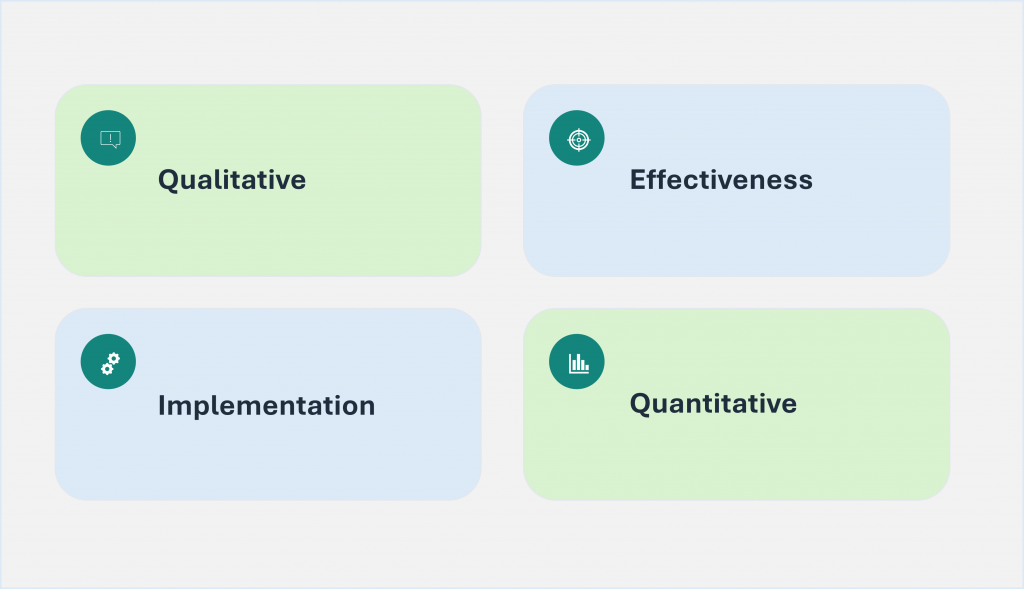
The review focuses on quantitative evidence, which has benefits, but means it misses data on implementation factors.
Implications for practice
Overall, the review is methodologically strong, but the underlying evidence base is too limited and low quality to support confident recommendations about which interventions to implement. At the same time it raises several important considerations for mental health inpatient care.
Firstly, it challenges the assumption that staff wellbeing interventions are inherently beneficial. The fact that some interventions may increase burnout highlights the need to approach implementation with caution. These interventions should not be seen as low‑risk additions, but as changes that can meaningfully affect staff experience, for better or worse.
Secondly, the findings reinforce the importance of how interventions are introduced and experienced by staff. Where interventions were perceived as imposed, overly burdensome, or disconnected from day‑to‑day realities, they were less acceptable and sometimes harmful. In contrast, those that allowed flexibility, local adaptation, and staff involvement were better received by staff. This points to a clear message, interventions need to feel relevant, manageable, and owned by the teams delivering them.
Thirdly, there is a notable gap in the types of interventions being implemented. The focus has largely been on improving staff skills or resilience, with little attention to reducing the underlying pressures staff face. In high‑acuity ward environments, where workload, staffing pressures and organisational strain are key drivers of burnout, this represents a significant limitation. Supporting staff to cope is important but it cannot substitute for addressing the demands placed upon them.
Finally, the review highlights the importance of organisational context. Factors such as leadership support, clear roles, adequate resources, and opportunities for supervision influenced both implementation and outcomes. This suggests that the success of any intervention is likely to depend as much on the surrounding system as on the intervention itself.
In addition to practice considerations, the authors made nine research recommendations. These included: using logic models and fidelity checks; developing co-produced multi-level interventions; considering ‘simple’ psychoeducation-based approaches; monitoring diversity to ensure equity; and always including adequate controls in evaluations.
The authors went on to make two policy recommendations, focusing on monitoring for unintended harms and delivering locally tailored, co-produced interventions with clear communication and manageable workloads, although these remain at high level with feasibility in clinical practice to be established.
Overall, the findings suggest that improving staff wellbeing in inpatient mental health settings is unlikely to be achieved through isolated interventions alone. Instead, it requires approaches that are locally meaningful, system‑aware, and attentive to both the demands placed on staff and the resources available to them.

This review challenges the assumption that staff interventions are inherently helpful.
Statement of interests
Phil Baldry has no conflicts of interest to declare in relation to this blog. This blog was reviewed by AI (Claude, Anthropic) for readability and subsequently checked by the author to ensure accuracy and clinical relevance.
Edited by
Simon Bradstreet.
Links
Primary paper
Maddox L, Teoh K, Baldoza S, Clarkson L, Evans R. (2026) Interventions to reduce empathy-based stress and enhance compassionate care in mental health wards: a systematic review. BMC Health Services Research 26:117.
Other references
Bakker A.B. and Demerouti E. (2007) The Job Demands–Resources model: State of the art. Journal of Managerial Psychology, 22(3), pp. 309–328. https://peopleful.io/Job-Demands-Resource-Model-research.pdf
Care Quality Commission (2024) Well-led: Single assessment framework. Available at: https://www.cqc.org.uk/guidance-regulation/providers/assessment/single-assessment-framework/well-led
Johnson J, Hall LH, Berzins K, Baker J, Melling K, Thompson C. (2018) Mental healthcare staff well-being and burnout: A narrative review of trends, causes, implications, and recommendations for future interventions. International Journal of Mental Health Nursing 27(1) 20-32. https://doi.org/10.1111/inm.12416
NHS England (2023) NHS Long Term Workforce Plan. Available at: https://www.england.nhs.uk/publication/nhs-long-term-workforce-plan/
O’Connor K, Neff DM, Pitman S. (2018) Burnout in mental health professionals: a systematic review and meta-analysis of prevalence and determinants. European Psychiatry 53:74–99. https://www.cambridge.org/core/journals/european-psychiatry/article/burnout-in-mental-health-professionals-a-systematic-review-and-metaanalysis-of-prevalence-and-determinants/8DE6B29F7AD65E2442726CA8D1F7F876
Photo credits
- Photo by Aarón Blanco Tejedor on Unsplash
- Photo by reyna on Unsplash
- Photo by Wesley Tingey on Unsplash
- Photo by GR Stocks on Unsplash