
The Mental Elf

Smoking cessation for people with severe mental illness

Individuals with mental health problems are more likely to smoke than the rest of the general population (Pasco et al, 2009). Smoking rates in those with severe mental health disorders such as bipolar disorder and schizophrenia are estimated to be between 58% and 90% (McDonald, 2000).

Evidence suggests that individuals with severe mental health problems are more likely to start smoking earlier (Weiser et al. 2004), to smoke more intensely (i.e. inhale more deeply) (Williams et al, 2005) and are more likely to become nicotine dependent (Szatkowski and McNeil, 2013) compared to the general population. However, despite these factors those with severe mental health are less likely to receive help to quit smoking (Szatkowski and McNeill, 2013).

Smokers with mental health problems have been shown to be motivated and able to quit smoking when provided with evidence-based support (Lasser et al, 2000). Although, since the introduction of a law in 2008 requiring all mental health services in England to be smoke-free, fewer facilities have offered stop smoking support for those who request it (Ratschen et al, 2011). The National Institute for Health and Care Excellence (NICE) (2013) has recently called for all mental health services to be completely smoke-free and to offer full access to smoking cessation interventions for all individuals using mental health services.

In order to address the need for smoking cessation strategies aimed at those with severe mental health disorders, a recent study (Gilbody et al, 2015) examined the clinical effectiveness and cost-effectiveness of a smoking cessation intervention targeted specifically at those with severe mental ill health. In their pilot study, Simon Gilbody and colleagues aimed to test the feasibility of recruitment and randomisation methods in a Randomised Controlled Trial (RCT) of a bespoke smoking cessation intervention.

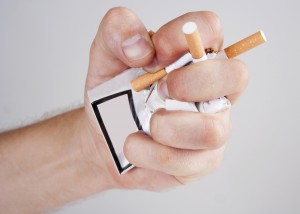
Smoking tobacco CC2 license. Photo: Markus Spiske / raumrot.com
Rates of tobacco smoking are very high in people with severe mental illness.
CC2 license. Photo: Markus Spiske / raumrot.com

Methods 

Recruitment

The Smoking Cessation Intervention for Severe Mental Ill Health (SCIMITAR) Trial recruited participants from NHS primary care and mental health services in the UK.

Inclusion criteria stated that participants should be:

  • Aged 18 and over
  • Diagnosed with a severe mental health disorder (schizophrenia, psychotic illness or bipolar disorder by psychiatric services)
  • Current smokers who are looking to cut down or quit smoking

Exclusion criteria indicated that participants should not be:

  • Pregnant or breastfeeding
  • Non-English speakers
  • Co-morbidly abusing alcohol or drugs
  • Unable to give consent

Randomisation

Participants were randomised using a secure phone randomisation service, to receive either:

  1. Usual care (control) or
  2. Usual care plus a bespoke smoking cessation program (intervention)

Because of the nature of the intervention, group allocation could not be masked from researchers or participants.

Intervention

All participants received usual care, consisting of advice on how to access the full range of smoking cessation services offered by the NHS. Participants were also given the number for a free telephone helpline service (NHS Quitline) offering smoking cessation advice.

Participants allocated to receive the bespoke smoking cessation program received usual care plus an individually tailored service (consisting of behavioural support and pharmacotherapy), delivered by a trained mental health practitioner. The program met NICE guidelines for smoking cessation, but was altered to cater for those with severe mental health problems.

Adaptations included:

  • Several assessments before setting a quit date
  • Recognition of the reasons for smoking in context of the mental health disorder
  • Home visits to provide face-to-face support after unsuccessful quit attempts or relapse
  • Informing the family doctor and mental health specialist of successful quit attempts (giving the opportunity to review psychiatric medication and metabolic changes)

Measures and outcomes

Baseline measures were taken and follow-up assessments were carried out at 1-month, 6-month and 12-months.

  • The primary outcome was smoking status at 12 months (verified by CO <10 ppm)
  • The secondary outcomes were self-reported cigarette use, nicotine dependency, motivation to quit, patient health and changes from baseline in Body Mass Index (BMI), and drug misuse

Results

Participants

  • 51 participants were randomly allocated to the usual care only (control) group and 46 were assigned to the bespoke program (intervention) group. Groups were well matched for sociodemographic and prognostic factors
  • Participants had a median age of 47, smoked for an average of 27 years and smoked on average 25 cigarettes per day
  • None of the participants in the usual care condition accessed NHS cessation services that were advised

Primary outcome

  • At 12 months, 69% of participants in the usual care group and 72% of participants assigned to the intervention group provided a CO measurement or self-reported their smoking status
  • At 12 months, 23% of participants allocated to the control group had stopped smoking compared with 36% of people assigned to the intervention group
  • The likelihood of stopping smoking in the intervention was three times higher than in the usual care group (odds ratio 2·9, 95% CI 0·8 to 10·5)

Secondary outcomes

Descriptive data indicated that:

  • Cigarette use dropped at 6-months for both groups, but increased again at 12 months
  • Both groups showed a decrease in nicotine dependency at 12-months
  • Both groups showed a small increase in motivation to stop smoking at 12-months
  • BMI did not change from baseline in either group
  • Drug misuse at 12-months was reported by 6% of participants in the intervention group and 12% of participants in the usual care group
  • Physical health scores increased at 6-months for both groups, indicating improved health. At 12-months both groups showed a reduction in health scores, with the usual care group reporting scores similar to those at baseline
  • Mental health scores decreased at 6-months for the intervention group, indicating poorer mental health. At 12-months, scores for the intervention group were lower than at baseline. For the usual care group, scores indicated improved health at 1-month but a reduction at 12-months that was slightly higher than at baseline.

The likelihood of stopping smoking in the intervention was three times higher than in the usual care group.

Conclusions

Results demonstrate that bespoke smoking cessation for smokers with severe mental health disorders can be implemented and may be an effective intervention for increasing the likelihood of quitting smoking.

The study also indicates the promise of bespoke interventions for improving engagement with smoking cessation in those with mental health problems. This study is the first of its kind to report on a smoking cessation intervention that accommodates the needs of individuals with severe mental ill health. The intervention trialled here represents an adapted and enhanced version of evidence-based NHS smoking cessation strategies, delivered by skilled mental health practitioners.

The findings presented here indicate the feasibility of recruiting and randomising individuals with severe mental health problems to a smoking cessation RCT. At this stage, these data should not be taken as evidence for the effectiveness of bespoke smoking cessation for individuals with severe mental health disorders as the study was not designed to be powered to show clinical effectiveness or cost-effectiveness. However, the findings do suggest that a full RCT is suitable and relevant to examine the efficacy and safety of a bespoke intervention program for smokers with severe mental problems.
These are promising findings for people with severe mental illness who wish to quit smoking.

Limitations

  • The study did not report details of CO verification of smoking cessation at the 1-month and 6 month time-points. This information is important and of interest in mapping the trajectory of cessation following the intervention. Future studies should make biochemical verification of abstinence a methodological priority
  • Secondary outcome measures were interpreted using descriptive methods (e.g. means, % etc). Further analysis of time-point data for nicotine dependency and cigarette use would have enabled greater understanding of the nature and strength of differences in the smoking-related behaviours between intervention groups
  • Given the pilot nature of the study, there are limited details of the bespoke intervention provided (i.e. what type of behavioural support and pharmacotherapy was offered). It would be advantageous for future studies to examine the optimum components of a bespoke smoking intervention.

Summary

This paper is the first to present a highly promising bespoke intervention for smokers with severe mental health disorders. Further research is now required to examine both bespoke programs and general smoking cessation interventions for those with mental ill health to determine the most clinically effective and cost-effective form of treatment.

The SCIMITAR+ follow on trial is already underway. (Like we need an excuse to feature a Rusty Cheeked Scimitar Babbler).
The SCIMITAR+ RCT is already underway
(Like we need an excuse to feature a Rusty Cheeked Scimitar Babbler).

Links

Primary paper

Gilbody S, Peckham E, Man MS, et al (2015) Bespoke smoking cessation for people with severe mental ill health (SCIMITAR): A pilot randomised controlled trial. The Lancet [Abstract]

Other references

Pasco JA, Williams LJ, Jacka FN, et al. (2008) Tobacco smoking as a risk factor for a major depressive disorder: a population-based study. The British Journal of Psychiatry: 193: 322-326.

Szatkowski L, McNeill A. (2013) The delivery of smoking cessation interventions to primary care patients with mental health problems. Addiction: 108: 1487–94. [PubMed abstract]

Add a comment
  • Smoking cessation for people with severe mental illness? SCIMITAR

    Smoking cessation for people with severe mental illness? SCIMITAR

    7 years ago
    […] (SMI) neither can, nor indeed wish, to stop smoking (Gilbody et al, 2019). Sally Adams covered the SCIMITAR pilot trial results back in 2015, but read on to find what the full study has today […]
  • JRepique

    JRepique

    10 years ago
    Cessation of #smoking for people with severe #mentalillness https://t.co/3icotthprL via @mental_elf #mentalhealth #RCT #research
  • McClendonCenter

    McClendonCenter

    10 years ago
    Smoking cessation for people with severe mental illness https://t.co/r2M5N0U3vu via @sharethis
  • mazenger81

    mazenger81

    10 years ago
    Smoking cessation for people with severe mental illness https://t.co/Uk3UXF8OOe via @sharethis
  • DefyingOddsBook

    DefyingOddsBook

    10 years ago
    Smoking cessation for people with severe mental illness http://t.co/yAf8CrKr4e
  • eve_potts

    eve_potts

    10 years ago
    RT @ian_hamilton_: Smoking cessation for people with severe mental illness https://t.co/d9hgIg58IM via @sharethis
  • ian_hamilton_

    ian_hamilton_

    10 years ago
    Smoking cessation for people with severe mental illness https://t.co/d9hgIg58IM via @sharethis
  • SanteTheatre

    SanteTheatre

    10 years ago
    RT @Mental_Elf: Is #SCIMITAR a highly promising bespoke intervention for smokers with bipolar disorder, psychosis or schizophrenia? http://…
  • Newrofeedback

    Newrofeedback

    10 years ago
    http://t.co/qQBODBVknU Interesantes conclusiones de un programa de #tabaquismo en grupo de personas con trastorno mental. #tabaco
  • hotla0038

    hotla0038

    10 years ago
    @Mental_Elf thanks for sharing The Mental Elf, have a great Tuesday :) (insight by http://t.co/3AN8xj9reV)
  • DHCFT_OT

    DHCFT_OT

    10 years ago
    RT @Mental_Elf: Don't miss: Smoking cessation for people with severe mental illness http://t.co/bGfmCRPPDi #EBP
  • anandhinagaraj

    anandhinagaraj

    10 years ago
    RT @felly500: "Smoking cessation for people with severe mental illness" http://t.co/Ds6Cc0TBGl
  • FurberA

    FurberA

    10 years ago
    RT @felly500: "Smoking cessation for people with severe mental illness" http://t.co/Ds6Cc0TBGl
  • felly500

    felly500

    10 years ago
    "Smoking cessation for people with severe mental illness" http://t.co/Ds6Cc0TBGl
  • CizCG

    CizCG

    10 years ago
    RT @Mental_Elf: Don't miss: Smoking cessation for people with severe mental illness http://t.co/bGfmCRPPDi #EBP
  • DrGilluley

    DrGilluley

    10 years ago
    RT @Mental_Elf: Don't miss: Smoking cessation for people with severe mental illness http://t.co/bGfmCRPPDi #EBP
  • Stirlingcares

    Stirlingcares

    10 years ago
    RT @Mental_Elf: Don't miss: Smoking cessation for people with severe mental illness http://t.co/bGfmCRPPDi #EBP
  • fatattacknow

    fatattacknow

    10 years ago
    RT @Mental_Elf: Don't miss: Smoking cessation for people with severe mental illness http://t.co/bGfmCRPPDi #EBP
  • MrsManfyDiston

    MrsManfyDiston

    10 years ago
    RT @Mental_Elf: Don't miss: Smoking cessation for people with severe mental illness http://t.co/bGfmCRPPDi #EBP
  • LiesvandenAssum

    LiesvandenAssum

    10 years ago
    “@Mental_Elf: Don't miss: Smoking cessation for people with severe mental illness http://t.co/hEjWj4jP6C #EBP”
  • davey_kevin

    davey_kevin

    10 years ago
    RT @Mental_Elf: Don't miss: Smoking cessation for people with severe mental illness http://t.co/bGfmCRPPDi #EBP
  • NAMIOregon

    NAMIOregon

    10 years ago
    RT @Mental_Elf: Don't miss: Smoking cessation for people with severe mental illness http://t.co/bGfmCRPPDi #EBP
  • DrIanDawe

    DrIanDawe

    10 years ago
    RT @Mental_Elf: Don't miss: Smoking cessation for people with severe mental illness http://t.co/bGfmCRPPDi #EBP
  • Mental_Elf

    Mental_Elf

    10 years ago
    Don't miss: Smoking cessation for people with severe mental illness http://t.co/bGfmCRPPDi #EBP
  • embobkob

    embobkob

    10 years ago
    RT @Mental_Elf: Smoking cessation for people with severe mental illness http://t.co/bGfmCRyeeI
  • tombssimon

    tombssimon

    10 years ago
    RT @Mental_Elf: New blog by @SallyScientist on @TheLancet #SCIMITAR trial, helping people with severe mental illness quit smoking http://t.…
  • Anabel Formosa

    Anabel Formosa

    10 years ago
    Anabel Formosa liked this on Facebook.
  • OliviaMaynard17

    OliviaMaynard17

    10 years ago
    RT @Mental_Elf: New blog by @SallyScientist on @TheLancet #SCIMITAR trial, helping people with severe mental illness quit smoking http://t.…
  • ian_hamilton_

    ian_hamilton_

    10 years ago
    RT @Mental_Elf: Hi @SimonGilbody @MHARG_york Have you spotted the Rusty Cheeked Scimitar Babbler yet? http://t.co/bGfmCRPPDi http://t.co/L1…
  • NeedMoreCourage

    NeedMoreCourage

    10 years ago
    RT @Mental_Elf: New blog by @SallyScientist on @TheLancet #SCIMITAR trial, helping people with severe mental illness quit smoking http://t.…
  • mndsci

    mndsci

    10 years ago
    RT @Mental_Elf: New blog by @SallyScientist on @TheLancet #SCIMITAR trial, helping people with severe mental illness quit smoking http://t.…
  • PhilWardAu

    PhilWardAu

    10 years ago
    RT @Mental_Elf: New blog by @SallyScientist on @TheLancet #SCIMITAR trial, helping people with severe mental illness quit smoking http://t.…
  • SallyScientist

    SallyScientist

    10 years ago
    @marinkestassen @Mental_Elf 2/2 Compared to those allocated to control, perhaps @SimonGilbody could clarify?
  • SallyScientist

    SallyScientist

    10 years ago
    @marinkestassen @Mental_Elf 1/2 I took the OR to be evidence that those allocated to intervention were 3x more likely to stop smoking
  • MegEliz_

    MegEliz_

    10 years ago
    RT @Mental_Elf: New blog by @SallyScientist on @TheLancet #SCIMITAR trial, helping people with severe mental illness quit smoking http://t.…
  • soozaphone

    soozaphone

    10 years ago
    RT @Mental_Elf: New blog by @SallyScientist on @TheLancet #SCIMITAR trial, helping people with severe mental illness quit smoking http://t.…
  • NHFTNHSLibrary

    NHFTNHSLibrary

    10 years ago
    RT @Mental_Elf: New blog by @SallyScientist on @TheLancet #SCIMITAR trial, helping people with severe mental illness quit smoking http://t.…
  • redliz

    redliz

    10 years ago
    @AllenFrancesMD @Mental_Elf don't also forget alcohol many very MI self medicate with it , I used to and it nearly killed me :(
  • Mental_Elf

    Mental_Elf

    10 years ago
    New blog by @SallyScientist on @TheLancet #SCIMITAR trial, helping people with severe mental illness quit smoking http://t.co/bGfmCRPPDi
  • AllenFrancesMD

    AllenFrancesMD

    10 years ago
    Severe mental illness (& meds used for it) biggest cause of intense smoking & short lifespan. Help is essential @Mental_Elf
  • ramh_scotland

    ramh_scotland

    10 years ago
    RT @Mental_Elf: Is #SCIMITAR a highly promising bespoke intervention for smokers with bipolar disorder, psychosis or schizophrenia? http://…
  • HHLibService

    HHLibService

    10 years ago
    Smoking cessation for people with severe mental illness http://t.co/LJBV1Lxjl0
  • Hifistud

    Hifistud

    10 years ago
    @SallyScientist @Mental_Elf the maths is still all bent out of shape. Frankly, given worsening MH, needs a lot more work to justify.
  • Hifistud

    Hifistud

    10 years ago
    @SallyScientist @Mental_Elf 8 in control, out of 51. 12 in intervention, out of 46. At 90% CI (95 is bad) not statistically significant.
  • Hifistud

    Hifistud

    10 years ago
    @SallyScientist @Mental_Elf bugger... Groups transposed in order in abstract, ARGH! Either way, still not a threefold better chance.
  • jackie_curtisAU

    jackie_curtisAU

    10 years ago
    RT @Mental_Elf: Is #SCIMITAR a highly promising bespoke intervention for smokers with bipolar disorder, psychosis or schizophrenia? http://…
  • Hifistud

    Hifistud

    10 years ago
    @SallyScientist @Mental_Elf that's still wrong! 12 out of 51 and 8 out of 46 - no statistically significant difference.
  • SallyScientist

    SallyScientist

    10 years ago
    @Hifistud @Mental_Elf 2/2 Changing the result to (odds ratio 2·5, 95% CI 0·8–7·7) page 4 http://t.co/fh49IHxCx8
  • SallyScientist

    SallyScientist

    10 years ago
    @Hifistud @Mental_Elf 1/2 Assuming the missing individuals are still smoking; 51 in control and 12 in intervention had stopped
  • NeedMoreCourage

    NeedMoreCourage

    10 years ago
    RT @Mental_Elf: Is #SCIMITAR a highly promising bespoke intervention for smokers with bipolar disorder, psychosis or schizophrenia? http://…
  • playlablondon

    playlablondon

    10 years ago
    Study involving a smoking cessation course for people w/ severe #mentalhealth problems looks promising! @Mental_Elf http://t.co/nScRx7LnC8
  • BigMadTweeter

    BigMadTweeter

    10 years ago
    RT @Mental_Elf: Smoking cessation for people with severe #mentalillness http://t.co/TTEAhZe96B
  • QualitasRes

    QualitasRes

    10 years ago
    Smoking cessation for people with severe mental illness https://t.co/aYFkLd3Wmw via @sharethis
  • CDukes66

    CDukes66

    10 years ago
    RT @Mental_Elf: Is #SCIMITAR a highly promising bespoke intervention for smokers with bipolar disorder, psychosis or schizophrenia? http://…
  • TheLancetPsych

    TheLancetPsych

    10 years ago
    RT @Mental_Elf: Is #SCIMITAR a highly promising bespoke intervention for smokers with bipolar disorder, psychosis or schizophrenia? http://…
  • Mental_Elf

    Mental_Elf

    10 years ago
    Is #SCIMITAR a highly promising bespoke intervention for smokers with bipolar disorder, psychosis or schizophrenia? http://t.co/bGfmCRPPDi
  • marinkestassen

    marinkestassen

    10 years ago
    @Mental_Elf the odds ratio is misinterpreted as relative risk
  • Hifistud

    Hifistud

    10 years ago
    @Mental_Elf also the "three times more likely" assessment is not correct. Those lost to follow up have to be assumed not to have quit.
  • Hifistud

    Hifistud

    10 years ago
    .@Mental_Elf interesting that the mental health scores were lower - ie worse mental health - in the intervention group. That says something.
  • SimonGilbody

    SimonGilbody

    10 years ago
    RT @Mental_Elf: Hi @SimonGilbody @MHARG_york Have you spotted the Rusty Cheeked Scimitar Babbler yet? http://t.co/bGfmCRPPDi http://t.co/L1…
  • Fleclj

    Fleclj

    10 years ago
    RT @Mental_Elf: Hi @SimonGilbody @MHARG_york Have you spotted the Rusty Cheeked Scimitar Babbler yet? http://t.co/bGfmCRPPDi http://t.co/L1…
  • MHARG_york

    MHARG_york

    10 years ago
    RT @Mental_Elf: Hi @SimonGilbody @MHARG_york Have you spotted the Rusty Cheeked Scimitar Babbler yet? http://t.co/bGfmCRPPDi http://t.co/L1…
  • Lucy Riddett

    Lucy Riddett

    10 years ago
    Lucy Riddett liked this on Facebook.
  • Mental_Elf

    Mental_Elf

    10 years ago
    @SallyScientist on the SCIMITAR RCT, which investigates smoking cessation for people with severe mental ill health http://t.co/bGfmCRPPDi
  • NeedMoreCourage

    NeedMoreCourage

    10 years ago
    RT @Mental_Elf: Hi @SimonGilbody @MHARG_york Have you spotted the Rusty Cheeked Scimitar Babbler yet? http://t.co/bGfmCRPPDi http://t.co/L1…
  • clivestone22

    clivestone22

    10 years ago
    RT @Mental_Elf: Smoking cessation for people with severe mental illness http://t.co/bGfmCRyeeI
  • Mental_Elf

    Mental_Elf

    10 years ago
    Hi @SimonGilbody @MHARG_york Have you spotted the Rusty Cheeked Scimitar Babbler yet? http://t.co/bGfmCRPPDi http://t.co/L1Eis7GV0P
  • iVivekMisra

    iVivekMisra

    10 years ago
    Smoking cessation for people with severe mental illness http://t.co/YyXNKZIReJ #MentalHealth http://t.co/Y5yaz74WFS
  • DiODoherty

    DiODoherty

    10 years ago
    RT @Mental_Elf: Smoking cessation for people with severe mental illness http://t.co/bGfmCRyeeI
  • cygnetceo

    cygnetceo

    10 years ago
    RT @Mental_Elf: Smoking cessation for people with severe mental illness http://t.co/bGfmCRyeeI