

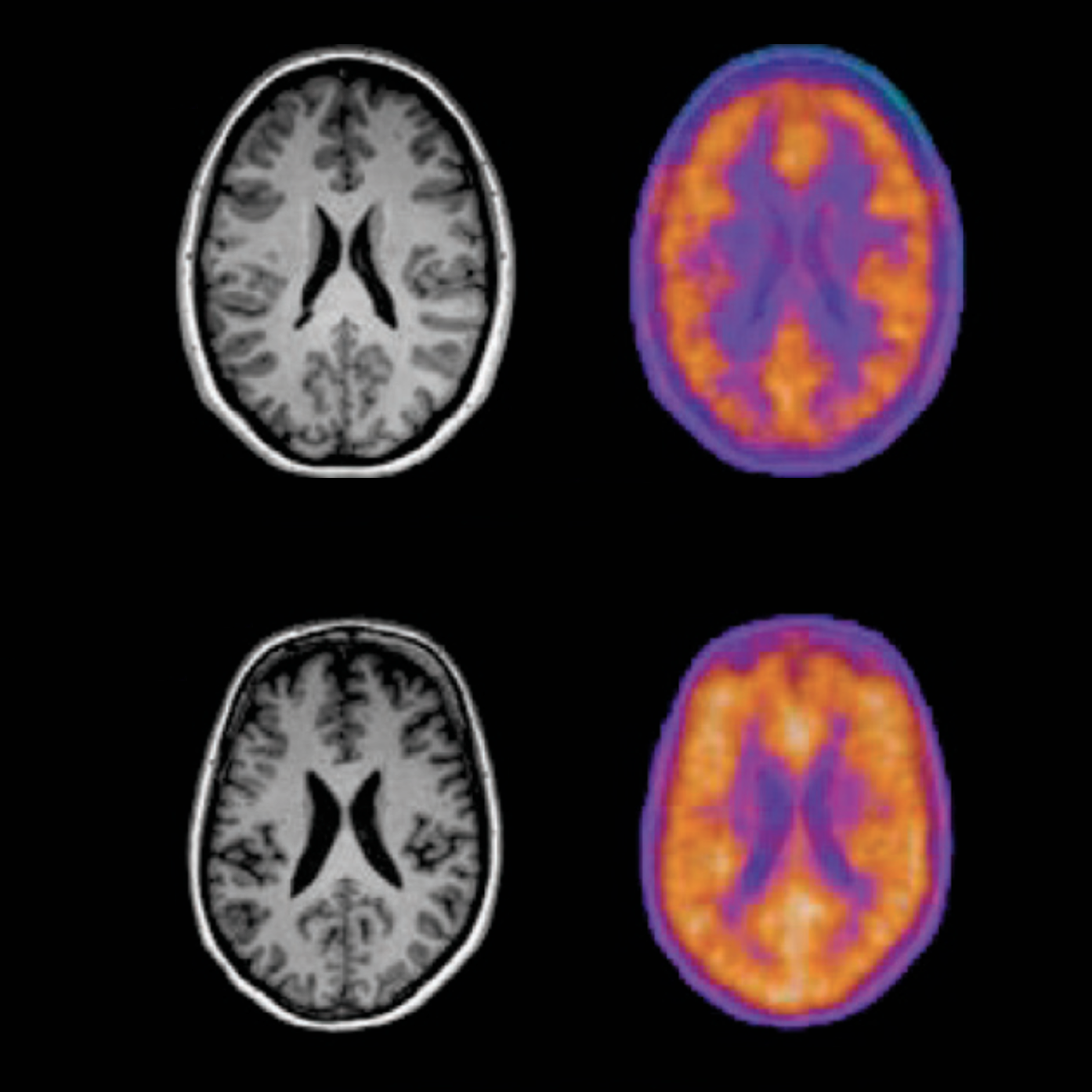

The paper reviews the evidence for increased microglial activity in schizophrenia, such as post-mortem evidence and smaller studies including negative studies.
Microglial cells, or microglia, are the resident macrophages of the Central Nervous System. Macrophages are immune system white cells that “eat” foreign material such as bacteria and other material such as cancer cells, as well as interact with the rest of the immune system, amongst many other functions. They get called different names depending on where they are found in the body (e.g. Kupfer cells in the liver). They are also a lot more active and mobile than previously thought, as well as possibly having a role in pruning neuronal synapses (the junctions between nerve cells) (Hughes, 2012).
Methods
It’s a very complicated method used by the authors. I can’t tell a voxel from a Vauxhall so struggled to follow the more technical aspects. Essentially they used a 2nd generation radio ligand [11C] PBR28 which specifically binds to 18kD translocator-protein (TSPO), which is found on microglia. This is a radioactive molecule which binds to TSPO and thus “labels” a microglial cell.
When the subject has a PET scan after being injected with [11C] PBR28, a brighter signal is detected in areas with more microglia. To identify where these areas are, an MRI brain scan is also performed separately for each subject to generate an accurate picture of that individual’s brain. The PET signal is overlaid on the MRI scan so that areas of brightness can be correlated with areas of the brain.
Amongst the problems the authors faced was that genetics strongly affected how strongly [11C] PBR28 radio ligand bound to TPSO so the genetically mediated “affinity” status (high, low or mixed) was measured. Other problems included the high ratio of “noise” to “signal” that is the final end-result, was to a degree, unreliable.
Two separate cohorts were measured:
- 14 Ultra High Risk of Psychosis cases v 14 Controls
- 14 Schizophrenia cases v Controls
Each case was matched for age with a control. The two cohorts were analysed separately.
All participants were given a Beck’s Depression Inventory (BDI). Ultra High Risk of Psychosis participants were assessed with the Comprehensive Assessment of the At Risk Mental State (CAARMS). Participants with a diagnosis of schizophrenia were assessed with the Positive and Negative Syndrome Scale (PANNS).
Reasonable exclusion criteria were applied such as no recent anti-inflammatory medication or no recent benzodiazepines. Two of the Ultra High Risk of Psychosis cases had exposure to Citalopram antidepressant and the schizophrenia patients were on antipsychotics.
Adjustments were made for age (as it affected microglial activity) and for affinity status and medication status (in Ultra High Risk of Psychosis cases). Particular interest was paid to the frontal and temporal lobe regions, but 2 areas of the brain were used as “control regions” (brain stem and cerebellum).
Results
For Ultra High Risk of Psychosis (UHRP) cases v controls
- Total grey matter UHRP had higher microglial activity (Cohen’s D= 1.244, i.e. a large effect size) p=0.004
- Frontal grey matter UHRP had higher microglial activity (Cohen’s D =0.894, i.e. a large effect size p=0.03). This effect persisted taking into account Citalopram exposure
- Temporal lobe grey matter UHRP had higher microglial activity (Cohen’s D= 0.829, i.e. a large effect size) p=0.047, but significance of effect lost after taking into account Citalopram exposure
- No significant differences in control regions
For schizophrenia (SCZ) cases v controls
- Total grey matter SCZ had higher microglial activity (Cohen’s D= 1.769, i.e. a large effect size) p<0.001
- Frontal grey matter SCZ had higher microglial activity (Cohen’s D= 1.245, i.e. a large effect size) p=0.005
- Temporal grey matter SCZ had higher microglial activity (Cohen’s D= 1.430, i.e. a large effect size) p=0.001
- No significant differences in control regions, but brain stem came close at p=0.088
No correlation was found between BDI scores and microglial activity or between PANNS scores and microglia in participants with schizophrenia.
There was a significant correlation between CAARMS score and microglial activity (r=0.730, p=0.01).

Strengths and limitations
- Small study
- Took into account individual affinity for the radio ligand
- Ultra High Risk of Psychosis group were antipsychotic free and mostly had limited exposure to psychotropic medications
- Unable to control for antipsychotic exposure in participants with schizophrenia, though the paper suggests this is likely to reduce microglial activity, i.e. reduce the difference between control participants and participants with schizophrenia
- Problem with high “noise” to “signal” ratio means less confidence with results, but large effect sizes showing increased microglial activity mitigates this uncertainty
- CAARMS score showed correlation with increased microglial activity, but PANNS didn’t, meaning uncertain relationship between psychotic symptoms and microglial activity
- Possible progressive relationship of increased microglial activity in Ultra High Risk of Psychosis, then further increased still in schizophrenia
- No 95% confidence intervals for effect sizes to help judge likely range of “true” value
What does this all mean?
It’s a preliminary study that indicates there may be increased microglial activity in people with Ultra High Risk of Psychosis or schizophrenia. Larger studies including unmedicated first episode of schizophrenia participants should be performed.
If the finding does prove to be true what are the implications?
It would need to be established if this happens just in psychosis (or types of psychosis) or happens generally in mental health problems. We would also like to find out the relationship between microglial activity and the psychosis. Is it a cause of psychosis or a reaction to a cause?
If we intervene to reduce (or increase) microglial activity, what effect does it have on the outcomes for psychosis, i.e. is it a good target for an intervention? It should be noted that if increased microglial activity is a reaction to a process causing psychosis, this does not mean the cause is necessarily biological. We may yet find out that psychosocial causes affect the brain to increase inflammation including microglial activity. However, this does add to a large body of evidence that brain processes are affected in people with schizophrenia.

Links
Primary paper
Bloomfield PS, Selvaraj S, Veronese M, Rizzo G, Bertoldo A, Owen DR, Bloomfield MAP, Bonoldi I, Kalk N, Turkheimer F, McGuire P, de Paola V, Howes OD. (2015) Microglial Activity in People at Ultra High Risk of Psychosis and in Schizophrenia: An [11C]PBR28 PET Brain Imaging Study. American Journal of Psychiatry 2015 http://dx.doi.org/10.1176/appi.ajp.2015.14101358
Other references
Hughes V. (2012) Microglia The Constant Gardeners. Nature Volume: 485,Pages: 570–572 Date published: (31 May 2012) DOI: doi:10.1038/485570a





Lubos
10 years agoBrianG61UK
10 years agotweet_al
10 years agoChristina Armstrong-Graham
10 years agoPaulette Howard
10 years agoddxwhiteboard
10 years agoarctichamster
10 years agormelling1
10 years agoIrskdanser
10 years agoMental_Elf
10 years agoPsySocialGold
10 years agoSameiHuda
10 years agoSensoryWise
10 years agoMrKPalmer
10 years agoMental_Elf
10 years agoClinPsy
10 years agoBibSonomy :: url :: Microglial activity in psychosis and schizophrenia
10 years agoPaulWhiteleyPhD
10 years agoSameiHuda
10 years agoMental_Elf
10 years agomark_bolstridge
10 years agoSameiHuda
10 years agomark_bolstridge
10 years agoDrFulli
10 years agomark_bolstridge
10 years agoSameiHuda
10 years agoDrFulli
10 years agoTheLancetPsych
10 years agoSameiHuda
10 years agoMental_Elf
10 years agoRasha Hosni Ali
10 years agoHampshire Healthcare Library Service
10 years agoLucy Riiddett
10 years agoVanessa Pollard
10 years agoPete_Bloomfield
10 years agoPete_Bloomfield
10 years agoPete_Bloomfield
10 years agoCNWLlibraries
10 years agoMental_Elf
10 years agominifeet2
10 years agoSameiHuda
10 years agoClarissaGiebel
10 years agoSameiHuda
10 years agomatthewrbroome
10 years agotompollak
10 years agoBLennox4
10 years agoMental_Elf
10 years agoThe Mental Elf
10 years agoFiona Meikle
10 years agoPoliticalBee
10 years agocginpvd
10 years agobilginhulya
10 years agoabigailwr16
10 years agoHealth_News4U
10 years agofacebookguide2
10 years agoiVivekMisra
10 years ago