



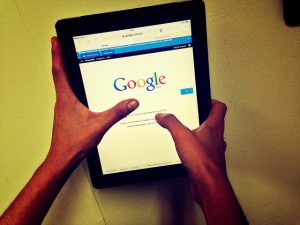
The accessibility of the internet is changing the way people learn about their illness, with “Dr Google” (as some health professionals may derogatorily call it) only a few search terms away. The online health information people find could potentially influence the decisions they make about how they manage their health and the kinds of treatment they want to receive. The authors suggest this may particularly be the case for people with stigmatised conditions.
There is a growing body of research into the experience of specific interventions delivered over the internet, such as computerised therapy, but this study wanted to explore how people with psychosis use the internet to learn about their condition and the implications of this.
Methods
- The study aimed to qualitatively explore the experience and perceptions of people with psychosis using semi-structured interviews
- Participants were recruited through an Early Intervention Service for psychosis, an NHS residential Crisis House and an Acute Day Unit
- 22 people were interviewed for the study. The authors report that one interview was cut short due to the patient experiencing symptoms, but it’s not clear whether this interview was excluded from the analysis (the authors mention that the interview ended before the participant could “discuss the more complex questions”).
Results
- Use of the internet was common, which contrasted to the view that people with psychosis aren’t as digitally active as the general population.
- Few of the participants were aware of specific NHS or mental health charity resources, and none of those with smartphones had used specific mental health apps. Wikipedia and Google were most frequently used.
- Information about medication and medication side-effects was the most common reason for searching online.
- Beyond seeking specific information about diagnoses and treatments, participants also discussed specifically searching for first-hand personal accounts of illness experience. These helped reassure them about their own experience or suggested ways of coping with the condition.
- It appears that those who don’t search online are those who trust the information provided by health professionals. This issue of trust also fed into how people used that information. The authors differentiated “collaborators”, who discussed the information they found with their clinicians, from “parallel universes” who kept these two areas separate and in some cases trusted the online information more than NHS professionals.
- Collaborators felt empowered to discuss the information with their team, whereas those in the “parallel universe” felt that clinicians would disprove of them seeking out information in case it contradicted their expert position.

Conclusions
The authors say:
The results of this study suggest that while some participants find online information helpful and reassuring, for others who do not use this information collaboratively with their mental health team, it can lead to concern and affect health related decisions…
Participants reported that they did not volunteer information about their Internet use for fear of undermining their clinician’s authority…This has repercussions for shared decision-making beyond digital technology and may reflect perceived inequalities of power in the therapeutic relationship.
A partnership approach to online health information-seeking is needed with mental health clinicians encouraging patients, particularly those with a longer psychiatric history and from an older age group, to discuss information they have found online as part of a shared decision-making process.
The study demonstrates the importance of sampling from different groups. In this study, younger people from the Early Intervention Service could be compared to older people from acute care settings and this revealed the “collaborator”/”parallel universe” distinction.
Despite some limitations (listed below), I think the study does a good job of capturing the ambivalent nature of using the net for health information (in contrast to hailing the internet as either the saviour of health literacy or the destroyer of the patient-clinician relationship). Using the net for health information can have both positive and negative effects, for some patients more than others, and this demonstrates why increasingly clinicians need to consider how this digital health seeking may impact their patients and find ways to support them to discuss their concerns.
As part of the NIHR New Media competition, the authors have produced a snazzy YouTube video that summarises the paper:
Limitations
- Interviews were only conducted by one person, described as an academic clinical fellow in psychiatry. It can be helpful to have at least two different people interviewing, so they can compare how the interviews go and check that they pick up similar issues.
- I’m a bit of a fake-it-till-you-make-it qualitative researcher (all my training was quantitative, but the bulk of my work now is qualitative) and have myself fallen foul of reviewers saying that the analysis is more a descriptive narrative report (“One participant said this, Four participants said that”) than an in-depth qualitative analysis. I think this study is perhaps victim to that problem as well. The analysis at times reads like a list of disparate comments about interview contents. The most thematic part is the “collaborator”/“parallel universe” concept but it’s not well articulated how these issues were identified and why those terms were chosen.
- In general there’s not a huge amount of detail about how the analysis was conducted, beyond it being thematic. For example, they could have talked about how the thematic framework was developed, whether they particularly looked out for different views and so on. Or, alternatively, these steps weren’t undertaken, and this may account for the lack of depth in the themes reported.
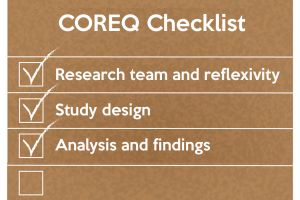
- It’s still an issue of contention as to whether qualitative research can or should adhere to quality reporting frameworks such as COREQ, but in papers which perhaps lack some methodological detail, such as this one, I think it could have been helpful.
Links
Primary paper
Aref-Adib G, O’Hanlon P, Fullarton K, Morant N, Sommerlad A, Johnson S, Osborn D. (2016) A qualitative study of online mental health information seeking behaviour by those with psychosis. BMC Psychiatry 2016 16:232 DOI: 10.1186/s12888-016-0952-0




How do young adults engage with online health information?
9 years agoghibbs1980
9 years agopart_ickle
9 years agoLukiKnowsBest
9 years agoBTSamaritans
9 years agoAnniecoops
9 years agoMental_Elf
9 years agoEmadLilo
9 years agoegosyntonically
9 years agoiVivekMisra
9 years agocynchazen
9 years agoHV_Research_UOM
9 years agoHWWPotts
9 years agoUCLPsychiatry
9 years agoBecsBird
9 years agoin_psych
9 years agoJaneStreetPPAD
9 years agosoniajohnson
9 years agodocgolnar
9 years agoTalentCoop
9 years agoMental_Elf
9 years agoharrodugo
9 years agoCarla_McEnery
9 years agoClinPsyD_Hull
9 years agoVoices4ChoicesT
9 years agojonesir
9 years agojppharm
9 years agomarionpfallon
9 years agoAlanRoulstone
9 years agoMHNEtweets
9 years agoBPSOfficial
9 years agoBassetlawMind
9 years agoMental_Elf
9 years agoSCIE_sco
9 years agoDeborah32044514
9 years agoegosyntonically
9 years agoEMPOWER_EWS
9 years agoDrKateLovett
9 years agocynchazen
9 years agoForeman1David
9 years agohigham_andrea
9 years agoNickyfearon
9 years agoMentalhealthMSc
9 years agorussell50
9 years agovalidconsent
9 years agovalidconsent
9 years agovalidconsent
9 years agodr_know
9 years agosamillaiee
9 years agofday5846
9 years agoLWHmusictherapy
9 years agoMental_Elf
9 years agovalidconsent
9 years agoculshaw_laura
9 years agomins_sarah
9 years agoEGMundy
9 years agoSPHR_UCL
9 years agonursewhitebeard
9 years agoatsommerlad
9 years agoFewingsBj
9 years agoSteveFreemanSFB
9 years agomel_lean
9 years agoneilthomas3182
9 years agobetty_friedrich
9 years agobetty_friedrich
9 years agoPuffinOH
9 years agoPuffinOH
9 years agoPuffinOH
9 years agoMental_Elf
9 years agoAriesStudyUCL
9 years agoAriesStudyUCL
9 years agothinkpsychol
9 years agonatashadlord
9 years agodocgolnar
9 years agodocgolnar
9 years agodocgolnar
9 years agodr_know
9 years agodr_know
9 years agoosborn_ucl
9 years agoSCIE_sco
9 years agoDebsHarmony
9 years agoLPTresearch
9 years agoharryNKansah
9 years agoSallyHardys
9 years agoThe Mental Elf
9 years agovalidconsent
9 years agobath_cbt
9 years agoMental_Elf
9 years agotalktoste
9 years agoRoger Batterbury
9 years agoPaulaHopes1
9 years agotraynors
9 years agostephnicallan
9 years agoian_hamilton_
9 years agoMental_Elf
9 years agoruthfranciszka
9 years agoSciSeekFeed
9 years agoNatashaSmasha
9 years agomatthewrbroome
9 years ago