

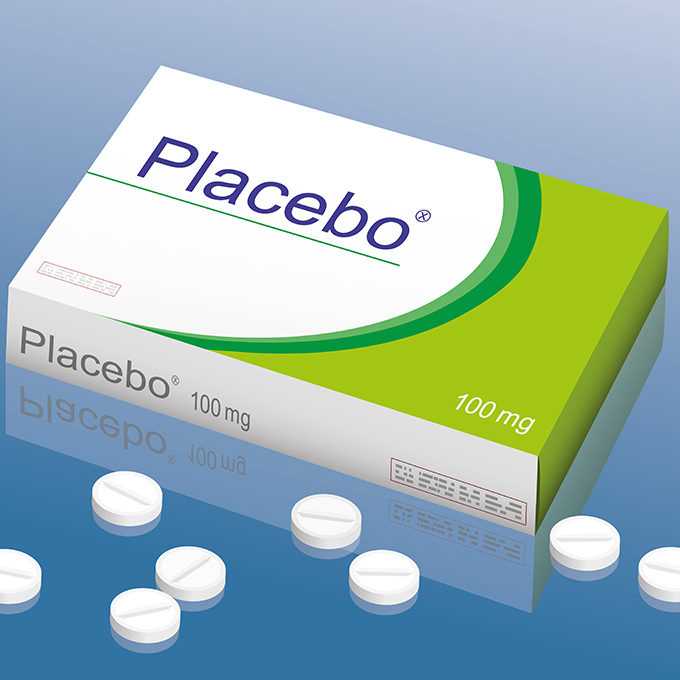

The placebo effect refers to the effect of a simulated or otherwise ineffectual treatment. It has been known about for quite a long time now (since at least 1784) and placebos are often used as control treatments in trials of medicine. The idea here is that the medicine should outperform the placebo (commonly a sugar pill) in order for it to be regarded as efficacious. (If you’re looking for a placebo primer, you should read Ben Goldacre’s piece for The Guardian from March 2008).
A very interesting series of papers and letters has been published in BMC Medicine looking directly at the placebo effect in relation to depression and the use of antidepressant medication.
A group of French psychiatrists conducted what they called a “thought-provoking network meta-analysis” of antidepressant placebos. It certainly is thought-provoking!
Naudet and colleagues (2014) argued in their introduction that some practitioners and researchers consider that most of the antidepressant efficacy reflects the placebo effect. They also noted that antidepressants have been rank ordered in terms of efficacy by Cipriani and colleagues. Naudet et al suggested that if both of these assumptions are correct then it should therefore be possible to rank order placebos, even though the placebos contain the same ingredients – sucrose. They compared the effects of placebos for Fluoxetine and Venlafaxine, two commonly prescribed antidepressants.
Methods
Naudet et al appear to have used appropriate inclusion and exclusion criteria. They reviewed studies involving adults with a diagnosis of “major depressive episode” and they compared the placebo arms of trials of Fluoxetine and Venlafaxine. This resulted in three different types of placebo:
- Fluoxetine placebo
- Venlafaxine placebo
- Venlafaxine/Fluoxetine placebo (where placebo was compared to both Venlafaxine and Fluoxetine)
Trials over a twenty year period were considered. Only reports in English, French and Spanish were included. Published and unpublished studies were sought using appropriate search terms. Studies were assessed for quality and two network meta-analyses were run. The dependent variables used were response and remission. Publication bias was also explored.

Results
Naudet et al found that:
- The three placebos were not significantly different in terms of response or remission
- Antidepressant medications were significantly more efficacious than placebos
- Venlafaxine was more efficacious than Fluoxetine
Discussion
Very interestingly, Naudet et al took a very critical stance on their own results. They noted that their results suggest that choice of placebo is not important, that antidepressants proved superior to placebos and that “sucrose equals sucrose”. That is, placebos perform equally well.
However, they suggested that some of the assumptions on which research in this area are based may be flawed. They further noted that the indirect comparison may have had low statistical power. Most interestingly, they highlighted a substantial difficulty with publication bias. They asserted that “antidepressant research is completely controlled by the pharmaceutical industry” and emphasised that of 33 unpublished studies where they asked for data from pharmaceutical companies, they were denied access to data on 30 occasions. All of the studies included in their analysis were sponsored by pharmaceutical companies. Naudet et al opined that no firm conclusions can be made based on these results.
Alternative perspectives
Naudet et al were relatively critical of their own results but also of those of a previous study conducted by Cipriani and colleagues. Cipriani and Geddes responded in a commentary. They argued that Naudet et al’s attempt to look at the placebo effect in a scientific way was commendable. However, they suggested that Naudet et al were too critical of their own results and that valid conclusions can be drawn from imperfect evidence. They highlighted the other part of the results which suggested that some antidepressants are more efficacious than others. They concluded that placebos should continue to be used as a control in trials of antidepressant medication and that clinicians should combine the most effective medications with some level of therapeutic contact to enhance the effects of treatment.
Naudet and Falissard responded to the commentary by highlighting that their paper was intended to provoke a response. They were in agreement with Cipriani and Geddes that care plays a key role in the treatment of people diagnosed with depression.
To be perfectly honest, I have read all of these papers a few times now and still haven’t made up my mind about what the results actually mean. As a psychologist I have been thinking in particular about how they might apply to my own discipline but have been left scratching my head in confusion.
Naudet et al have definitely succeeded in writing a thought provoking piece. I would encourage Mental Elf readers to delve into this for themselves!
Links
Naudet F, Millet B, Charlier P, Reymann JM, Maria AS, Falissard B. Which placebo to cure depression? A thought-provoking network meta-analysis. BMC Med. 2013 Oct 25;11:230. doi: 10.1186/1741-7015-11-230.
Cipriani A, Geddes JR. Placebo for depression: we need to improve the quality of scientific information but also reject too simplistic approaches or ideological nihilism. BMC Med. 2014 Jun 25;12:105. doi: 10.1186/1741-7015-12-105.
D’Souza U. Mood disorders: Exploring the placebo effect, improving treatment and the promise of pharmacogenetics. BioMed Central blog, 25 Jul 2014.
Goldacre B. All bow before the might of the placebo effect, it is the coolest strangest thing in medicine. Bad Science, 1 Mar 2008.
Goldacre, B. The placebo effect (video). NHS Choices, Jan 2010.
Rutherford BR, Roose SP. A model of placebo response in antidepressant clinical trials. Am J Psychiatry. 2013 Jul 1;170(7):723-33. doi: 10.1176/appi.ajp.2012.12040474.
Naudet F, Falissard B. Does reductio ad absurdum have a place in evidence-based medicine? BMC Med. 2014 Jun 25;12:106. doi: 10.1186/1741-7015-12-106.





Placebo for psychosis
11 years agoDo you value your Mental Elf?
11 years agodavidbriess
11 years agoKAOSLOSOPHY
11 years agohermitsholiday
11 years agoSenta86948228
11 years agoHealthwatchTame
11 years agoGwenELewis
11 years agopjcirca74
11 years agoBigWhiteWall1
11 years agoRecoveryDoctor
11 years agoDrGTalkingCures
11 years agoVivien Rinks
11 years agoTokyoTherapy
11 years agoFizzAnnand
11 years agoWelshFreeSpirit
11 years agosamirshah
11 years agoGill_Livingston
11 years agoCoyneoftheRealm
11 years ago121Therapy
11 years agoMental_Elf
11 years agoEduardo_Barbudo
11 years agouofcfreethinker
11 years agoMental_Elf
11 years agoNeuronet64
11 years agoKrysaliaH
11 years agoClaireH23308508
11 years agoJoeJudgePsy
11 years agoJoeJudgePsy
11 years agoDrMitsopulos
11 years agoBizOMadness
11 years agoMStenDeut
11 years agoarnejouke
11 years agoPsykologidagen
11 years agoLignedescience
11 years agoGrahamCLDavey
11 years agojen_unwin
11 years agoneide_stbs
11 years agoneide_stbs
11 years agopash22
11 years agoSafeUncertainty
11 years agoAllenFrancesMD
11 years agohelenlp
11 years agoMental_Elf
11 years agoBwoodHighland
11 years agobenainsworth
11 years agodrachenberggsd
11 years agoQMUPsychology
11 years agosaunderskaren1
11 years agoCaffeineAndHate
11 years agoMental_Elf
11 years agoJennyHunt2
11 years agoUCBCAppPsyc
11 years agoTwiceDiabetes
11 years agocialdella01
11 years agolouise_keir
11 years agoBigWhiteWall1
11 years agoirishayesha
11 years agonxtstop1
11 years agoyvahn
11 years agoPhyllisStein2
11 years agoPhyllisStein2
11 years agotalkJenny
11 years agoNeed2KnowDotCom
11 years agoInvolveAdam
11 years agoCreativeAspie
11 years agoMental_Elf
11 years agoEamonn Duffy
11 years agoMosaic Training Consultancy Ltd
11 years agoMegEliz_
11 years agoHHLibService
11 years agoalisondiaper
11 years agoJoeJudgePsy
11 years ago121Therapy
11 years agomcostaenf
11 years agowahyuwei
11 years agocarotomes
11 years agoPeteEtchells
11 years agonyonenyone
11 years agolypftlib
11 years agojmcefalas
11 years agoCaroline Tomes
11 years agoMental_Elf
11 years agoLisaHynes19
11 years agoLisaHynes19
11 years agoMental_Elf
11 years ago121Therapy
11 years agojosephine_n
11 years agoSab_Ra
11 years agoBethan Davies
11 years agoThe Mental Elf
11 years agoBMCMedicine
11 years agoMental_Elf
11 years agoBABCP
11 years agoclivestone22
11 years agoUdderwisePsych
11 years ago_SMHR_
11 years agoOlivia Cialdi
11 years agoLynneJ_P
11 years agoMareeMcAndrew
11 years agoFroddington
11 years agoAddictionNotDis
11 years agoPlymCogInst
11 years agoMental_Elf
11 years agoJoeJudgePsy
11 years agoJoeJudgePsy
11 years agomark_bolstridge
11 years agoGeorgiaBelam
11 years agoOPGSPsychology
11 years agoNovembervivi
11 years agoChayaGarbarini
11 years agomark_bolstridge
11 years agomark_bolstridge
11 years agocarotomes
11 years agoaghoury79
11 years agoian_hamilton_
11 years ago