
The Education Elf
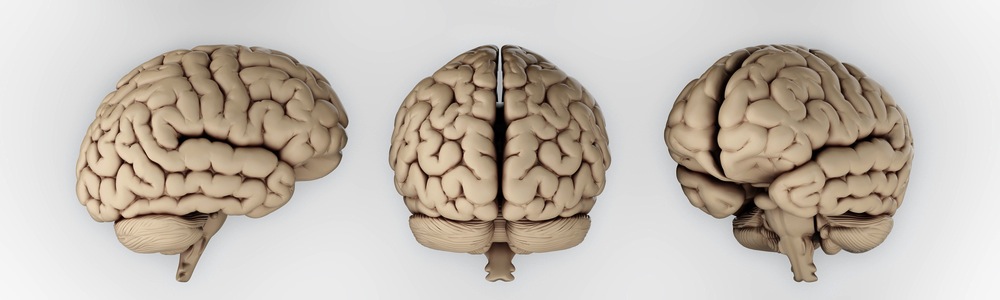
Melting brain

How susceptible are you to ‘neuromyths’? Take the quiz and test your science knowledge.

Neurons
Are your neurons firing correctly? Have you fallen for widely believed ‘neuromyths’?

Once you are given your score, please leave a comment (and your score, if you are brave enough!) in the box at the bottom of this page.

Good luck!

My blog next week will discuss this topic, with a more detailed look at recent research on the widely believed myths about  the brain.

[mtouchquiz 1]


Acknowledgements

The neuromyths quiz was developed for a research study conducted by Sanne Dekker et al and published in Frontiers in Psychology in October 2012:

Sanne Dekker, Nikki C. Lee, Paul Howard-Jones, Jelle Jolles. Neuromyths in Education: Prevalence and Predictors of Misconceptions among Teachers. Front Psychol. 2012; 3: 429. Prepublished online 2012 August 31. Published online 2012 October 18. doi: 10.3389/fpsyg.2012.00429


Add a comment
  • Cesazcal

    Cesazcal

    3 years ago
    Can't take the quiz!
  • Cesazcal

    Cesazcal

    3 years ago
    Nice!
  • Bernadette

    Bernadette

    9 years ago
    Very interesting to see my results (21/32) - I need to do a bit of research here. It's amazing how we are so convinced about certain 'facts' - is there still a place for multiple intelligences and accommodation of different learning styles?
  • Ali A. Mahmoudi

    Ali A. Mahmoudi

    9 years ago
    27 out of 32. Very interesting quiz! I have some questions in this regard: - what is the average score of respondents? - what are the roots of these neuromyths? - is there any proper reference for teachers to know more about neuromyths? Thanks
  • Shagufta Habib Rupani

    Shagufta Habib Rupani

    9 years ago
    Will it be available any research about that how the capacity of human brain can access or judge through activities and how those activities help to improve the brain power.
  • Michelle

    Michelle

    9 years ago
    22/32 made a few dumb mistakes, interesting quiz.
  • Michael Young

    Michael Young

    9 years ago
    I scored 27/32 84.375% better than I thought I would have done. Thank you for this conversation. MYoung Houston, Texas
  • Lyelle Palmer, Ph.D.

    Lyelle Palmer, Ph.D.

    10 years ago
    Some of the questions are not yes/no absolutes so making the choices makes one guess about what evidence the question might be referring to. Some of the so-called "myths" may have a grain of usefulness for particular children but should not be considered valid in general. Part of the problem is that researchers did not really replicate, but usually made slight changes that created new/different hypotheses than the one supposedly being tested. Unless a person knows in depth the issue in question it is easy to be confused or jump to invalid conclusions.
  • Alla

    Alla

    10 years ago
    I scored 23, but I do not agree with all the answers, for example number 11: There are critical periods in childhood after which certain things can no longer be learned. as if a child does not hear a language until its 3, it will never learn how to talk (a child raised by wolves example).
  • Brande'

    Brande'

    11 years ago
    20/32
  • milika

    milika

    11 years ago
    very intresting test, thanks for sharing !
  • Charlotte

    Charlotte

    11 years ago
    23/32 .. I agree with all except that there are no critical periods for learning...
  • Neil MacFarlane

    Neil MacFarlane

    12 years ago
    I disagree with some of the answers e.g. stroke recovery must use other parts of the brain, feral children struggle to learn language after 7/8, and my students/clients much prefer their learning style!
  • G

    G

    12 years ago
    28/32 food for thought!
  • Sarah

    Sarah

    12 years ago
    27/32 Thanks, interesting an better than expected
  • Kelvin

    Kelvin

    12 years ago
    Wow did this late without double checking my answers not bad 21/32...
  • Fiona Art

    Fiona Art

    12 years ago
    Damn, on 3,15,18, 20 & 31 I hesitated and didn't go with my gut feeling/immediate thought and questioned myself too much by over analysing. This leads me to wonder can low self esteem and self doubt affect intelligence testing? 22/32, average :-(, could do better, need to read more as I think as a mental health activist I should have better knowledge of brain myths.
  • Fran Wilkie

    Fran Wilkie

    12 years ago
    I only got 23... some interesting stuff in there!
  • Fang farrier

    Fang farrier

    12 years ago
    Only 21, but then again only occasionally engaged in training and not really an educationalist.
  • HANI

    HANI

    13 years ago
    I scored 19/32 i believe in the brain neuromythus. Regards Hani
  • ThinkGal

    ThinkGal

    13 years ago
    I've asked a group of teachers to complete this quiz preparatory to our taking a deeper look into how people learn and how we can make better and better decisions about learning in school situations. Thanks for an excellent and useful website! I hope our group will leave notes on what they think as well.
  • Caroline

    Caroline

    13 years ago
    That was fun - 28/32 - could have done better!
  • Michelle

    Michelle

    13 years ago
    Well glad to see that my results have not changed over the many, many years since i left school 17 out pof 32 (average 50%) just goes to show that no matter how hard you try, the intelligence you gain as a child in school can haunt you for life! no help for me now then:(
  • Kate O'Neill

    Kate O'Neill

    13 years ago
    21- quite embarrassing! I guess I should eat more breakfast and drink less tea.
  • joh

    joh

    13 years ago
    How I wish the management at my college would do this. They happily swallow any sort of management speak and turn it into timewasting doctrine.
  • Sue Gerrard

    Sue Gerrard

    13 years ago
    Ainslie is right about the ambiguous nature of the questions. Two previous studies (Herculano-Houzel (2002) http://is.gd/CUOh46 and Howard-Jones et al (2009) http://is.gd/kG55RY) had established the 'correctness' of the items in their questionnaires by first measuring the level of agreement with the statements amongst neuroscientists. 70% agreement was the threshold for the assertions that were used in the questionnaires. In other words, even neuroscientists disagreed about whether the assertions were true or false. It's not clear how Dekker et al established the 'correctness' of their assertions, as some of them were drawn from a different source. In all three studies, respondents were given the options T/F/DK. In the survey above, 'don't know', 'it depends what you mean by...' or 'true in about 80% of cases' and so on, are not permitted responses. Take, for example, question 3, 'Boys have bigger brains than girls'. It's true that the a large group of boys of a specific age would tend to have bigger brains than a large group of girls of the same age, but since the distributions for the sexes overlap, any given boy might not have a bigger brain than any given girl. If you know that, you can't really respond either 'true' or 'false' to the statement, because neither response accurately reflects the data we have about brain size. Or take question 6, 'When a brain region is damaged other parts of the brain can take up its function'. That would depend, surely, on which brain region was involved and what the damage was. It's pretty clear from the outcomes for cerebral palsy and stroke patients that the statement is true in some cases but not in others. I know this quiz is for fun, but I think there's a risk that the concept of 'neuromyths' might be well on the way to becoming a myth itself.
    • 2 replies
    • James
      James 11 years ago
      Well said Sue. For a website that claims to keep you up to date with the latest evidence, this quiz was really poorly worded and would have been nice to have citiations to studies, systematic reviews and/or scientific consensus included.
    • James Hammond
      James Hammond 12 years ago
      I agree. Some of the questions which are considered 'false' can certainly be challenged. Take the question about learning styles. Whilst Fleming's VARK model has received a whole number of challenges, research has never exactly proved it to be false, because much of that research is actually questionable itself. See this website for a selection of comments: http://thinkneuroscience.wordpress.com/2013/04/11/the-myth-of-learning-styles/ There are other questions which also say something is a neuromyth when others would disagree, such as brain repair in old age, etc. This test, then, of itself, has limited value because it is based on the opinions of some -- but not all -- psychologists, and others would disagree. I was always taught "hypothesis-antithesis-synthesis". This kind of questionnaire really doesn't follow that approach and for that reason, as Sue stated, it could be somewhat of a neuromyth itself.
  • Ainslie Levy

    Ainslie Levy

    13 years ago
    oops typo brain!
  • Ainslie Levy

    Ainslie Levy

    13 years ago
    31/32 I think some questions are a touch ambiguous. I thought when some parts of the brian are damaged other parts can compensate which may be why I got 6 wrong.
  • Sylvie

    Sylvie

    13 years ago
    26/32 mmm... could do better. Going to ask Fen to try it when he gets home from dance and see how a GCSE Biology student does (not that I'm competitive).
  • Derek

    Derek

    13 years ago
    Just 20 - spending too much time reading about teeth Enjoyed the quiz
  • denise

    denise

    13 years ago
    23/32. Not bad considering I dip dip sky blued some answers..lol!
  • Kathryn Beer

    Kathryn Beer

    13 years ago
    18/32! Must try harder!
  • lisa frazer

    lisa frazer

    13 years ago
    Only 20/32! I have reading to do! Thanks, i enjoy a little quiz
  • Sam cogle

    Sam cogle

    13 years ago
    I did think I was reading some quality research but my score says otherwise. Oops. Cool quiz
  • Colin Lever

    Colin Lever

    13 years ago
    Sorry, the last question about neurogenesis is question 32 not 30.
  • Colin Lever

    Colin Lever

    13 years ago
    22/32 Oh dear. I guessed several. The stuff about left right was a theme I just guessed about, which is different from having a belief one might act strongly on, which is wrong. I doubt it is what the 'myth' is about but there is some evidence for left vs right prefrontal cortical differences in being motivated by expected aversive outcomes or expected rewarded outcomes, which I would guess might indeed affect learning approaches. Several questions are a bit too vague and ambivalent. I wouldn't accept them for an MCQ. For instance with question 30, neurogenesis is probably required for some types of learning but not other types. Re another question, is all learning just synaptic modification? It's still debated. A hippocampus-oriented neuroscientist.
  • Maeve Carey

    Maeve Carey

    13 years ago
    26/32. I'm happy enough with that score. I'm disappointed that caffeine doesn't help your focus. I seem to do nothing but suck on coffee during my frees. Now I've no excuse for drinking it - Bah! I'll have to tell the pupils to leave the Red Bulls at the door on their way in.
  • Jenny Shaw

    Jenny Shaw

    13 years ago
    I honestly thought I knew a lot more about the links between our brains and our capacity to learn! At least I can stop drinking litres of water every day and will stop scouring the Internet for recipes involving salmon, mackerel and trout! Very interesting quiz though, thanks.
  • Dawn

    Dawn

    13 years ago
    17/32 well slightly over 50% I guess. Gutted and right brained! I am a softer for myths obvs.
  • Richmonde

    Richmonde

    13 years ago
    26 out of 32. I'm just so left-brain!
  • Barry

    Barry

    13 years ago
    22/32. I always knew André was cleverer than me.
  • Jonathan Parr

    Jonathan Parr

    13 years ago
    Very interesting - although the wording of some of the questions would seem to suggest that a case could be made for answering yay or nay... Or am I just a bit gutted about my low score?
    • 1 reply
    • Jenny Shaw
      Jenny Shaw 13 years ago
      But how low is low?!? Mine was embarrassingly low!
  • Jonathan Black

    Jonathan Black

    13 years ago
    Hmm, 22/32 - worse than I hoped for - some myths clearly held so must learn to read around more. However, not a medic and not a psychology grad - so maybe anything about half marks is OK....
  • Robin Layfield

    Robin Layfield

    13 years ago
    20/32 — shucks, my Psychology A level counts for nothing!
  • Sibbymcc

    Sibbymcc

    13 years ago
    Fascinating - pleased my new course on dyslexia helped with some answers but yes a few myths debunked too in my 22/32 score!
  • André

    André

    13 years ago
    Great quiz! Lot's of fun, but really hard. I scored 27 out of 32, which was a lot more than I was expecting to get. I slipped up on questions: 13, 15, 18, 24 ad 29. Thanks for a nice bit of brain gym! ;-)
    • 1 reply
    • Fiona Martin
      Fiona Martin 13 years ago
      I do not agree with all the answers. For example neurogenesis can occur in old age in certain parts of the brain.