

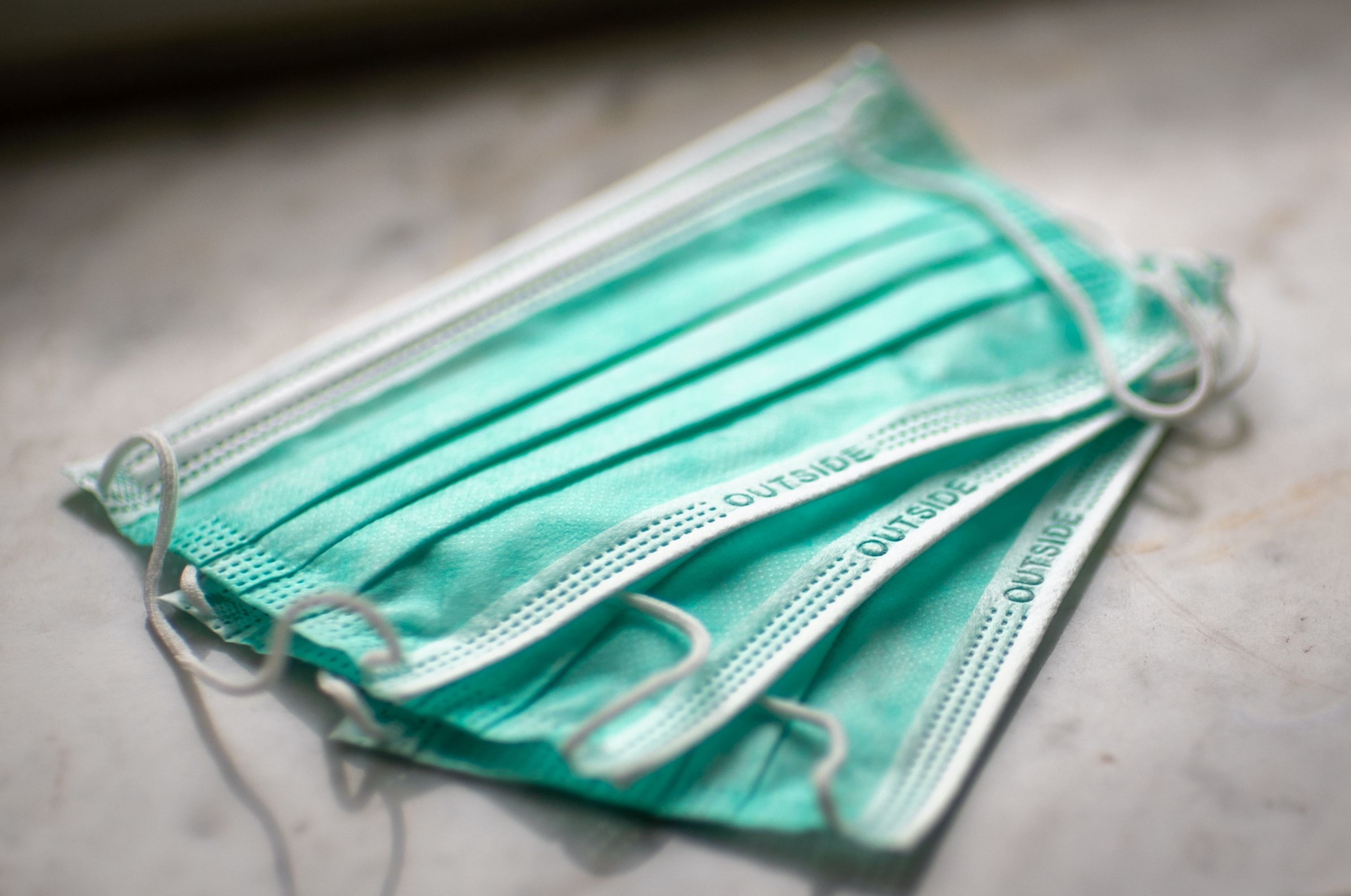

Dentists have been using face masks as part of their routine personal protective equipment (PPE) for many years. However, their close proximity to patients during treatment and the potential for the production of aerosols during dental treatment has focused much attention on the face mask and other items of PPE. During the Covid-19 pandemic global shortages of PPE have forced consideration of protective equipment sharing measures such as extended use, re-use or reprocessing of single-use masks and respirators.
The aim of this rapid review was to summarise the guidance and systematic review evidence on extended use, re-use or reprocessing of any type of surgical mask or filtering facemask respirators
Methods
The Medline, Pubmed, Epistemonikos, Cochrane Database of Systematic Reviews and three preprint repositories (Litcovid, MedRxiv and Open Science Framework) were searched for systematic reviews exploring the extended use, re-use or reprocessing of any type of surgical mask or filtering facemask respirators (FFPR). The World Health Organization, European Centre for Disease Prevention and Control, the US Centers for Disease Control and Prevention, and Public Health England websites were searched for guidance documents. Two reviewers searched for guidance documents which were screened for inclusions systematic review were also double screened for inclusion. Data extraction was carried out by two reviewers with the quality of the systematic reviews being assessed using the AMSTAR-2 checklist. The findings were integrated and narratively synthesised.
Results
Guidance documents
- 6 documents were identified, 3 from the US Centers for Disease Control and Prevention, and one each from the European Centre for Disease Prevention and Control, Public Health England and the World Health Organisation.
- The guidance documents were published or updated between March 17th 2020 and May 21st 2020 and written for the COVID-19 pandemic.
- None of the guidance documents included a systematic review of the literature.
- All the guidance documents depicted extended use, re-use or reprocessing as extraordinary, last resort measures favouring extended use over re-use because of reduced risk of contact transmission.
Systematic reviews
- 4 relevant systematic reviews (3 from the same team) were included.
- The reviews were considered to be predominantly of high-quality.
- 3 were on different interventions for reprocessing of FFPR.
- 1 related to surgical mask.
- No reviews in our sample examined the impact of extended use or re-use of filtering facepiece respirators or surgical masks on the ability to meet technical standards or on healthcare worker acceptability outcomes such as comfort.
Main findings
- While extended use or re-use of single-use surgical masks or respirators (with or without reprocessing) is generally not recommended, guidance from various organisations supports such measures (preferably extended use rather than re-use) as a last-resort measure during critical shortage.
- Comparisons across guidance documents and systematic reviews highlight limited evidence, varying levels of detail, and areas of inconsistency, especially in relation to re-use of respirators (with or without reprocessing) during and after aerosol generating procedures.
- The reprocessing of surgical masks is not recommended.
- Reprocessing of respirators under controlled and standardised conditions is recommended, but there is inconsistency regarding how or when this should take place and further research is needed in this area.
- Where extended use or re-use is being practised, healthcare facilities and institutions should ensure that policies and systems are in place to enable these practices to be carried out in the safest way possible in line with available guidance.
Conclusions
The authors concluded: –
Extended use and re-use of single-use surgical masks and respirators (with or without reprocessing) should only be considered in situations of critical shortage. Where extended use or re-use is being practiced, healthcare organisations should ensure that policies and systems are in place to ensure these practices are carried out as safely as possible and in line with available guidance. Areas of guidance lacking clarity and consistency warrant further attention and investigation.
Comments
This rapid evidence review was conducted in line with Cochrane interim guidance for rapid reviews and a summary was published as part of the Oxford Covid-19 Evidence Review Service on the 5th June. The reviewers examined six guidance documents none of which included systematic reviews of the evidence. The reviewers search for reviews identified 4 relevant systematic review all of which are new having been conducted between March and April 2020. These reviews are all from Canada with 3 being from the same team, and all were either in peer review or pre-prints. There are considered to be mainly of high quality although only 2 studies in one of the included reviews looked at the effect of reprocessing on SARS-CoV-2.
Prior to the Covid-19 pandemic dental teams were used to changing masks after each patient. Guidance from a number of sources (C0DER Working Group 2020) has suggested longer periods of use up to 4 hours or on a sessional basis where there is no visual damage or obvious soiling. UK guidance documents suggests the risk assessment of sessional use while a small number of other international guidance documents have advised of the possible re-use of FFPR masks following re-processing. This review would suggest that extended use or re-use should be a last resort measure.
Links
Primary Paper
Extended use or re-use of single-use surgical masks and filtering facepiece respirators: A rapid evidence review. Elaine Toomey, Yvonne Conway, Christopher Burton, Simon Smith, Michael Smalle, Xin-Hui Chan, Anil Adisesh, Sarah Tanveer, Lawrence Ross, Iain Thomson, Declan Devane, Trish Greenhalgh.
Oxford CEMB- Covid -19 Evidence Blog
Review protocol and associated materials
Other references
Recommendations for the re-opening of dental services: a rapid review of international sources, Version 1.3 16th May. The (CoDER) Working Group. (accessed 11th June 2020)
Dental Elf – 30th Apr 2020
How much extra protection does an FFP3 mask offer in the dental surgery?
Dental Elf – 25th Mar 2020
Photo Credits
Photo by Mika Baumeister on Unsplash





COVID-19 Dental Elf Blogs -3 - National Elf Service
6 years agoMichael Logies
6 years agoMichael Logies
6 years ago