


The Social Care Elf

What does evidence say for Making Safeguarding Personal?

As forest-dwelling creatures, elves know the importance of effective organisation and structure of their camp. The question is, how is this best achieved – should all elves be able to light the camp fire or is it more effective to rely on specialist firelighters? And what sort of relationships should they have with the pixies to ensure harmony in the woods? Such important questions are explored in a different context here – that of adult safeguarding.

Adult safeguarding is identified as a core part of social work practice. It has evolved over time, from the scandals of the 1960s that raised awareness of the issue of adult abuse through to No Secrets which talked about the protection of vulnerable adults. The new Care Act 2014:

  • Outlines a duty for local authorities to make, or cause to be made, enquiries into safeguarding concerns
  • States that other multiagency partners must contribute to those enquiries;
  • Places Safeguarding Adults Boards on a statutory footing
  • Advocates serious case reviews as an opportunity for learning.

This paper aims to find out how developments in policy are reflected in practice by asking how service responses are organised for safeguarding, and whether particular models of safeguarding are linked to outcomes.

It does so by reporting on a ‘narrative synthesis’ of the literature, and is part of a large study investigating adults safeguarding policy and practice in England. Narrative synthesis is described as an approach that integrates lots of different types of evidence in different themes. Qualitative evidence is seen as particularly important, as it explains ‘how’ and ‘why’ things are done.
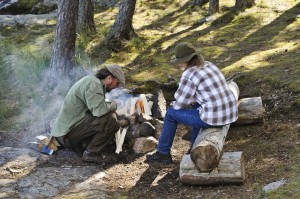
 Should we have specialists to undertake important tasks (like lighting a campfire, or safeguarding adults?
Should we have specialists to undertake important tasks like lighting a campfire, or safeguarding adults?

 Methods

An initial search specifically for models drew a bit of a blank, so the search terms were broadened. Literature between 2000 (when the seminal policy document No Secrets was published) and 2013 was searched. Literature around elder abuse was found to be more prevalent than for other groups, with corresponds to a greater proportion of referrals (60% in 2012-13) for this group.

The selection process for literature is clearly outlined, with 162 full text papers being retrieved. Of those, 16 were deemed to have relevance to the research question, e.g. exploring the organisation of safeguarding practice. All four researchers read each of the sixteen papers, which lessened the possibility of missing themes or important information.

Safeguarding as a concept has been described as elastic, adapting to different people’s thresholds.

Findings

The results of the analysis showed that decision-making and thresholds, and multiagency working were critical areas. The experience and outcomes of people who use services were also picked out as themes.

So is it better to have specialist safeguarding (or firelighting) practitioners, or should everyone play a part? This theme emerged frequently in the reviewed literature, though no studies focussed on it specifically. Numerous approaches are described, from Adult Protection Coordinator (APC) roles (which can be ill-defined so could vary between strategic and operational remits), to teams of safeguarding specialists, to safeguarding being integrated into case management.

APCs were found to increase the chances of ‘good’ outcomes such as confirming abuse, joint working, and post-abuse work – however the evidence on whether specialism leads to better outcomes than generalism in safeguarding is currently inconclusive.

What sort of processes exist for safeguarding adults? The paper notes that most processes mirror the guidance available at the time (No Secrets, 2000) encompassing a timeline of alert, referral, potentially leading to an investigation, case conference safeguarding plan and monitoring. Again, specialist teams are noted as having pros (objectivity, connecting events, clear leadership) as well as cons (lack of continuity, potential conflict with other teams, deskilling other workers).

Decision making and thresholds for action is another main theme emerging in the paper. Safeguarding is described as an ‘elastic’ concept, with thresholds depending on the referrer. Factors affecting decisions about what is considered as harm/ abuse and worth pursuing through safeguarding include:

  • Likelihood of a substantiated allegation
  • Needs and pressures on resources
  • Formation of a ‘cognitive mask’ which prevents professionals ‘seeing’ low level abuse
  • Impact on the organisation involved
  • The wishes of the person who has been harmed – balancing ‘empowerment’ and ‘protection’.

Perhaps unsurprisingly, good multiagency working has been found to lead to better outcomes of safeguarding investigations. The challenges of multiagency working are highlighted as one of definition, lack of resources, poor communication and lack of clarity over roles and responsibilities.

The authors note that the Care Act guidance may assist multiagency working by placing a duty to engage on statutory agencies. Co-location is suggested as a way to aid multiagency working (e.g. through a Multi- Agency Safeguarding Hub (MASH)), although not everyone shares this view.

The final theme is the question of what safeguarding is meant to lead to – its outcome. Measures of this include:

  • Levels of substantiation of abuse/ confirmation of abuse
  • ‘ongoing monitoring’
  • Speed of response
  • Likelihood of investigation

Again, the paper notes that the APC role was associated with better outcomes in relation to these metrics.

 Seeing the wood for the trees – is safeguarding research asking the right questions?
Seeing the wood for the trees – is safeguarding research asking the right questions?

Conclusions

The authors conclude that

The implications of specialism have not been extensively explored. However, several important characteristics of safeguarding practice are identifiable from the literature including specialism within the organisation of adult safeguarding; decision-making and thresholds for safeguarding response; and multi-agency working.

Summing up

The authors note limitations of the study as being an exclusion of non-English language papers, and a lack of inclusion of research studies, due to a lack of such research being carried out. They note that only one study looked specifically at models of safeguarding organisation.

A further limitation not of this paper, but generally for the application of the research to practice, is the changing policy context. The inclusion of a Making Safeguarding Personal (MSP) approach in the Care Act guidance may impact on numerous aspects of how safeguarding is carried out, not least by enabling practitioners to focus less on process and more on individuals’ wishes following an instance of abuse.

Early evidence from MSP (e.g. Lawson, Lewis and Williams 2014) suggests that relationships and involving people from the beginning are more important to people than process is, and this may act as a useful new focus for research – a perspective also picked up on in the review (Ash, 2013).

It could be argued that previous research has been driven by policy and practice rather than by an ambition to elucidate how services can lead to better experiences and outcomes for people. This review raises the question – has previous research missed the point of safeguarding – i.e. is anyone better off afterwards? Part of this may be down to the fallacy of ‘what’s measured, matters’ – it is easy to measure whether abuse is substantiated or not and much more difficult to measure if safeguarding improved the wellbeing and safety of the person concerned.

The MSP approach, which involves asking the person who has experienced harm about what they would like to happen, may ameliorate the issues raised above by focusing practitioners on the person and the outcomes they want. This change in practice may also support researchers to answer the more difficult questions around how effective, inclusive safeguarding can be achieved.

Link

Graham K, Norrie C, Stevens M, Moriarty J, Manthorpe J, and Hussein S. (2014) Models of adult safeguarding in England: a review of the literature. Journal of Social Work, doi: 10.1177/1468017314556205 [Abstract]

References

Ash, A. (2013). A cognitive mask? Camouflaging dilemmas in street-level policy implementation to safeguard older people from abuse. British Journal of Social Work, 43(1),99–115. doi:10.1093/bjsw/bcr161 [Abstract]

Department of Health (2000) No Secrets: Guidance on developing and implementing multi-agency policies and procedures to protect vulnerable adults from abuse. London, England: TSO. [Full report]

Department of Health (2014). Care Act 2014. [Full report]

Department of Health (2014) Care Act 2014: statutory guidance for implementation. [Full report]

Lawson J, Lewis S and Williams C (2014) Making Safeguarding Personal 2013/14: Summary of Findings. Local Government Association and ADASS. [Full report]

Add a comment
  • Michael Clark

    Michael Clark

    11 years ago
    Michael Clark liked this on Facebook.
  • Models of adult safeguarding: what works best?

    Models of adult safeguarding: what works best?

    11 years ago
    […] to get good outcomes for people? Eagle eyed elves may have noticed that this study elaborates on a previous elf post, which summarised a paper outlining the literature on models of adult safeguarding. Here, we […]
  • scwru

    scwru

    11 years ago
    RT @Intipton: Super discussion on @SocialCareElf of research on adult safeguarding by @Lindsey_Pike from @ripfa http://t.co/a0TYBQKsTg
  • JeanneCarlin

    JeanneCarlin

    11 years ago
    RT @Intipton: Super discussion on @SocialCareElf of research on adult safeguarding by @Lindsey_Pike from @ripfa http://t.co/a0TYBQKsTg
  • N_Wilson94

    N_Wilson94

    11 years ago
    RT @Aspirantdiva: Shouldn't safeguarding be more about improving outcomes for person at risk? @Lindsey_Pike for @SocialCareElf http://t.co…
  • LauraAPitman

    LauraAPitman

    11 years ago
    RT @Aspirantdiva: Shouldn't safeguarding be more about improving outcomes for person at risk? @Lindsey_Pike for @SocialCareElf http://t.co…
  • valeriemarriot1

    valeriemarriot1

    11 years ago
    RT @Aspirantdiva: Shouldn't safeguarding be more about improving outcomes for person at risk? @Lindsey_Pike for @SocialCareElf http://t.co…
  • SSKS_online

    SSKS_online

    11 years ago
    RT @SocialCareElf: What does evidence say for Making Safeguarding Personal? http://t.co/VlRBmeJ32p
  • AlresfordBear

    AlresfordBear

    11 years ago
    RT @SocialCareElf: What does evidence say for Making Safeguarding Personal? http://t.co/VlRBmeJ32p
  • POP2781

    POP2781

    11 years ago
    RT @SocialCareElf: What does evidence say for Making Safeguarding Personal? http://t.co/VlRBmeJ32p
  • PSSRU_LSE

    PSSRU_LSE

    11 years ago
    RT @SocialCareElf: What does evidence say for Making Safeguarding Personal? http://t.co/VlRBmeJ32p
  • LSE_SCEIP

    LSE_SCEIP

    11 years ago
    RT @SocialCareElf: What does evidence say for Making Safeguarding Personal? http://t.co/VlRBmeJ32p
  • NIHRSSCR

    NIHRSSCR

    11 years ago
    RT @SocialCareElf: What does evidence say for Making Safeguarding Personal? http://t.co/VlRBmeJ32p
  • focus_Warner

    focus_Warner

    11 years ago
    RT @SocialCareElf: What does evidence say for Making Safeguarding Personal? http://t.co/VlRBmeJ32p
  • Aspirantdiva

    Aspirantdiva

    11 years ago
    @AlresfordBear @Lindsey_Pike @SocialCareElf That is not self promotion BTW - Simon Ricketts introduced us to concept and helped us with it
  • AlresfordBear

    AlresfordBear

    11 years ago
    @Aspirantdiva @Lindsey_Pike @SocialCareElf Indeed. Making truly reflective considered decisions. Although this can be used to hesitate.
  • AlresfordBear

    AlresfordBear

    11 years ago
    @Aspirantdiva @Lindsey_Pike @SocialCareElf It often sees things in a singularity. More of a process, than solution.
  • Aspirantdiva

    Aspirantdiva

    11 years ago
    @AlresfordBear @Lindsey_Pike @SocialCareElf So e.g risk to quality of life versus physical risk - in this heatmap https://t.co/xVnDi6owGd
  • Aspirantdiva

    Aspirantdiva

    11 years ago
    @AlresfordBear @Lindsey_Pike @SocialCareElf Yes - I like idea of risk/benefits analysis - risk to a person if something does NOT happen
  • AlresfordBear

    AlresfordBear

    11 years ago
    RT @Aspirantdiva: Shouldn't safeguarding be more about improving outcomes for person at risk? @Lindsey_Pike for @SocialCareElf http://t.co…
  • AlresfordBear

    AlresfordBear

    11 years ago
    @Lindsey_Pike @Aspirantdiva @SocialCareElf Most certainly in its evaluation.
  • AlresfordBear

    AlresfordBear

    11 years ago
    @Lindsey_Pike @Aspirantdiva @SocialCareElf In order to have the definition of outcomes, it would require risk to be recalibrated.
  • mhresources

    mhresources

    11 years ago
    RT @SocialCareElf: What does evidence say for Making Safeguarding Personal? http://t.co/VlRBmeJ32p
  • DWswk

    DWswk

    11 years ago
    RT @SocialCareElf: What does evidence say for Making Safeguarding Personal? http://t.co/VlRBmeJ32p
  • The Social Care Elf

    The Social Care Elf

    11 years ago
    The Social Care Elf liked this on Facebook.
  • HHLibService

    HHLibService

    11 years ago
    What does evidence say for Making Safeguarding Personal? http://t.co/jso9I042hT
  • Lindsey_Pike

    Lindsey_Pike

    11 years ago
    @Aspirantdiva @SocialCareElf haha, apologies if it's taken you a bit off track!!
  • Aspirantdiva

    Aspirantdiva

    11 years ago
    @Lindsey_Pike @SocialCareElf I will never be able to think about safeguarding except in terms of specialist firelighting elves from now on!
  • Lindsey_Pike

    Lindsey_Pike

    11 years ago
    @Intipton @SocialCareElf @ripfa thank you!
  • Lindsey_Pike

    Lindsey_Pike

    11 years ago
    RT @Intipton: Super discussion on @SocialCareElf of research on adult safeguarding by @Lindsey_Pike from @ripfa http://t.co/a0TYBQKsTg
  • Lindsey_Pike

    Lindsey_Pike

    11 years ago
    @Aspirantdiva @SocialCareElf ezzactly!
  • Lindsey_Pike

    Lindsey_Pike

    11 years ago
    RT @Aspirantdiva: Shouldn't safeguarding be more about improving outcomes for person at risk? @Lindsey_Pike for @SocialCareElf http://t.co…
  • peterjsimcock

    peterjsimcock

    11 years ago
    RT @MartinStevens2: Great Blog @SocialCareElf from @Lindsey_Pike on our Models of Sgding Lit rev.Good sum& ID imp questions. http://t.co/7…
  • EPPICentre

    EPPICentre

    11 years ago
    RT @SocialCareElf: What does evidence say for Making Safeguarding Personal? http://t.co/VlRBmeJ32p
  • Prrawa

    Prrawa

    11 years ago
    RT @SocialCareElf: What does evidence say for Making Safeguarding Personal? http://t.co/VlRBmeJ32p
  • Lindsey_Pike

    Lindsey_Pike

    11 years ago
    RT @Mental_Elf: Welcome to the woodland @Lindsey_Pike Great debut blog on #safeguarding http://t.co/zjSqF6bnKs nb. NEVER let a pixie near t…
  • Lindsey_Pike

    Lindsey_Pike

    11 years ago
    @rich_w @SocialCareElf thanks!
  • Lindsey_Pike

    Lindsey_Pike

    11 years ago
    RT @ripfa: Examining safeguarding models and arguments for and against safeguarding specialists - our very own @Lindsey_Pike http://t.co/2y…
  • Ichi_Bear

    Ichi_Bear

    11 years ago
    What does evidence say for Making Safeguarding Personal? http://t.co/aUM5GWYGzB via @sharethis
  • TCSWkatemetcalf

    TCSWkatemetcalf

    11 years ago
    RT @ripfa: Examining safeguarding models and arguments for and against safeguarding specialists - our very own @Lindsey_Pike http://t.co/2y…
  • Mental_Elf

    Mental_Elf

    11 years ago
    Welcome to the woodland @Lindsey_Pike Great debut blog on #safeguarding http://t.co/zjSqF6bnKs nb. NEVER let a pixie near the campfire!
  • scwru

    scwru

    11 years ago
    RT @Lindsey_Pike: My first @SocialCareElf blog is up! http://t.co/btnWAdwY9H on models of adult safeguarding & how this relates2 Making Sa…
  • TCSWkatemetcalf

    TCSWkatemetcalf

    11 years ago
    RT @scwru: What does evidence say for Making Safeguarding Personal? http://t.co/qqhJwCIm7A post from @Lindsey_Pike at @SocialCareElf on @sc…
  • SocialCareElf

    SocialCareElf

    11 years ago
    RT @ripfa: Examining safeguarding models and arguments for and against safeguarding specialists - our very own @Lindsey_Pike http://t.co/2y…
  • rich_w

    rich_w

    11 years ago
    RT @Lindsey_Pike: My first @SocialCareElf blog is up! http://t.co/btnWAdwY9H on models of adult safeguarding & how this relates2 Making Sa…
  • rich_w

    rich_w

    11 years ago
    @Lindsey_Pike @SocialCareElf Nice one!
  • ripfa

    ripfa

    11 years ago
    Examining safeguarding models and arguments for and against safeguarding specialists - our very own @Lindsey_Pike http://t.co/2y5He5vpNU
  • SchrebersSister

    SchrebersSister

    11 years ago
    RT @SocialCareElf: What does evidence say for Making Safeguarding Personal? http://t.co/VlRBmeJ32p
  • SocialCareElf

    SocialCareElf

    11 years ago
    RT @Intipton: Super discussion on @SocialCareElf of research on adult safeguarding by @Lindsey_Pike from @ripfa http://t.co/a0TYBQKsTg
  • Intipton

    Intipton

    11 years ago
    Super discussion on @SocialCareElf of research on adult safeguarding by @Lindsey_Pike from @ripfa http://t.co/a0TYBQKsTg
  • SocialCareElf

    SocialCareElf

    11 years ago
    RT @Lindsey_Pike: My first @SocialCareElf blog is up! http://t.co/btnWAdwY9H on models of adult safeguarding & how this relates2 Making Sa…
  • SocialCareElf

    SocialCareElf

    11 years ago
    RT @scwru: What does evidence say for Making Safeguarding Personal? http://t.co/qqhJwCIm7A post from @Lindsey_Pike at @SocialCareElf on @sc…
  • SocialCareElf

    SocialCareElf

    11 years ago
    RT @Aspirantdiva: Shouldn't safeguarding be more about improving outcomes for person at risk? @Lindsey_Pike for @SocialCareElf http://t.co…
  • Aspirantdiva

    Aspirantdiva

    11 years ago
    Shouldn't safeguarding be more about improving outcomes for person at risk? @Lindsey_Pike for @SocialCareElf http://t.co/ujRGsjUN8x
  • EffectivePrac

    EffectivePrac

    11 years ago
    RT @Lindsey_Pike: My first @SocialCareElf blog is up! http://t.co/btnWAdwY9H on models of adult safeguarding & how this relates2 Making Sa…
  • ripfa

    ripfa

    11 years ago
    RT @Lindsey_Pike: My first @SocialCareElf blog is up! http://t.co/btnWAdwY9H on models of adult safeguarding & how this relates2 Making Sa…
  • Lindsey_Pike

    Lindsey_Pike

    11 years ago
    RT @scwru: What does evidence say for Making Safeguarding Personal? http://t.co/qqhJwCIm7A post from @Lindsey_Pike at @SocialCareElf on @sc…
  • scwru

    scwru

    11 years ago
    How are service responses organised for safeguarding; how are particular models of safeguarding linked to outcomes? http://t.co/qqhJwCIm7A
  • scwru

    scwru

    11 years ago
    What does evidence say for Making Safeguarding Personal? http://t.co/qqhJwCIm7A post from @Lindsey_Pike at @SocialCareElf on @scwru study
  • scwru

    scwru

    11 years ago
    RT @MartinStevens2: Great Blog @SocialCareElf from @Lindsey_Pike on our Models of Sgding Lit rev.Good sum& ID imp questions. http://t.co/7…
  • selfharmaid

    selfharmaid

    11 years ago
    RT @SocialCareElf: What does evidence say for Making Safeguarding Personal? http://t.co/VlRBmeJ32p
  • phuecworcuni

    phuecworcuni

    11 years ago
    RT @SocialCareElf: What does evidence say for Making Safeguarding Personal? http://t.co/VlRBmeJ32p
  • Iain_caldwell

    Iain_caldwell

    11 years ago
    RT @SocialCareElf: What does evidence say for Making Safeguarding Personal? http://t.co/VlRBmeJ32p
  • Jo_Thomas67

    Jo_Thomas67

    11 years ago
    RT @SocialCareElf: What does evidence say for Making Safeguarding Personal? http://t.co/VlRBmeJ32p
  • tanyamooreherts

    tanyamooreherts

    11 years ago
    RT @Lindsey_Pike: My first @SocialCareElf blog is up! http://t.co/btnWAdwY9H on models of adult safeguarding & how this relates2 Making Sa…
  • Mental_Elf

    Mental_Elf

    11 years ago
    RT @SocialCareElf: What does evidence say for Making Safeguarding Personal? http://t.co/VlRBmeJ32p
  • tanyamooreherts

    tanyamooreherts

    11 years ago
    “@SocialCareElf: What does evidence say for Making Safeguarding Personal? http://t.co/Quepq5kp0a”
  • Lindsey_Pike

    Lindsey_Pike

    11 years ago
    @MartinStevens2 @SocialCareElf Thanks Martin :)
  • Lindsey_Pike

    Lindsey_Pike

    11 years ago
    My first @SocialCareElf blog is up! http://t.co/btnWAdwY9H on models of adult safeguarding & how this relates2 Making Safeguarding Personal
  • Lindsey_Pike

    Lindsey_Pike

    11 years ago
    RT @MartinStevens2: Great Blog @SocialCareElf from @Lindsey_Pike on our Models of Sgding Lit rev.Good sum& ID imp questions. http://t.co/7…
  • Michael Clark

    Michael Clark

    11 years ago
    Michael Clark liked this on Facebook.
  • SocialCareElf

    SocialCareElf

    11 years ago
    RT @MartinStevens2: Great Blog @SocialCareElf from @Lindsey_Pike on our Models of Sgding Lit rev.Good sum& ID imp questions. http://t.co/7…
  • MartinStevens2

    MartinStevens2

    11 years ago
    Great Blog @SocialCareElf from @Lindsey_Pike on our Models of Sgding Lit rev.Good sum& ID imp questions. http://t.co/7WUtND4x65
  • katekarban

    katekarban

    11 years ago
    RT @SocialCareElf: What does evidence say for Making Safeguarding Personal? http://t.co/VlRBmeJ32p