The Mental Elf

Sleep disruption during and after pregnancy may be associated with postpartum mental illness

Mental illness after pregnancy (such as postpartum depression, anxiety or psychosis) is estimated to affect 10-15% of women. These episodes of poor mental health can have a variety of harmful effects, from strains on parental relationships to poor infant development, to infanticide or child abuse in severe cases.

Given the negative effects of postpartum mental illness, effective treatment is needed. However, many pregnant women are unwilling to take psychiatric medicines, so a non-pharmacological intervention would be useful.

Managing sleep may be such a possible intervention, as changes in sleep patterns have been associated with many mental illnesses, even being included in the DSM-V as a symptom of anxiety and depression. Pregnancy and the postpartum period are typically periods with poorer sleep and some research has found a link between sleep deprivation in this period and postpartum mental illness.

This review aimed to evaluate the current evidence for the impact of sleep on the development of postpartum mental disorders.
It's estimated that mental health problems affect 10-15% of women who have recently given birth.
It’s estimated that mental health problems affect 10-15% of women who have recently given birth.

Methods

Due to the limited amount of research on the topic, broad inclusion criteria were used when searching for articles for the review. Studies which focused on any mental illness developing within 12 months of childbirth were included, with these studies either just following sleep postpartum, or during pregnancy as well. Papers were only included if sleep quality/quantity was directly tested, such as through questionnaire or physiological measurement.

Relevant studies were found from various database searches and reference lists, then assessed for quality using the Effective Public Health Practice Project Quality Assessment Tool for Quantitative Studies (EPHPP) – a quality assessment tool used successfully in many other reviews.

Results

31 papers were included in the review, of which 1 was evaluated as strong using the EPHPP, 13 as moderate and 17 as weak.

Studies focusing on postpartum depression (PPD): 29/31 studies

Studies using subjective assessment of sleep during pregnancy (e.g. questionnaires)

  • 10 studies in total, of which 8 were moderate on EPHPP and 2 weak
  • 7 of these studies found relationship between self-reported sleep in third trimester and development of depressive symptoms in postpartum period
  • A further paper found a trend towards this relationship (p = .056)
  • The last 2 found no evidence of a relationship

Studies using an objective assessment of sleep during pregnancy (e.g. EEG, actigraphy)

  • 5 studies: 1 strong, 3 moderate, 1 weak
  • Two studies (including the only strong paper included in the review) found a relationship between sleep in pregnancy and subsequent development of depressive symptoms
  • The further 3 studies found no evidence of a relationship

Studies using subjective assessment of sleep during postpartum

  • 21 studies investigated sleep in postpartum and depressive symptoms using subjective sleep assessment: 7 were of moderate quality, 14 were weak
  • 18 studies found some relationship between sleep and PPD, either through increasing sleep disruptions leading to greater depressive symptoms, or treatment of postpartum insomnia resolving PPD symptoms
  • 3 studies found no relationship

Studies using an objective assessment of sleep during postpartum

  • 10 studies assessed postpartum sleep objectively (8 of these in addition to subjective measures): 4 of these papers were moderate, whilst 6 were weak
  • 6 studies found a relationship between changes to sleep patterns on EEG or disrupted sleep measured by actigraphy and development of PPD symptoms
  • 4 studies found no relationship between disrupted sleep measured by actigraph and PPD

Studies focusing on postpartum anxiety (PPA): 2/31 studies

Both studies investigating sleep and PPA were rated as weak in quality. One found no relationship between objective and subjective sleep in pregnancy and PPA, nor objective postpartum sleep and PPA. The other study found that having at least moderate insomnia in the postpartum period led to a greater chance of reporting general anxiety.

Studies focusing on postpartum psychosis (PPP): 2/31 studies

One of the PPP studies was classified as being of moderate quality, the other as weak. The moderate study found that a greater proportion of women hospitalised with PPP had night-time deliveries and longer labours than matched controls, and found insomnia to be the most common symptom appearing before PPP. The weak paper found no association between having PPP/bipolar disorder and subjectively reported sleep.
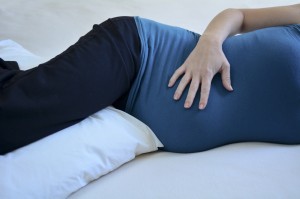
The review reported a link between self-reported poor sleep during and after pregnancy and the development of postpartum depression.

Conclusion

The authors of the review conclude that:

sleep interventions represent a potential…prevention and treatment strategy for postpartum mental illness

though do concede that

further high quality research is needed in this topic area.

Indeed, although the initial evidence does look promising, it is difficult to draw any firm conclusions from this review, due to the broadness of its scope. Though there are numerous studies for postpartum depression, these are still of differing designs, participant groups and sleep assessments which limit their comparability.

There was only 1 study each for postpartum psychosis and anxiety which found a relationship between sleep and these illnesses.

The research quality overall was also quite poor, with only one included study receiving a strong rating on the EPHPP, so overall it seems premature to say that sleep interventions may be useful in treating all postpartum mental illness.

Nonetheless, the authors do suggest that a lot of the null results may have arisen due to having too small sample sizes, and given the promising theoretical basis for a link between sleep and postpartum mental illness and the benefits of a non-pharmacological intervention, further research in this area is probably warranted.
This review does not provide sufficient evidence to support the use of sleep interventions for treating postpartum mental illness.

Link

Primary paper

Lawson, Andrea et al. The relationship between sleep and postpartum mental disorders: A systematic review. Journal of Affective Disorders , Volume 176 , 65 – 77 [Abstract]

ChameleonsEye / Shutterstock.com

Add a comment
  • The Big Sleep | Dokter Bibber

    The Big Sleep | Dokter Bibber

    10 years ago
    […] Sleep disruption during and after pregnancy may be associated with postpartum mental illness, The Mental Elf, 2015_06_03 > LINK […]
  • Sleep #1 | Dokter Bibber

    Sleep #1 | Dokter Bibber

    10 years ago
    […] Sleep disruption during and after pregnancy may be associated with postpartum mental illness, The Mental Elf, 2015_06_03 > LINK […]
  • AVoiceNotHeard

    AVoiceNotHeard

    11 years ago
    RT @CamillaSanger: Great to see lots of #perinatal issues in recent @Mental_Elf blogs. Today's is on the role of sleep on postnatal MH http…
  • Gees_gang

    Gees_gang

    11 years ago
    Sleep disruption during and after pregnancy may be associated with postpartum mental illness http://t.co/wi5eBy5reE
  • SouthwarkBelle

    SouthwarkBelle

    11 years ago
    RT @CamillaSanger: Great to see lots of #perinatal issues in recent @Mental_Elf blogs. Today's is on the role of sleep on postnatal MH http…
  • AlexBThomson

    AlexBThomson

    11 years ago
    RT @CamillaSanger: Great to see lots of #perinatal issues in recent @Mental_Elf blogs. Today's is on the role of sleep on postnatal MH http…
  • DrBillChen

    DrBillChen

    11 years ago
    RT @CharliHuggett: Sleep disruption during and after pregnancy may be associated with postpartum mental illness https://t.co/tl2iDgAxiW #me…
  • CharliHuggett

    CharliHuggett

    11 years ago
    Sleep disruption during and after pregnancy may be associated with postpartum mental illness https://t.co/tl2iDgAxiW #mentalhealth #PND
  • NHFTNHSLibrary

    NHFTNHSLibrary

    11 years ago
    Sleep disruption during and after pregnancy may be associated with postpartum mental illness https://t.co/HfIqt4c3eD via @Mental_Elf
  • HHLibService

    HHLibService

    11 years ago
    Susie Johnson summarises a systematic review that explores the relationship between sleep disruption and... http://t.co/DoWo9dSep3
  • 121Therapy

    121Therapy

    11 years ago
    RT @Mental_Elf: Don't miss: Sleep disruption during and after pregnancy may be associated with postpartum mental illness http://t.co/VHuXju…
  • Jane_Iles

    Jane_Iles

    11 years ago
    RT @CamillaSanger: Great to see lots of #perinatal issues in recent @Mental_Elf blogs. Today's is on the role of sleep on postnatal MH http…
  • PPSurvivorMum

    PPSurvivorMum

    11 years ago
    RT @Mental_Elf: Don't miss: Sleep disruption during and after pregnancy may be associated with postpartum mental illness http://t.co/VHuXju…
  • aghoury79

    aghoury79

    11 years ago
    Mental Elf: Sleep disruption during and after pregnancy may be associated with postpartum mental illness http://t.co/MHLdQwSo0b
  • lhenderson231

    lhenderson231

    11 years ago
    RT @Mental_Elf: Don't miss: Sleep disruption during and after pregnancy may be associated with postpartum mental illness http://t.co/VHuXju…
  • SWMH_IoPPN

    SWMH_IoPPN

    11 years ago
    RT @Mental_Elf: Don't miss: Sleep disruption during and after pregnancy may be associated with postpartum mental illness http://t.co/VHuXju…
  • ESMI_research

    ESMI_research

    11 years ago
    RT @Mental_Elf: Don't miss: Sleep disruption during and after pregnancy may be associated with postpartum mental illness http://t.co/VHuXju…
  • LindaMinkow

    LindaMinkow

    11 years ago
    RT @DannyMinkow: Sleep disruption during and after pregnancy may be associated with postpartum mental illness https://t.co/BlMWhMdbZv @Ment…
  • amandahv37

    amandahv37

    11 years ago
    RT @Mental_Elf: Don't miss: Sleep disruption during and after pregnancy may be associated with postpartum mental illness http://t.co/VHuXju…
  • GreenCandidate

    GreenCandidate

    11 years ago
    RT @Mental_Elf: Don't miss: Sleep disruption during and after pregnancy may be associated with postpartum mental illness http://t.co/VHuXju…
  • Liztaylor501

    Liztaylor501

    11 years ago
    RT @Mental_Elf: Sleep disruption during and after pregnancy may be associated with postpartum mental illness http://t.co/VHuXjuAToz
  • Mental_Elf

    Mental_Elf

    11 years ago
    Don't miss: Sleep disruption during and after pregnancy may be associated with postpartum mental illness http://t.co/VHuXjuAToz #EBP
  • pPODresearch

    pPODresearch

    11 years ago
    RT @CamillaSanger: Great to see lots of #perinatal issues in recent @Mental_Elf blogs. Today's is on the role of sleep on postnatal MH http…
  • dotxking

    dotxking

    11 years ago
    RT @CamillaSanger: Great to see lots of #perinatal issues in recent @Mental_Elf blogs. Today's is on the role of sleep on postnatal MH http…
  • Victoria Day

    Victoria Day

    11 years ago
    Victoria Day liked this on Facebook.
  • DannyMinkow

    DannyMinkow

    11 years ago
    Sleep disruption during and after pregnancy may be associated with postpartum mental illness https://t.co/BlMWhMdbZv @Mental_Elf
  • Lynnzie Stirling

    Lynnzie Stirling

    11 years ago
    Lynnzie Stirling liked this on Facebook.
  • Lorraine Elvis Friguglietti

    Lorraine Elvis Friguglietti

    11 years ago
    Lorraine Elvis Friguglietti liked this on Facebook.
  • paulramchandani

    paulramchandani

    11 years ago
    RT @CamillaSanger: Great to see lots of #perinatal issues in recent @Mental_Elf blogs. Today's is on the role of sleep on postnatal MH http…
  • TheSRIP

    TheSRIP

    11 years ago
    RT @Mental_Elf: Sleep disruption during and after pregnancy may be associated with postpartum mental illness http://t.co/VHuXjuAToz
  • CamillaSanger

    CamillaSanger

    11 years ago
    Great to see lots of #perinatal issues in recent @Mental_Elf blogs. Today's is on the role of sleep on postnatal MH http://t.co/WehiCCjA2b
  • CamillaSanger

    CamillaSanger

    11 years ago
    Great to see lots of #perinatal issues in recent @Mental_Elf blogs. Today's is on the role of sleep on postnatal MH http://t.co/WehiCCBbqL
  • DrLouis_D

    DrLouis_D

    11 years ago
    RT @Mental_Elf: Sleep disruption during and after pregnancy may be associated with postpartum mental illness http://t.co/VHuXjuAToz
  • AllyThornton27

    AllyThornton27

    11 years ago
    RT @Mental_Elf: Sleep disruption during and after pregnancy may be associated with postpartum mental illness http://t.co/VHuXjuAToz
  • paulramchandani

    paulramchandani

    11 years ago
    RT @Mental_Elf: Sleep disruption during and after pregnancy may be associated with postpartum mental illness http://t.co/VHuXjuAToz
  • E_L_Wilkinson

    E_L_Wilkinson

    11 years ago
    RT @Mental_Elf: Sleep disruption during and after pregnancy may be associated with postpartum mental illness http://t.co/VHuXjuAToz
  • heatsloan

    heatsloan

    11 years ago
    Sleep disruption during and after pregnancy may be associated with postpartum mental illness https://t.co/bxlJZ1VKIn via @sharethis
  • iVivekMisra

    iVivekMisra

    11 years ago
    Sleep disruption during and after pregnancy may be associated with postpartum… http://t.co/A6KK10H9Ty #MentalHealth http://t.co/BduYLL9HZk
  • aghoury79

    aghoury79

    11 years ago
    Sleep disruption during and after pregnancy may be associated with postpartum mental illness: Susie Johnson su... http://t.co/tWBTsjbx6R
  • gailycee

    gailycee

    11 years ago
    RT @Mental_Elf: Sleep disruption during and after pregnancy may be associated with postpartum mental illness http://t.co/VHuXjuAToz