



This Mental Elf blog relates to issues that are very close to my heart: how best to meet the health needs and improve outcomes for marginalised groups with multiple needs.
Specifically, this blog will give an overview of two papers that featured in a Lancet series on Homelessness, and a review of service responses and outcomes.
What is ‘homelessness’?
Before we delve into this, it is worth considering what is meant by ‘homelessness’. Rather than referring to a specific situation, homelessness is an umbrella term for a range of circumstances where someone lacks a permanent home. These include people:
- who are roofless (no home/accommodation at all)
- in temporary accommodation (e.g. bed and breakfast)
- in other insecure or inadequate housing, such as “sofa surfing” (crashing with acquaintances but with no permanent or legal right to stay)
It is also worth making a point about the use of language to describe people who are homeless. It’s important to distinguish between the person (their identity) and the circumstances in which they find themselves. Therefore, in this blog I will be using the phrase “people who are homeless” as opposed to “homeless people” or “the homeless”. It’s so important to remind ourselves that anyone can become homeless, given a certain set of events. Homelessness is not a “lifestyle choice”. There are also a lot of stereotypes and stigma associated with homelessness, and it’s possible that this stigma could affect the ability of health services to engage with this group.
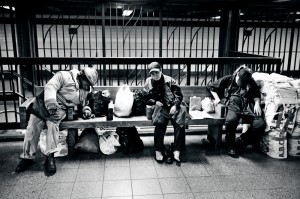
Causes of homelessness
The causes of homelessness are complex and occur as a result of interaction between individual and structural causes:
- ‘Individual causes’ refers to the circumstances that an individual may experience, such as poverty, childhood abuse, being in care, family problems, mental ill-health and/or substance use
- ‘Structural causes’ are ones that exist in society in general, such as a shortage of low-cost housing and lack of low-paid employment. Substance use, in particular, is associated with the cause and persistence of homelessness
In any given night, there are 400,000 people who are homeless in the EU, and 600,000 in the USA. This is a shameful statistic, given that both regions of the world are considered relatively “wealthy”.

What are the health needs of people who are homeless?
The first paper, by Fazel, Geddes and Kushel (2014), reviews the health needs of people who are homeless. People who are homeless experience high rates of premature death (that is to say, dying much earlier than predicted for the general population). Causes of death relate to high rates of suicide and unintentional accidents. In addition, they experience high rates of infectious diseases, as well as non-communicable diseases (such as diabetes and cancer) as a result of poor diet, smoking and alcohol consumption.
Findings
- People who are homeless are an aging population (in USA the median age is 50 years). They experience problems related to aging (such as cognitive impairment) at a much earlier age. Being older also means experiencing more chronic diseases and conditions such as cardiovascular disease
- Likelihood of dying (mortality) is substantially increased
- Greater risk of infectious diseases, such as HIV, tuberculosis and heart disease
- Lifestyle-related risks increase, such as substance use, suicide, homicide and poisoning
- Poor health (morbidity) is also significantly more likely compared with the general population. This may be compounded by effects of poverty in early life, as well as the impact of being homeless (poor nutrition, heavy smoking, poor access to health care, injuries and substance use).
- Mental health and substance use problems are common and greatly exacerbated by being homeless
- There is wide variability in prevalence of disease within studies, but there is a consistent message that health is significantly poorer for people who are homeless
Recommendations
Health recommendations:
- Screening people who are homeless for infectious diseases
- Local surveys to determine the mental and physical health needs of people in the local area
- Services and treatments need to take into account effects of co-morbid substance use
- Smoking cessation interventions should be available as well as “smoke-free” accomodation
- Homeless accomodation providers to consider providing facilities to store medication (such as a fridge to store insulin), as well as providing more nutritional food (low fat, high fibre etc)
- Health staff should screen for cognitive impairments and head trauma for people over 50 years who are homeless
In terms of policy:
- National/state targets related to health outcomes for people who are homeless
- Surveillance of health in this population
- Consistency in definition of “homelessness” in order to provide more generalisable data
- Strategies for prevention of homelessness during “high risk” periods of transition (leaving the criminal justice system, psychiatric services etc)
What does the evidence say about the most effective way to meet health needs?
In the second paper, Hwang and Burns 2014 provide a narrative outline of the findings of a literature review of the evidence for specifically tailored models of health care for people who are homeless.
Fazel, Geddes and Kushel (2014) drew attention to the fact that despite high levels of health need, people who are homeless don’t seem to engage and access health care, and disproportionately use accident and emergency services instead, compared to general population. So, given this fact, Hwang and Burns examined whether specifically tailored interventions for people who are homeless were more effective in improving health, homelessness and other outcomes compared with standard care.
Findings
- Primary care: service users in the USA rated the quality of care within comprehensive and specialised services substantially higher than those within mainstream health services
- Mental health: specific mental health services targeting people who are homeless show improved outcomes (including reduction in hospital bed use and decrease in psychiatric symptoms), as well as increased engagement
- Two key outcomes are the reduction of homelessness and service use costs. An effective approach for achieving this is permanent supported housing with case management, which allows alcohol consumption for people with chronic alcoholism and frequent admissions to emergency departments
- Medical respite, to allow time to recuperate and receive follow-up care, has been shown to reduce re-admission
- Any substance use treatment (compared with no treatment) seems to reduce substance use. There is a debate regarding the goal of interventions, ie harm reduction or abstinence
- In terms of homeless young people, the evidence is weak. Such research has focused on improving short-term outcomes, such as substance use or risky sexual behaviour
Conclusions
The central message coming from this paper is the importance of the quality of the relationship between the service provider and the person who is homeless. This relationship is critical in order to engage people. Workers will need to adapt what they do to meet the specific needs of this group, as well as being aware of the range of services available in their local area.
A comprehensive approach, encompassing services beyond health care, is vital. In some cases, assertive outreach approaches will be required rather than expecting people to independently access the services. Mental health services should be accessible as part of a broader service, providing accommodation and general physical health care. The authors note the paradox that the likelihood of receiving care is inversely related to the complexity and need of the person, and therefore they urge practitioners to use any contact as productively as possible.

Discussion
People become homeless usually as a result of adversity in their lives, as well as lack of opportunity for work and affordable housing. Being homeless has significant impact on health and well-being, and can lead to premature death. Mental ill-health and/or substance use is highly prevalent in people who are homeless.
Evidence suggests that health outcomes, as well as outcomes for housing and employment (recovery outcomes), can be improved by:
- specifically-tailored health interventions that are designed to be comprehensive and multi-disciplinary
- assertive engagement strategies
- intensive case management
The challenge for tackling homelessness, and the impact of homelessness, is that it requires a comprehensive policy drive, involving all of the public sectors: health, social care, housing, criminal justice, education and employment. There are a number of third sector initiatives pushing forward the multi-agency approach at national policy level and at local levels, including:
- Making Every Adult Matter has been established to help local areas form a comprehensive strategy, working in partnership for people with multiple needs (including homelessness)
- Homeless Link is a consortium of charities, focusing on lobbying for policy change to improve outcomes for people who are homeless.
Links
Fazel S, Geddes JR, Kushel M. The health of homeless people in high-income countries: descriptive epidemiology, health consequences, and clinical and policy recommendations. Lancet. 2014 Oct 25;384(9953):1529-40. doi: 10.1016/S0140-6736(14)61132-6. [Abstract]
Hwang SW Burns T. Health interventions for people who are homeless. Lancet. 2014 Oct 25;384(9953):1541-7. doi: 10.1016/S0140-6736(14)61133-8. [Abstract]
Homelessness series. The Lancet. October 2014. [Including podcast]





Matthew Fish
11 years agoacaringmind
11 years agoian_hamilton_
11 years agoLBLangford
11 years agohjmc96
11 years agocozzameena
11 years agoLizHughesDD
11 years agopash22
11 years agoMental_Elf
11 years agoCDUCKCHOC
11 years agoalice_crosbie
11 years agosanctualityuk
11 years agoGiveBag
11 years agoMagsinLondon1
11 years agoanna_page_
11 years agofilsta1011
11 years agosarahanderson26
11 years agoMiranda_dWD
11 years agopopulitherapy
11 years agoMissDaniM
11 years agoCIPS_UoM
11 years agoMaverickWonk
11 years agopsychiatryjc
11 years agoGursharanVirdee
11 years agoLucy Riddett
11 years agoMental_Elf
11 years agoReneemmmm
11 years agoDrLauraR
11 years agoMHFEwhatsnew
11 years agoRCPsychStuAssoc
11 years agolisabrady72
11 years agoMKushel
11 years agoKat_Finch
11 years agodrabagnall
11 years agoMJ_Tacchi
11 years agoCyngorYGS
11 years agohermitsholiday
11 years agoOxPsychiatry
11 years agoPsiAction
11 years agoAlistair1965
11 years agoRaluca Lucacel
11 years agoDonna Sheppard
11 years agocarltontherapy
11 years agoscarletjedi
11 years agorebkean
11 years agoKateLinhart
11 years agoKateLinhart
11 years agojmw3cat
11 years agoSomaConsultancy
11 years agoMental_Elf
11 years agoHomelessLink
11 years agonicola_upton
11 years agodualdiagnosisuk
11 years agov_patton_
11 years agoMHcarers
11 years agoNeuroKneel
11 years agoAliceHoylePSHE
11 years agoangela_sheard
11 years agoMental_Elf
11 years agoEllenMaryHarris
11 years agobrianleetham
11 years agoMental_Elf
11 years agoLizHughesDD
11 years agoLizHughesDD
11 years agoMental_Elf
11 years agoCDUCKCHOC
11 years agoLizHughesDD
11 years agoCityRoadsDetox
11 years agoCDUCKCHOC
11 years agosarahwishart
11 years agoiamsamthomas
11 years agoCPAAssociation
11 years agoJPW066
11 years agoiopsychology
11 years agoRosemary Callahan
11 years agoJune Dunnett
11 years agoslturtle
11 years agohelenlp
11 years agohunter_hayleigh
11 years agodempsey_jen
11 years agoian_hamilton_
11 years agoMental_Elf
11 years agonurseofthemind
11 years agoDottyRocker
11 years agoHelenS_NHA
11 years agoserenderen
11 years agoLucyDPlymUni
11 years agocaputpurgijs
11 years agoIain_caldwell
11 years agoLoiner_nick77
11 years agotonibeepbeepri1
11 years agoseenafazel
11 years agoChristina Armstrong-Graham
11 years agoseenafazel
11 years agoseenafazel
11 years agoseenafazel
11 years agoseenafazel
11 years agoDebbieHEYH
11 years agoEmpManPaul
11 years agobunders
11 years agoemmahicklin
11 years agoMental_Elf
11 years agolypftlib
11 years agoseach_the_teach
11 years agoBKate6696
11 years agoCounsellingMum
11 years agoMental_Elf
11 years agoLizHughesDD
11 years agoKehksha Azam
11 years agoian_hamilton_
11 years agoseenafazel
11 years agoMental_Elf
11 years agomargueritahanco
11 years agoCarina Kirby
11 years agoTheQNI
11 years agoNHFTNHSLibrary
11 years agoqeddify
11 years agoBABCP
11 years agocateallison
11 years agoOutReachDude
11 years agobrianleetham
11 years agoDebDMA
11 years agohevy50
11 years agoBerniceTigheRD
11 years agoTexrus
11 years agoSForHelplines
11 years agouserscarersSU
11 years agoNHSWatch
11 years agoManchesterCCGs
11 years agoDrGTalkingCures
11 years agoThe Mental Elf
11 years agochadwick_ruth
11 years agoIntipton
11 years agosmurphy_nurse
11 years agoLaraOyedele
11 years agonursingSUni
11 years agoKevinWard59
11 years agoSCIE_sco
11 years agoIain_caldwell
11 years agoKayFSheldon
11 years agohealthfoodpage1
11 years agoSocialCareElf
11 years agoMental_Elf
11 years agoSmithson71
11 years agoaghoury79
11 years agoDrShirleyLock
11 years agoLiaisonLawson
11 years agoSMMGP
11 years agomarieannswift
11 years agoHartlepoolMind
11 years agoCathceosf
11 years agoJayneMCox
11 years ago121Therapy
11 years ago