

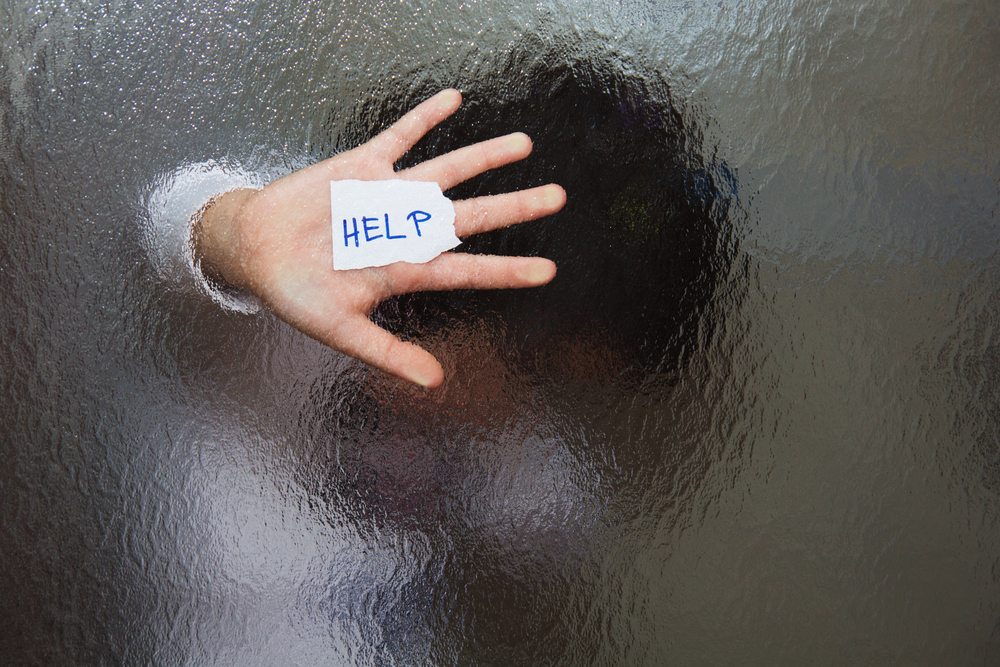

Just over a decade ago, a research study of rural mental health services in the north Midlands of the UK, recognised the importance of community mental health services and workers operating in a sensitive, non-stigmatising way (Crawford and Brown, 2002). The study made the connection between mental health stigma and service use. The authors described mental health stigma as traditionally being:
…seen as something that is the fault of the mental health system, and that involves an individual suffering social disapprobation and reduced life chances as a result of having been given a diagnostic label and an identity as a patient as a result of their contact with psychiatric institutions. (Crawford & Brown 2002 p229)
In a recent Mental Elf blog, Nikki Newhouse covered research from the Mental Health Commission of Canada that suggested that the stigma of mental illness is a barrier to care and help seeking. In the research, people with mental health problems said that at times ‘the stigma is worse than the illness’. Nikki mentioned the study summarised in this blog, which further explores the associations between the stigma of mental illness and people seeking help for their mental health problems. This study is the first systematic review of research looking at the impact of mental health stigma on help-seeking behaviour. The authors aimed to investigate the following questions:
- What is the size and direction of the association between stigma and help-seeking?
- To what extent is stigma identified as a barrier to help-seeking?
- What processes underlie the relationship between stigma and help-seeking?
- Are there population groups for which stigma disproportionately deters help-seeking?
They focused on help seeking from formal mental health services in the healthcare sector and from talking therapy services.

Methods
Five electronic databases (Medline, EMBASE, Sociological Abstracts, PsychInfo and CINAHL) were searched for studies and reviews on associations between stigma and help-seeking, dating from 1980 until 2011. There were no language restrictions in the searching. Following screening, 144 studies were included in the review. Three main types of literature were identified:
- Quantitative association studies, giving statistical data the relationship between measurements of stigma and help-seeking
- Quantitative barrier studies, giving data on the proportion of participants experiencing stigma-related barriers to help-seeking
- Qualitative process studies, giving analyses of interviews, focus groups or observational studies about stigma and help-seeking
Studies on structural stigma, such as lower funding and status accorded to mental health services or negative media stereotypes were not included.
Results
The majority of studies (69%) were undertaken in US or Canada, with 20 being conducted in Europe; 10 in Australia and New Zealand; 8 in Asia and 1 in South America. 21% of the studies were on students in higher education. The included studies were judged to be of methodologically mixed quality. Using key themes from the qualitative process studies, the authors constructed a conceptual model showing the relationship between the processes contributing to and counteracting the effects of stigma on help-seeking behaviour. The five major themes were:
- Dissonance between a person’s preferred self-identity or social identity and common stereotypes about mental health
- Anticipation/experience of negative consequences
- Need/preference for non-disclosure
- Stigma-related strategies used by individuals to enable help-seeking
- Stigma-related aspects of care that facilitate help-seeking
Notable sub-themes included ‘stigma for family’ for people from black and minority ethnic communities and ‘fear of psychiatric patients’, a barrier-related theme arising from the quantitative studies. Overall, the systematic review yielded these main findings:
- “Stigma was the fourth highest ranked barrier to help seeking [out of ten], with disclosure concerns the most commonly reported stigma barrier”
- “Ethnic minorities, youth, men, those in the military and health professionals were disproportionately deterred by stigma”
- “Stigma had a moderate effect on help-seeking compared to other types of barrier”
The authors also noted that seeking help from mental health services could be stigmatising and highlighted the negative effects of internalised stigma, or feelings of shame about having a mental health problem.
-

This review concluded that stigma has a small- to moderate-sized negative effect on help-seeking
Conclusion
The review authors conclude that:
Stigma has a small- to moderate-sized negative effect on help seeking. Review findings can be used to help inform the design of interventions to increase help-seeking.
For applying this research evidence in practice, they recommend that for interventions to improve access to mental health care and support:
multiple different types and aspects of stigma contribute to this effect, consequently multi-faceted approaches are likely to be most productive.
Summing up
This systematic review has some important limitations to consider when thinking about the generalisibility of findings. Firstly, the majority of included studies were carried out in Western countries with particular understandings of mental health and health and social care systems. Therefore mental health stigma and help-seeking was framed within the experience and values of those countries. The authors note that the exclusion of ‘grey literature’ represents a possible publication bias and that the fact that studies looking at ‘structural stigma’ were excluded may have resulted in an incomplete picture. Nearly a quarter of the studies had students as participants.
Despite these limitations, the study suggests that the stigma of mental illness itself can effect help-seeking from mental health services, implying that using mental health services can be stigmatising. This barrier has the potential to result in a cycle where mental health deteriorates because help is not sought and stigma increases as a result. Stigma is revealed to be a complex experience, with various effects on help-seeking for different people. The combined effect of social discrimination and/or stereotypes and mental health stigma is suggested by the profile of people who are disproportionately deterred from seeking help from formal mental health services by stigma. As such, the authors recommend that:
Services and practitioners could…support service users to develop additional strategies to cope with, and counter, treatment stigma and to address internalised stigma.

Links
Clement S, Schauman O, Graham T, Maggioni F, Evans-Lacko S, Bezborodovs N, Morgan C, Rusch N, Brown S J L, Thornicroft G (2014) What is the impact of mental health-related stigma on help seeking? A systematic review of quantitative and qualitative studies Psychological Medicine doi: 10.1017/S00332917140000129 [PubMed abstract]
Crawford P & Brown S (2002) ‘Like a friend going round’: reducing the stigma attached to mental healthcare in rural communities (PDF). Health and Social Care in the Community 10(4) pp.229–238




Bethan Davies
10 years agoJoão Leal
10 years agoNicola Davies
10 years agoWhat factors promote and challenge mental health recovery?
10 years agoSchizophrenia Society of Nova Scotia
12 years agoactiveadmission
12 years agoEyeSpyFan
12 years agoLCC_Counselling
12 years agoMaxK35
12 years agojmouriki
12 years agoRachelHadland
12 years agossnsc
12 years agoDrdomThompson
12 years agoSchrebersSister
12 years agoESPsychotherapy
12 years agoTilby62
12 years agoJasonShacks
12 years agoEMS_Junkie
12 years agoTheJackieBrook
12 years agonurse_w_glasses
12 years agoShamaila89
12 years agoShamaila89
12 years agoConstructed_Psy
12 years agoPaddy_kw
12 years agorjimmy663
12 years agoFionaArt
12 years agomcneil_77
12 years agosuemargar
12 years agoClinpsychLucy
12 years agojeandavisonTDT
12 years agoJean Davison
12 years agohermitsholiday
12 years agoEdgeDawn
12 years agoMental_Elf
12 years ago@EdgeDawn
12 years agoWirralRecovery
12 years agoClinpsychLucy
12 years agoSouthdownIPS
12 years agoCYPSNEP
12 years agoCYPSNEP
12 years agoShirley747
12 years agoniadla
12 years agoThorvid_HoliCow
12 years agoBarbara_Brennan
12 years agostephentimothy
12 years agoAPEAL_Lab
12 years agoNicola Davies
12 years agowoodylisa
12 years agoMaryP58
12 years agoEdgeDawn
12 years agoFutureDrWolfe
12 years agoKeeleMW
12 years agoShellLeach
12 years agoSimonTsar1079
12 years agomystosuk
12 years agodr_aud
12 years agodaisychick37
12 years ago121Therapy
12 years agoDasabuvir
12 years agoBPDFFS
12 years agoELaubenheimer
12 years agoMental_Elf
12 years agoSigrun_
12 years agoNFPH
12 years ago10womenaweek
12 years agoHannanRuth
12 years agocare4freedom
12 years agodementia_2014
12 years agoMental_Elf
12 years agoPaulaDoherty864
12 years agoTheCuriousSW
12 years agoronnytherep
12 years agoseawall
12 years agoJoão Leal
12 years agoDrIanDawe
12 years agotinkpink1
12 years agocisnotdirty
12 years agocisnotdirty
12 years agoMarkOneinFour
12 years agoMegEliz_
12 years agoMental_Elf
12 years agoheatsloan
12 years agodaisychick37
12 years agodaisychick37
12 years agoBwoodHighland
12 years agodaisychick37
12 years agoMarieLouiseLu
12 years agoHannanRuth
12 years agoMental_Elf
12 years agowaddellae
12 years agoaghoury79
12 years agoRMNBristol
12 years agoTinaColdham
12 years agoSchrebersSister
12 years agoSchrebersSister
12 years agoHealthwatch North Tyneside
12 years agoSeanCoglan
12 years agojanemccourt1
12 years agoLucy Bailey
12 years ago_Lucibee
12 years agosnowdingoe
12 years agoedanaming
12 years agoMental_Elf
12 years agomcpherson_ian
12 years agolypftlib
12 years agoBethan Davies
12 years agoelisemattnic
12 years agoIain_caldwell
12 years agoWatdoejij1
12 years agoccooper1309
12 years agoWill Convery
12 years agoThe Mental Elf
12 years agoaghoury79
12 years agojtrevmhn
12 years agoKeithWinestein
12 years agoian_hamilton_
12 years ago121Therapy
12 years agoLindaMilnes_UOM
12 years agoKaydonohue1
12 years agonursingSUni
12 years agoHFNurse
12 years agoAEJ1967
12 years agohullodave
12 years ago