

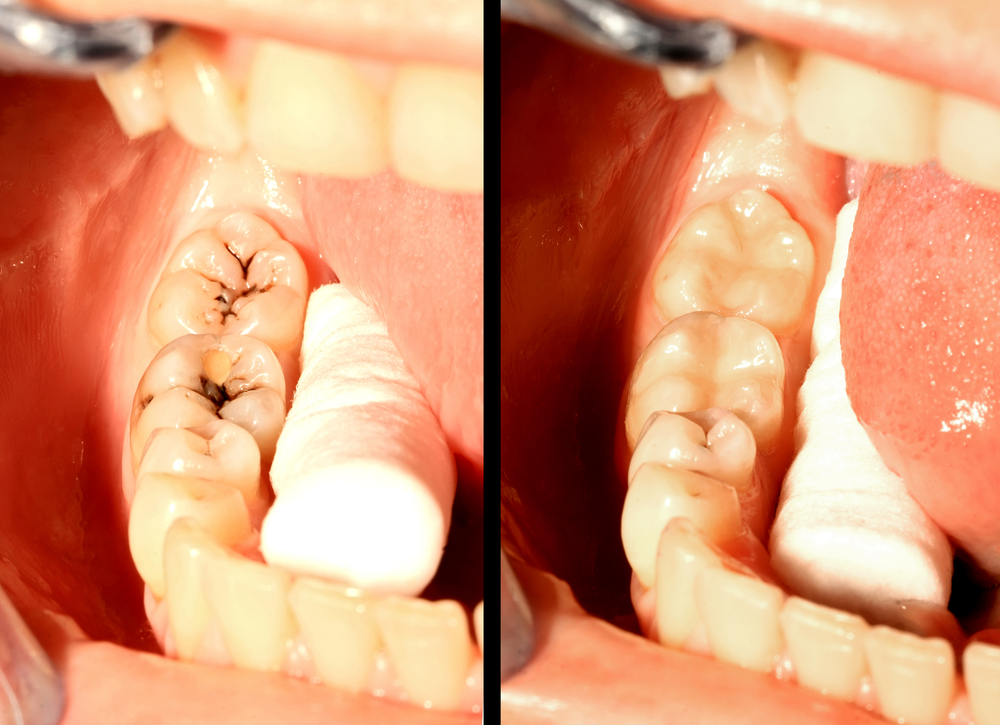

The use of tooth-coloured posterior restorations is increasing and the use of amalgam the material of choice for over 150 years is beginning to decline. These changes are in part due to an increasing desire for aesthetic restoration and the phasing down of amalgam following agreements at the Minimata Convention on mercury. The aim of this review was to assess the longevity of posterior resin restorations in adults.
Methods
Searches were conducted in the PubMed, Cochrane Library and the databases of the Centre for Reviews and Dissemination. Prospective randomised controlled trials (RCT), clinical controlled trials (CCT) and observational study of Class I and/or Class II resin composite restorations with a sample size of more than 40 individuals or teeth and longer that 4 years follow up were considered. Articles in English, German, Danish, Norwegian and Swedish were accepted. Abstracts were evaluated independently by the 5 reviewers. Methodological quality of the studies was assessed according to the Swedish Council on Health Technology Assessment (SBU) standardized checklists. Overall quality was assessed using the GRADE criteria.
Results
- 8 studies involving a total of 910 restorations in 420 patients were included.
- 7 of the 8 included studies were from the same research group.
- All studies used intra-individual comparisons and modified USPHS criteria for evaluation.
- Follow-up times ranged from 4 to 12 years.
- There were 80 failures of restorations in total, ranging from 2 to 17 per study.
- 60% of restoration of tooth fracture and endodontic complications occurred during the first 3 years of follow-up.
- Caries occurred later, more than 75% after 3 years in service.
- Total follow- up time at risk for failure was 62,030 months, ranging from 2736 to 13,820 months.
- The overall incidence rate for all causes of failure was 1.55 lost restorations per 100 restoration years.
- Survival rate at 4 years = 0.93 (95% CI; 0.91- 0.95). One study (74 teeth) provided data at 12 years with a survival rate = 0.86 (95% CI; 0.82;0.89).
- The most common biological reason for failure (a total of 31 restorations) was secondary caries, with or without fracture of the restoration.
- The quality of the evidence was low.
Conclusions
The authors concluded: –
The overall survival proportion of posterior composite restorations was high, but the results cannot be extrapolated to an effectiveness setting. The importance of adequate follow-up time is supported by the finding that secondary caries often occurred after 3 years or later.
Comments
A good methodological approach was taken for this review. Almost all of the included studies were conducted by the same research team, which needs to be taken into consideration when interpreting the findings. The reasons for failure were, in descending order, secondary caries, fractured or lost restoration, fractured tooth, and endodontic complications. A previous review (Dental Elf – 28th July 2014) found higher failure rates, but as noted by the authors of this review that included retrospective as well as prospective studies. However, the main reasons for failure in both reviews were similar, caries and fractures. A Cochrane review published in 2014 (Dental Elf – 7th Apr 2014) compared posterior composite resin filing with amalgam finding low-quality evidence to suggest that resin composites lead to higher failure rates and risk of secondary caries than amalgam restorations. So although tooth coloured restorative materials have continued to improve with time and will undoubtedly continue to do so, they do not as yet outperform amalgam.
Links
Ástvaldsdóttir Á, Dagerhamn J, van Dijken JW, Naimi-Akbar A, Sandborgh-Englund G, Tranæus S, Nilsson M. Longevity of posterior resin composite restorations in adults – A systematic review. J Dent. 2015 May 21. pii: S0300-5712(15)00108-6. doi: 10.1016/j.jdent.2015.05.001. [Epub ahead of print] PubMed PMID: 26003655.
Dental Elf – 7th Apr 2014 – Amalgam still an effective filling material for posterior teeth





Laminate restorations in posterior teeth
10 years agoAmalgam has lower failure rate than composite
10 years agojeff_manan
11 years agojeff_manan
11 years agoetukee
11 years agoDentalTijuana
11 years agoHowardFarran
11 years agoDominic_Hurst
11 years agoTheDentalElf
11 years agoTheDentalElf
11 years agoDentalTalks
11 years agoTheDentalElf
11 years agoDominic_Hurst
11 years agoTheDentalElf
11 years agoChristine Park
11 years agoHumberto Velásquez Mansilla
11 years agoHiroshi Kawase
11 years agoetukee
11 years ago