
The Mental Elf
High priority

(Mis)alliances in treatment research priorities

Achieving more openness and transparency in clinical research is critical if the basis for evidence based practice is to be completely sound.

The fairly recent recognition of the consequences of publication bias is one part of this: if treatment decisions and clinical guidelines are based on only part of the evidence, then it’s likely that poor clinical decisions will be (albeit unknowingly) made.

The movement to get all trials registered and reported is clearly irking parts of Big Pharma, as this month’s court action against the UK’s Health Research Authority demonstrates (AllTrials campaign). But tackling publication bias is only one part of improving the evidence-base. We also need greater openness about how research agendas are set.

Beavering away since 2004, the folks behind the James Lind Alliance (JLA) have been assuredly developing methods to systematically prioritise the research needed. Their ethos has always been to work with the most important people in any healthcare situation, namely the patients, carers and the health professionals with whom they work.

The JLA approach has been developed, refined and replicated over many years (and published in their guidebook). It seeks to identify and then prioritise treatment uncertainties (or unanswered research questions). Each project supported by the JLA is called a Priority Setting Partnership (PSP) to signal the equal participation of and collaborative working by patients/carers and health professionals.

Mental health features prominently in the JLA’s work, with five of the 49 current or completed PSPs focusing on a mental health condition:

  1. Bipolar disorder
  2. Depression
  3. Eating disorders (Netherlands)
  4. Dementia
  5. Schizophrenia

In their most recent article, in a new journal focusing on patient and public involvement and engagement in research (Crowe, et al, 2015), members of the JLA compared the types of treatments prioritised for research by the first 14 PSPs with the treatments being evaluated in studies registered in one of the main clinical trials registries. It makes for interesting reading!
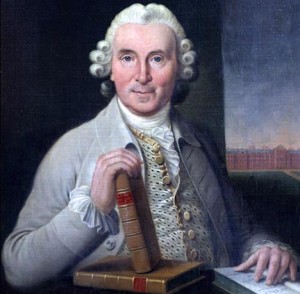
The James Lind Alliance brings patients, carers and clinicians together to identify and prioritise uncertainties, about the effects of treatments.
The James Lind Alliance brings patients, carers and clinicians together to identify and prioritise uncertainties about the effects of treatments. (James Lind, 1716-1794)

Methods

Analysing priorities from all the JLA PSPs

The priority lists generated from the 14 PSPs were collated to give 149 separate priorities and 126 mentions of treatments. These were classified by two authors into treatment types according to a system developed by a different author in an earlier study (see Table 1).

Sampling concurrently registered clinical trials for comparison

The authors chose the WHO International Clinical Trials Registry Platform for their comparison data as they considered it was the most comprehensive trials database and sufficiently detailed to enable the analysis. Trial data were downloaded, duplicates and studies not matched to the inclusion criteria removed, leaving 1,682 studies to analyse, leading to 1,867 treatment mentions. Of these, 52.8% were deemed non-commercial research and the rest commercially funded studies. The same two authors worked together to classify the studies into treatment types.

Results

The authors found marked differences between the proportions of different types of treatments identified by JLA PSPs and those being evaluated in studies registered on the Clinical Trials Registry.

Table 1: Interventions mentioned in research priorities identified by the JLA PSPs and among registered trials (2003-2012)

Type of intervention JLA patient-clinician PSP
Percentage (numbers) of interventions out of a total of 126 interventions mentioned
Registered non-commercial trials
Percentage (numbers) of interventions out of a total of 1,069 interventions mentioned
Registered commercial trials
Percentage (numbers) of interventions out of a total of 798 interventions mentioned
Drugs, vaccines and biologicals

18.2% (23)

37.2% (397)

86.3% (689)

Radiotherapy, surgery and perioperative, devices and diagnostic

23.0% (29)

29.8% (332)

11.1% (89)

Education and training, service delivery, psychological therapy, physical therapies, exercise, complementary therapies, social care, mixed or complex, diet, other

58.7% (74)

31.9% (307)

2.6% (20)

This study points to a mismatch between the research questions that patients and professionals think are important and the actual research that's being done.  
This study points to a mismatch between the research questions that patients and professionals think are important and the actual research that’s being done.

Discussion

The findings from this analysis, across a wide range of health areas, adds to the evidence from previous topic-specific studies to show there are important mismatches between the treatments that patients and clinicians wish to see evaluated and the treatments evaluated by researchers. This study also builds on this earlier work by including a larger dataset and longer timescales.

In particular, the authors identify that the mismatch is widest between JLA priorities and commercially funded research, with the latter dominated by drug trials. The way they analysed the data also suggests that few of the commercial studies can be comparing drugs with non-drug interventions.

Researchers urgently need to start addressing issues of importance to users of research.

Limitations

The authors recognise that using a clinical trials registry may lead to under-reporting of other types of research. This is a critical point because the authors also recognise that ‘methodological disincentives’ may lead to fewer controlled evaluations of non-drug treatments, interpersonal therapies and service delivery models. Other databases (e.g. studies funded by the National Institute of Health Research), may have included more studies of non-drug treatments and also included non-trial study designs that may be more suited to these types of interventions.

Conclusions

The authors concluded:

Research on drugs is preferred by researchers, evaluation of non-drug treatments is preferred by patients and clinicians.

As the original research into research priorities (in osteoarthritis: Tallon, 2000) that highlighted the mismatch and led to the establishment of the JLA was fifteen years ago, they argue that research culture is slow to change in regard to how important and relevant treatment research questions are identified and prioritised. Addressing this mismatch will need leadership and incentives as the current research culture privileges researchers’ (by this, do they really mean commercial?) interests rather than the needs of patients and their clinicians. The critical question, posed by Crowe in a blog post written to accompany the published paper, is:

When can we expect a change in culture and [research] commissioning that reflects these sorts of interventional studies, prioritized by patients and health and social care practitioners?

We knew 15 years ago that most research was answering the wrong questions. How much longer must we wait before things change? 
We knew 15 years ago that most research was answering the wrong questions. How much longer must we wait before things change?

Links

Primary paper

Crowe, S. Fenton, M. Hall, M. Cowan K. and Chalmers I. (2015) Patients’, clinicians’ and the research communities’ priorities for treatment research: there is an important mismatch. Research Involvement and Engagement 2015 1:2.

Other references

All Trials Registered, All Trials Reported campaign www.alltrials.net/

Chalmers, I. Rounding, C. Lock K. (2003) Descriptive survey of non-commercial randomised trials in the United Kingdom, 1980-2002. BMJ 2003: 327:1017-9.

James Lind Alliance guidebook – www.jlaguidebook.org/

Tallon, D. Chard, J. Dieppe, P. Relation between agendas of the research community and the research consumer Lancet 2000: 255:2037-40 [Abstract]

Crowe S. (2015) Do patients and clinicians research priorities really matter? 2015 BioMed Central blog.

Add a comment
  • Katherine_JLA

    Katherine_JLA

    10 years ago
    RT @lorraine_lbj: Great work! "@Katherine_JLA: Excellent blog from @vanhappier @Mental_Elf http://t.co/W0pCCRjT0w @sally_crowe @iainchalme…
  • lorraine_lbj

    lorraine_lbj

    10 years ago
    Great work! "@Katherine_JLA: Excellent blog from @vanhappier @Mental_Elf http://t.co/W0pCCRjT0w @sally_crowe @iainchalmersTTi"
  • iainchalmersTTi

    iainchalmersTTi

    10 years ago
    RT @Katherine_JLA: Excellent blog from @vanhappier @Mental_Elf on @LindAlliance & mismatches in research http://t.co/tTbEL3JBhz @sally_crow…
  • paulramchandani

    paulramchandani

    10 years ago
    RT @Katherine_JLA: Excellent blog from @vanhappier @Mental_Elf on @LindAlliance & mismatches in research http://t.co/tTbEL3JBhz @sally_crow…
  • Nicola Davies

    Nicola Davies

    10 years ago
    Nicola Davies liked this on Facebook.
  • MasterEBP

    MasterEBP

    10 years ago
    Mismatch tussen wat artsen/patiënten zouden willen onderzoeken en dat wat onderzoekers daadwerkelijk doen @Mental_Elf http://t.co/iivcJGhEE6
  • SysReviews

    SysReviews

    10 years ago
    RT @vanhappier: Not only is the research being done different to what patients want, research culture is slow to change http://t.co/R2eFapz…
  • SFlottorp

    SFlottorp

    10 years ago
    RT @sally_crowe: How do we change research funding culture 2 support research that matters to patients and health profs? @vanhappier http:/…
  • jonathanboote

    jonathanboote

    10 years ago
    RT @sally_crowe: How do we change research funding culture 2 support research that matters to patients and health profs? @vanhappier http:/…
  • ActiveKritizen

    ActiveKritizen

    10 years ago
    RT @sally_crowe: How do we change research funding culture 2 support research that matters to patients and health profs? @vanhappier http:/…
  • profsandyoliver

    profsandyoliver

    10 years ago
    RT @sally_crowe: How do we change research funding culture 2 support research that matters to patients and health profs? @vanhappier http:/…
  • DrSoumyadeepB

    DrSoumyadeepB

    10 years ago
    RT @sally_crowe: How do we change research funding culture 2 support research that matters to patients and health profs? @vanhappier http:/…
  • ProfTraceyHowe

    ProfTraceyHowe

    10 years ago
    RT @sally_crowe: How do we change research funding culture 2 support research that matters to patients and health profs? @vanhappier http:/…
  • sally_crowe

    sally_crowe

    10 years ago
    How do we change research funding culture 2 support research that matters to patients and health profs? @vanhappier http://t.co/vW025qP6hE
  • SABREresearchUK

    SABREresearchUK

    10 years ago
    RT @Mental_Elf: (Mis)alliances in treatment research priorities http://t.co/V6EQ4PCwO3
  • SABREresearchUK

    SABREresearchUK

    10 years ago
    RT @vanhappier: Not only is the research being done different to what patients want, research culture is slow to change http://t.co/R2eFapz…
  • Londontrini77

    Londontrini77

    10 years ago
    RT @Katherine_JLA: Excellent blog from @vanhappier @Mental_Elf on @LindAlliance & mismatches in research http://t.co/tTbEL3JBhz @sally_crow…
  • Katherine_JLA

    Katherine_JLA

    10 years ago
    RT @vanhappier: Not only is the research being done different to what patients want, research culture is slow to change http://t.co/R2eFapz…
  • dnunan79

    dnunan79

    10 years ago
    RT @Katherine_JLA: Excellent blog from @vanhappier @Mental_Elf on @LindAlliance & mismatches in research http://t.co/tTbEL3JBhz @sally_crow…
  • Mental_Elf

    Mental_Elf

    10 years ago
    RT @Katherine_JLA: Excellent blog from @vanhappier @Mental_Elf on @LindAlliance & mismatches in research http://t.co/tTbEL3JBhz @sally_crow…
  • LaurenMonds_AU

    LaurenMonds_AU

    10 years ago
    RT @vanhappier: Not only is the research being done different to what patients want, research culture is slow to change http://t.co/R2eFapz…
  • whatheidisays

    whatheidisays

    10 years ago
    RT @vanhappier: Not only is the research being done different to what patients want, research culture is slow to change http://t.co/R2eFapz…
  • BuffDavis

    BuffDavis

    10 years ago
    RT @vanhappier: Not only is the research being done different to what patients want, research culture is slow to change http://t.co/R2eFapz…
  • MarkOneinFour

    MarkOneinFour

    10 years ago
    RT @vanhappier: Not only is the research being done different to what patients want, research culture is slow to change http://t.co/R2eFapz…
  • DrPetra

    DrPetra

    10 years ago
    RT @vanhappier: Not only is the research being done different to what patients want, research culture is slow to change http://t.co/R2eFapz…
  • CEVetM

    CEVetM

    10 years ago
    RT @vanhappier: Not only is the research being done different to what patients want, research culture is slow to change http://t.co/R2eFapz…
  • iainchalmersTTi

    iainchalmersTTi

    10 years ago
    RT @vanhappier: Not only is the research being done different to what patients want, research culture is slow to change http://t.co/R2eFapz…
  • Katherine_JLA

    Katherine_JLA

    10 years ago
    Excellent blog from @vanhappier @Mental_Elf on @LindAlliance & mismatches in research http://t.co/tTbEL3JBhz @sally_crowe @iainchalmersTTi
  • Katherine_JLA

    Katherine_JLA

    10 years ago
    RT @sally_crowe: Hi @Katherine_JLA @iainchalmersTTi @vanhappier @LindAlliance has blogged about our mismatch paper here: http://t.co/vW025q…
  • AGMConfUK

    AGMConfUK

    10 years ago
    RT @APMPostTweets: (Mis)alliances in treatment research priorities https://t.co/4OjM4FmZJA
  • ClaireBallinge1

    ClaireBallinge1

    10 years ago
    RT @sally_crowe: Hi @Katherine_JLA @iainchalmersTTi @vanhappier @LindAlliance has blogged about our mismatch paper here: http://t.co/vW025q…
  • Mental_Elf

    Mental_Elf

    10 years ago
    Don't miss: (Mis)alliances in treatment research priorities http://t.co/V6EQ4PCwO3 #EBP
  • APMPostTweets

    APMPostTweets

    10 years ago
    (Mis)alliances in treatment research priorities https://t.co/4OjM4FmZJA
  • EcpdCarolyn

    EcpdCarolyn

    10 years ago
    (Mis)alliances in treatment research priorities https://t.co/vYwJQQJsv7
  • sally_crowe

    sally_crowe

    10 years ago
    Hi @Katherine_JLA @iainchalmersTTi @vanhappier @LindAlliance has blogged about our mismatch paper here: http://t.co/vW025qP6hE
  • CDukes66

    CDukes66

    10 years ago
    RT @Mental_Elf: (Mis)alliances in treatment research priorities http://t.co/V6EQ4PCwO3
  • NeedMoreCourage

    NeedMoreCourage

    10 years ago
    RT @vanhappier: Not only is the research being done different to what patients want, research culture is slow to change http://t.co/R2eFapz…
  • Dan_Robotham

    Dan_Robotham

    10 years ago
    Good article @Mental_Elf clarifying how research priorities can be set http://t.co/D3ypzNsqUx @LindAlliance https://t.co/APjQjpM40a
  • BPSOfficial

    BPSOfficial

    10 years ago
    RT @vanhappier: My latest @Mental_Elf blog summarises (mis)alliances in treatment research priorities highlighted by @LindAlliance http://t…
  • Mental_Elf

    Mental_Elf

    10 years ago
    RT @vanhappier: Not only is the research being done different to what patients want, research culture is slow to change http://t.co/R2eFapz…
  • vanhappier

    vanhappier

    10 years ago
    Not only is the research being done different to what patients want, research culture is slow to change http://t.co/R2eFapzT4x @Mental_Elf
  • psychwatch2

    psychwatch2

    10 years ago
    RT @Mental_Elf: (Mis)alliances in treatment research priorities http://t.co/V6EQ4PCwO3
  • Mental_Elf

    Mental_Elf

    10 years ago
    RT @vanhappier: My latest @Mental_Elf blog summarises (mis)alliances in treatment research priorities highlighted by @LindAlliance http://t…
  • HHLibService

    HHLibService

    10 years ago
    (Mis)alliances in treatment research priorities http://t.co/SHrlVq0ZK4
  • Christina Armstrong-Graham

    Christina Armstrong-Graham

    10 years ago
    Christina Armstrong-Graham liked this on Facebook.
  • MichaelGFollan

    MichaelGFollan

    10 years ago
    RT @Mental_Elf: (Mis)alliances in treatment research priorities http://t.co/V6EQ4PCwO3
  • eczemasupport

    eczemasupport

    10 years ago
    RT @Mental_Elf: (Mis)alliances in treatment research priorities http://t.co/V6EQ4PCwO3
  • iVivekMisra

    iVivekMisra

    10 years ago
    (Mis)alliances in treatment research priorities http://t.co/aEevfWweqo #MentalHealth http://t.co/kTyGkV5ziw
  • ian_hamilton_

    ian_hamilton_

    10 years ago
    RT @Mental_Elf: (Mis)alliances in treatment research priorities http://t.co/V6EQ4PCwO3
  • PowysTHBLibrary

    PowysTHBLibrary

    10 years ago
    RT @Mental_Elf: (Mis)alliances in treatment research priorities http://t.co/V6EQ4PCwO3
  • couragesings

    couragesings

    10 years ago
    “@Mental_Elf: (Mis)alliances in treatment research priorities http://t.co/4Wdf2OroXT” @kgapo
  • LiteracyHealth

    LiteracyHealth

    10 years ago
    RT @Mental_Elf: (Mis)alliances in treatment research priorities http://t.co/V6EQ4PCwO3