



Schizophrenia is a serious neurodevelopmental disorder that often starts during adolescence. Current treatment guidelines (NICE, 2013) recommend atypical antipsychotics for adolescents with this condition, but this is based largely on studies of adults with the condition.
The Cochrane Schizophrenia Group conducted this systematic review to synthesise the current evidence base for atypical antipsychotic medication in adolescents with schizophrenia. This was done because it is questionable whether the findings from adult studies can and should be generalised to adolescents in this way.
In addition, the existing evidence for treatment of psychotic disorder in adolescents suggests atypical and typical antipsychotics are equally effective. Atypical antipsychotics are better tolerated in the short term, and are seen to have fewer side effects than typical antipsychotics, which makes them a popular treatment choice; however, they have adverse effects of their own, such as weight gain and parkinsonism, and there is evidence to suggest adolescents are more sensitive to these than adults.
Methods
The authors included all relevant randomised controlled trials which involved adolescents aged 13-17 with schizophrenia or related disorders. They searched the Cochrane Schizophrenia Group Trials Register, which is compiled by systematic searches of major databases, hand searches and searches of conference proceedings. It also includes studies in languages other than English.
To assess trial quality, the reviewers followed the standard Cochrane Collaboration protocol. They also contacted study authors in those cases where details of randomisation or other characteristics of the trial were unclear or not provided.
13 studies with a total of 1,112 adolescent participants were included in the review.
Trials were grouped into four groups, depending on which control treatment was used:
- Atypical antipsychotic compared with placebo
- Atypical antipsychotic compared with typical antipsychotic
- One atypical antipsychotic compared with another
- Low dose of atypical antipsychotic compared with higher dose of the same atypical antipsychotic.
Results
The main findings were that:
- Research in the area of adolescent psychosis seems to be active, as 8 out of the 13 studies included in the review were published during or after 2008
- There was no convincing evidence that atypical antipsychotics are more effective than typical antipsychotics in treating adolescents with psychosis
- There was no difference in effectiveness between different atypical antipsychotics
- However, frequency and severity of adverse effects differed between medications:
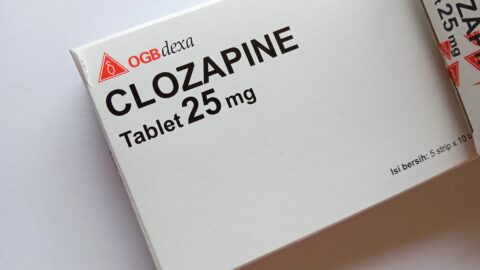
- Olanzapine, risperidone and clozapine were found to be associated with weight gain across studies
- The only drug not associated with weight gain was aripiprazole
- Adolescents responded better to standard doses than lower doses, no matter which atypical antipsychotic was used; except aripiprazole, where a low dose was as effective as a high dose

Conclusions
This was a well-conducted systematic review in an area of crucial clinical importance.
The reviewers conclude that more research is needed in this area. The review only found 13 trials that fulfilled the quality criteria, which in itself is not an especially low number. However, nine of these trials were extremely small (between 17 and 60) so that their results need to be interpreted with caution.
The review raises several issues with regard to research in this area. It advocates standardising the reporting of side effects, stating that comparisons across studies were difficult because side effects were not reported in a consistent way across studies.
It also points out several gaps in the current evidence base. No comparable data were available on long-term outcomes, service utilisation, economic outcomes, behaviour or cognitive responses, so the applicability of this review to clinical practice is limited. Especially as the main findings indicate no significant difference between medications, this data would be very useful for clinicians concerned with making a treatment decision.
In light of the findings indicating that atypicals are not inherently more effective than typicals, and that there does not seem to be a difference in efficiency between the different atypical antipsychotic medications, the review recommends choosing medications for adolescents with psychosis on a case-by-case basis, taking into account response or lack of response to past medications and the adverse effects mentioned. It also raises the importance of studying the effects of typical antipsychotics alongside atypicals in adolescents to be able to make truly informed treatment decisions. At the moment, there is only a study protocol for a Cochrane Review concerned with this (Datta, 2012).
Dosage seemed to be the factor that had the most influence: in the studies that compared a low dose of an atypical antipsychotic to a higher dose, a significant proportion of the participants left the study early because of lack of efficacy.

Links
Kumar A, Datta SS, Wright SD, Furtado VA, Russell PS. Atypical antipsychotics for psychosis in adolescents. Cochrane Database of Systematic Reviews 2013, Issue 10. Art. No.: CD009582. DOI: 10.1002/14651858.CD009582.pub2.
Psychosis and schizophrenia: recognition and management of psychosis and schizophrenia in children and young people. NICE clinical guideline, CG155, Jan 2013.
Datta SS, Kumar A, Wright SD, Russell P. Typical antipsychotics for psychosis in adolescents (Protocol). Cochrane Database of Systematic Reviews 2012, Issue 1. Art. No.: CD009539. DOI: 10.1002/14651858.CD009539.



bsspsychology
12 years agomariaw399
12 years agolisaburscheidt
12 years agosscpsychology
12 years agoNHFTNHSLibrary
12 years agoaghoury79
12 years agoSarahMMcKay
12 years ago121Therapy
12 years ago444blackcat
12 years agoMental_Elf
12 years agodelkadot
12 years agoayse_nur_akgun
12 years agoIntervalThinks
12 years agoBPSOfficial
12 years agoMental_Elf
12 years agodaceituno
12 years agoJosephCManning
12 years agojillipopperooni
12 years agoMindEdUK
12 years agoMental_Elf
12 years agobehlibrary
12 years agoMarylandParity
12 years agochristoclifford
12 years agoconcaff
12 years agomasters_nik
12 years agoMental_Elf
12 years agolypftlib
12 years agoemerging2OT
12 years agot_unit2010
12 years agoAlysColeKing
12 years agoMental_Elf
12 years agoBeyond_The_Body
12 years agoscharrlib
12 years agomissc1984
12 years agoforensicpsyinfo
12 years agoPSSRU_LSE
12 years agoMindEdUK
12 years agotokyocounseling
12 years agoMental_Elf
12 years agoMindEdUK
12 years agoHHLibService
12 years agoKirsten Corden
12 years agoeip_nepft
12 years agoMental_Elf
12 years agomissc1984
12 years agoLeona Allan
12 years agoEmpowerDerby
12 years agoaghoury79
12 years agoMandyware
12 years agoDrDanielJSmith
12 years ago121Therapy
12 years ago