

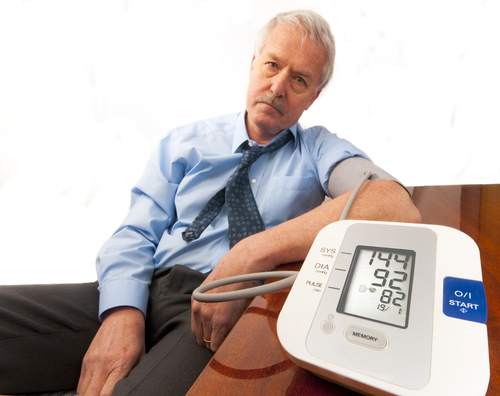

Individuals with severe mental illness (SMI) have shortened life expectancies compared to the general population. This is partly down to higher rates of chronic physical illness.
Cardiovascular disease (CVD) is the leading cause of death among patients using mental health services. It is assumed that interventions used to reduce CVD are similarly effective in patients with SMI and the general population. However, people with SMI are at greater risk of adverse drug reactions (drug-drug or drug-disease interactions) and are less able to access behavioural interventions.
Furthermore, medications commonly used to treat SMI (e.g atypical antipsychotics) are a contributory factor in CVD. It is worth evaluating commonly available interventions aimed reducing CVD risks specifically in this vulnerable population so that clinicians can target this problem.
The Agency for Healthcare Research and Quality (AHRQ) designed a comparative effectiveness (or systematic) review to evaluate strategies to improve CVD risk factors in adults with SMI. In this review, SMI was defined as: schizophrenia or schizoaffective disorder (or other related primary psychotic disorder), bipolar disorder, or current major depression with psychotic features.
Methods
The authors devised Key Questions (KQs) on advice from clinicians, patient advocates, scientific experts, and funding bodies from around the world. They searched MEDLINE, Embase, PsycINFO, and the Cochrane Database of Systematic Reviews, and looked for unpublished studies to address these KQs . Wherever possible, the authors conducted a meta-analysis. When this was not possible, results were summarised qualitatively. Outcomes of interest were common parameters measured in health care such as weight control, glucose level, lipid level, CVD risk profile (e.g., Framingham CVD scores) or components of modifiable CVD risk (e.g., blood pressure, smoking status).
Results
KQ 1: Do weight management interventions reduce weight for adults with SMI who are overweight, obese or take antipsychotics?
32 studies were identified.
Key points;
- Meta-analysis showed that behavioural interventions had significant advantage over control conditions (approximately -1 vs. +0.05 BMI points, p<0.01).
- Behavioural interventions are associated with a 3kg reduction weight (mean difference, -3.13 kg; 95% CI, -4.21 to -2.05), compared with controls (a mere 4% reduction in body weight!).
- Switching to or adding aripiprazole, adding the anticonvulsant medications topiramate and zonisamide, yielded small to moderate weight loss (mean difference, -5.11 kg; CI, -9.48 to -0.74), for those taking an antipsychotic.
- So did adding metformin (mean difference, -4.13 kg; 95% CI, -6.58 to -1.68).

KQ 2: Do diabetes interventions improve glucose level control for adults with SMI who have diabetes or are taking antipsychotics?
7 studies were identified.
Key points;
- There was insufficient evidence to support any strategy to control glucose.
- There was a small but significant advantage for metformin in controlling HbA1c (mean change -0.03 for metformin vs. +0.09, p=0.049).
KQ 3: Do interventions aimed at reducing lipids improve lipid level control for adults with SMI who have dyslipideamia or are taking antipsychotics?
15 studies were identified.
Key points;
- There is insufficient evidence to address this question properly.
- Aripiprazole modestly improved lipid levels when; i) added to chronic clozapine, and ii) swapped for olanzapine.
- Switching from oral to injectable olanzapine increased LDL cholesterol
KQ 4: Do lifestyle interventions improve cardiovascular risk factors for adults with SMI who have cardiovascular disease, are at increased risk of CVD, or are taking antipsychotics?
3 studies were identified.
Key points;
- The evidence is insufficient to estimate the effects of lifestyle interventions and studies varied substantially on methodological rigor and quality.
- One study showed benefit in switching from olanzapine, quetiapine, or risperidone to aripiprazole in the context of a manualized, behaviour oriented diet and exercise program.
- Two studies reported significant benefits of lifestyle interventions for self-reported health-related quality of life.

Conclusions
The authors concluded that
The meta-finding is that, of the interventions tested in SMI populations to date, effects on intermediate outcomes (e.g., weight) are similar to the effects found in the general population.
This was a good systematic review that asked some really important questions. Unfortunately they could only be partially answered due to the lack of high quality studies. Interventions addressing weight gain have received the most attention and have a demonstrable (but small) benefit for patients with SMI. There was also some evidence for metformin, topiramate, or aripiprazole as an adjunctive or antipsychotic-switching strategy. The authors of the review considered these to be “actionable strategies, provided that the benefits outweighed potential harm”. However there was little information on harm to inform these decisions.
Most of the Woodland Glen will know lots about the use of behavioural interventions in SMIs, such as Cognitive Behavioral Therapy (CBT). At a glance, behavioural interventions for weight reduction resemble CBT in many ways; employing strategies such as goal setting, activity scheduling and self monitoring to support weight reduction. Sound familiar? More-and-more people are training as CBT practitioners in services like Improving Access to Psychological Therapies or IAPT (to find out more about IAPT go to http://www.iapt.nhs.uk). Perhaps these skills with the support of nutritional experts could be used to bridge the wide crevasse that exists between mental and physical health.
Limitations
Given that CVD is the most prevalent cause of death in this population, there are surprisingly few studies. They did not find any studies looking at peer and family support interventions to address elevated CVD risk, any interventions designed to address lipids studies nor any interventions targeted individuals with psychotic depression. Study participants were mostly in the USA in middle aged groups from outpatients services, which effects the generalizability of the results.
Links
Gierisch JM, Nieuwsma JA, Bradford DW, Wilder CM, Mann-Wrobel MC, McBroom AJ, Wing L, Musty MD, Chobot MM, Hasselblad V, Williams JW Jr. Interventions To Improve Cardiovascular Risk Factors in People With Serious Mental Illness. Comparative Effectiveness Review No. 105. The Agency for Healthcare Research and Quality (AHRQ).
The Improving Access to Psychological Therapies website; http://www.iapt.nhs.uk




Av Rajiv Rai
10 years agoLatest Reports from the Mental Elf | The Knowledge Toolkit
12 years agopaulinegrant1
12 years agoaghoury79
12 years agoDrDJSmith
12 years agoMental_Elf
12 years agoFloBaing
12 years agoDrMariosAdamou
12 years agoClaireplanner
12 years agoBeresfordPeter
12 years agoMental_Elf
12 years agoThe Mental Elf
12 years agoangliacounsel
12 years agoAUShrink
12 years agoMental_Elf
12 years agoTreasa_corbett
12 years agoCraigmclaugh
12 years agoHRHLiblib
12 years agoSysReviews
12 years agoMental_Elf
12 years agoAv Rajiv Rai
12 years agoDrJoeyD
12 years agoaghoury79
12 years ago