



What is art if not therapy? It’s easy to understand how engaging with art might improve well-being, but that isn’t the same as tackling serious mental health problems.
We’ve heard mixed messages in relation to art therapy for schizophrenia here in the woodland (Tomlin, 2012; Judge, 2014), but what about for non-psychotic mental health disorders? After all, depression, anxiety and phobias make up the majority of mental health problems and are not associated with psychosis.
A new HTA study addresses this, considering clinical effectiveness and cost-effectiveness (Uttley, 2015). Like most HTA studies, the analysis was multifaceted. The authors hoped to identify:
- The clinical effectiveness of art therapy for people with non-psychotic mental health disorders
- User and service provider perspectives on acceptability and potential harms and benefits of art therapy
- The cost-effectiveness of art therapy for people with non-psychotic mental health disorders

What is art therapy?
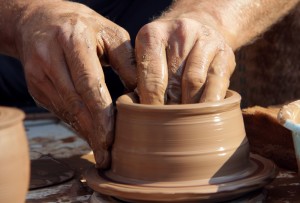
Simply doing art is not art therapy. It can involve things like painting, clay work and the use of digital media as a form of nonverbal expression. Art therapy is seen as an option for people who have problems putting distress into words, or other problems with engagement. It’s important that it takes place alongside other modes of communication within a therapeutic relationship and in a therapeutic setting.
Variation in definition and delivery is surely one of the greatest challenges in the evaluation of psychological therapies. Unfortunately, like many complex interventions, art therapy lacks a clear single definition. The authors provide one for the purpose of their review, requiring that it involves:
- Definition of appropriate therapeutic boundaries
- Presence of a therapist, with an appropriate therapeutic relationship
- Therapeutic use of art materials
- Appropriateness to the cultural and service context
NICE recommends art therapy to be considered for people with psychosis and schizophrenia (NICE, 2014) and arts therapies are included in the autistic spectrum disorder Strategic Plan for Wales (Welsh Assembly Government, 2009). However, there are currently no national guidelines in the UK for the use of art therapy for non-psychotic mental disorders.
The literature search
The foundation of all 3 parts of the study is one mega literature search. 13 databases were searched along with 10 additional sources. The authors should be commended for including full details of their search terms. The searches allowed for all study types and used a flexible population definition, including mental health clinical samples (with or without formal diagnoses) as well as people with physical conditions where art therapy was used to reduce mental health symptoms. All possible comparators were considered and studies could be conducted in any setting.
The search identified 10,270 unique records. Studies conducted in people with a psychotic disorder were manually excluded through sifting, and each of the 3 stages of the study used different inclusion and exclusion criteria.
The authors describe their work as an ‘evidence portfolio’ because the research questions centre on the intervention rather than a specific population. However, the population is defined as ‘non-psychotic’ and therefore conditions like schizophrenia are excluded.

Quantitative review
Non-randomised studies were excluded from the quantitative analysis, which sought to identify treatment effects associated with art therapy. Of the 10,270 records, 49 full-text articles were assessed for eligibility. 18 references were included in the analysis, which were based on 15 different studies.
Art therapy had a positive impact on mental health symptoms in 10 out of the 15 studies, but the quality of the RCTs was generally low. Study characteristics included:
- Mean sample size of 52
- 11 of 15 studies examined group art therapy
- 3 of 15 studies targeted people with non-psychotic mental disorders
- 4 of 15 studies were in cancer patients
- 4 of 15 studies were in children or adolescents
- 5 of 15 studies involved only women; 1 only men
- Number of sessions ranged from 1 to 40 (mean of 9)
These facts highlight that there was a lot of heterogeneity. Primary diagnoses included cancer, dementia/Alzheimer’s, PTSD, depression, HIV/AIDS, asthma and sickle cell disease. Comparators included treatment as usual, wait-list, attention placebo, CBT and verbal dynamic psychotherapy. Therapists were variously described as ‘trained’, ‘licensed’, ‘qualified’, ‘certified’ and ‘registered’, while some studies made no reference to accreditation. 7 studies did not describe randomisation. The majority of studies had a high risk of bias.
It wasn’t possible to perform a formal pooled analysis as there were many different outcome measures used. The table below shows the number of studies identified as beneficial or otherwise for a selection of target symptoms. We can clearly see that most studies were finding art therapy to be beneficial, but many showed no statistically significant benefit.
| Symptom / variable | Significant positive treatment effect vs control | Improvement from baseline, but no treatment effect | No improvement for art therapy | Significant negative treatment effect vs control |
| Depression | 4 | 4 | 1 | |
| Anxiety | 6 | 1 | ||
| Mood | 3 | 1 | ||
| Trauma | 3 | |||
| Distress | 2 | 1 | ||
| Quality of life | 4 | |||
| Coping | 1 | 2 | ||
| Cognition | 1 | |||
| Self-esteem | 1 |
Qualitative review
The qualitative review sought to investigate issues relating to acceptability for both patients and practitioners and how these might affect clinical effectiveness. 42 full-text articles were assessed for eligibility and 13 references (12 studies) were included in the analysis. 11 papers assessed patients’ attitudes and 2 assessed practitioner attitudes. In total the studies contained qualitative data from 188 patients and 16 health practitioners.
Benefits of art therapy identified included:
- Relationships
- Understanding
- Perspective
- Distraction
- Personal achievement
- Expression
- Relaxation
- Empowerment
Some respondents indicated that they did not think art therapy would be beneficial. In patients with cancer, a number of potential harms were identified including the potential for causing anxiety, increasing pain and leading to the activation of emotions that were not resolved.
Overall, art therapy was viewed as acceptable. In particular, a good relationship between the patient and art therapist was viewed as essential for effective treatment.

Cost-effectiveness analysis
Essentially, the economic evaluation was a bit of a flop. The authors did their best but the data just weren’t there; 26 full-text articles were assessed but only 1 study was identified as useful. Not only that, but this was a case study of a single patient.
Nevertheless, the authors developed a simple model to evaluate cost-effectiveness in terms of cost-per-QALY, with outcomes in the primary analysis based on a single study of mindfulness-based art therapy on 111 women with cancer in the US. The analysis assumed – based on data from the British Association of Art Therapists – that treatment would be 43 sessions in a year, at a cost of £750.
This analysis suggested that art therapy, compared with wait-list control, was very likely to be cost-effective.
Conclusion
The authors concluded that:
Art therapy appears to have statistically positive effects compared with controls in a number of studies in patients with different clinical profiles.
Furthermore, the report concludes that art therapy is reported to be an acceptable treatment associated with a number of benefits, and that art therapy appears to be cost-effective versus wait-list control.

Discussion
The authors acknowledge that their approach is non-standard in that they are considering an intervention rather than a population; they essentially review art therapy being used for any health problem. This is not adequately addressed by the methodology.
My conclusions would be more circumspect than the authors’. In regard to the review of effectiveness, the authors identify various potential sources of bias. I think publication bias could be playing an important role here, but this study does not reveal much in this regard. I also do not think a claim can be made that we would expect art therapy to be cost-effective. The analysis is based on a very specific population, and outcomes are based on a mapping approach that could be unreliable. Costs might also be far from realistic; it’s worth noting that the cost-effectiveness analysis assumed that 43 sessions would be carried out over 52 weeks, yet no study identified included this many and the mean number of sessions was 9.
The authors acknowledge that “it is difficult to define or exhaustively list comparators for art therapy”. This is a key requirement of decision analysis; we cannot make the best decisions without knowing about the full range of alternatives.
Art therapy has been heavily studied, but there remains a dearth of randomised trials. Art therapists are clearly engaged with the research, but there is a need to develop better designed and more standardised randomised studies to identify whether art therapy might be worth the investment.

Links
Primary paper
Uttley L, Scope A, Stevenson M, Rawdin A, Taylor Buck E, Sutton A, et al. Systematic review and economic modelling of the clinical effectiveness and cost-effectiveness of art therapy among people with non-psychotic mental health disorders. Health Technol Assess 2015;19(18) [PubMed]
Other references
Judge J. Art therapy for schizophrenia: an effective add-on treatment? The Mental Elf. 27 Jun 2014.
Tomlin A. Group art therapy does no better than standard care at improving symptoms for people with schizophrenia. The Mental Elf. 5 Mar 2012.
NICE (2014) Psychosis and schizophrenia in adults: treatment and management. NICE clinical guideline, CG178, 2014. (See recommendations section 1.4.4.3: “Consider offering arts therapies to all people with psychosis or schizophrenia, particularly for the alleviation of negative symptoms. This can be started either during the acute phase or later, including in inpatient settings”).
Welsh Assembly Government (2009) The Autistic Spectrum Disorder Strategic Action Plan for Wales (PDF). A report produced by the Adult Task and Finish Group, Oct 2009.





K Callaghan
7 years agoThe Creative Arts And Mental Illness | Melissa's Blog
7 years agoAlicia Gil
8 years agoGh kleiner
8 years agoNeill Richardson
10 years agoSueStradPhoto
10 years agoScotMusicHealth
10 years agoNickyHaire
10 years agobaat_org
10 years agojonart_therapy
10 years agoChildtherapytoy
10 years agoDrawitOut1
10 years agoandreahrysko
10 years agoJenn Henderson
10 years agoAnge Guisso
10 years agoKeaneMinds
10 years agoThe Mental Elf
10 years agoABlow2TheHead
10 years agoFourCornersHC
10 years agoHHLibService
10 years agoNHFTNHSLibrary
10 years agobloomsburylady
10 years agoEndTheMHStigma
10 years agoMHTuz
10 years agoFFosteratu
10 years agoTime4Recovery
10 years agomhequalities
10 years agoxXRos3R3dXx
10 years agogretchen_miller
10 years agoGees_gang
10 years agoKMKArtTherapy
10 years agoKpaap2012
10 years agoarttxalliance
10 years agoStavrosOrfanos
10 years agoLovingWifewBD2
10 years agoitsmepanda1
10 years agoKateGillieART
10 years agoWellbeingWithin
10 years agoCMHAPeelRegion
10 years agoKate Matthews
10 years agoPrivate_Therapy
10 years agoacaringmind
10 years agobedoubty
10 years agoDissolveCloud
10 years agobaat_org
10 years agotamiyabjohnston
10 years agoAvril Cutler
10 years agoArt Therapy Study
10 years agoCarrie Speculand
10 years agoNicola Davies
10 years agoSusan Henderson
10 years agogordonmilson
10 years agokjswayne
10 years agosamalecwilson
10 years agoNAMIOregon
10 years agoBexTheElf
10 years agoallan_eve
10 years agoMental_Elf
10 years agocheesarnie
10 years agoLesley Uttley
10 years agoKat Collard Hill
10 years agoJane Mannersj
10 years ago9SandraWhite
10 years agobrandingscience
10 years agoElasticFamilies
10 years agoScHARRSheffield
10 years agoClinPsy
10 years agoraluca_lucacel
10 years agoevakaltenthaler
10 years agoeve_potts
10 years agoeve_potts
10 years agoLaura Wallace
10 years agohughesy9000x
10 years agoSteveDRMN
10 years agoMental_Elf
10 years agoMental_Elf
10 years agoSHIPUSOCIALWORK
10 years agoMental_Elf
10 years agoAntonietta Picariello
10 years agoSanika Summer
10 years agoOhStevenCarne
10 years agoAlisonscope
10 years agodrabagnall
10 years agohartleyhare00
10 years agomhresources
10 years agoeditoravs
10 years agoUWSMichaelF
10 years agoBPSOfficial
10 years agoOtGita
10 years agoChrisSampson87
10 years agoMental_Elf
10 years agojungatheartblog
10 years agosueveneer
10 years agoHealthUKTD
10 years agoKayFSheldon
10 years agoOTBeth131
10 years agoChrisSampson87
10 years agoJune Dunnett
10 years agoCultureComProg
10 years agoKamGillar
10 years agoMental_Elf
10 years agoKatie Edwards
10 years agoBethan Davies
10 years agosusanyinka
10 years agoMartinEHeadofC
10 years agoBPDFFS
10 years agoheronjess
10 years agoforever_murphy
10 years agoSchrebersSister
10 years agobignick47
10 years agoiVivekMisra
10 years agoAliciaRidout
10 years ago