


Recently, the one millionth person in England became a dementia friend. Now this shows how much awareness of dementia has been raised already since the initiative started two years ago, and is continuing to make everyone aware, from shop owners to hotels to friends.
In the English National Dementia Strategy, and in the new Prime Minister’s Challenge on Dementia 2020 (PDF), raising awareness is one major priority. Another one is improving diagnosis rates. With high GP workloads and a large assessment involved when diagnosing dementia, finding ways to increase the number of diagnosed people with dementia and reducing the time of diagnosis are much sought-after.
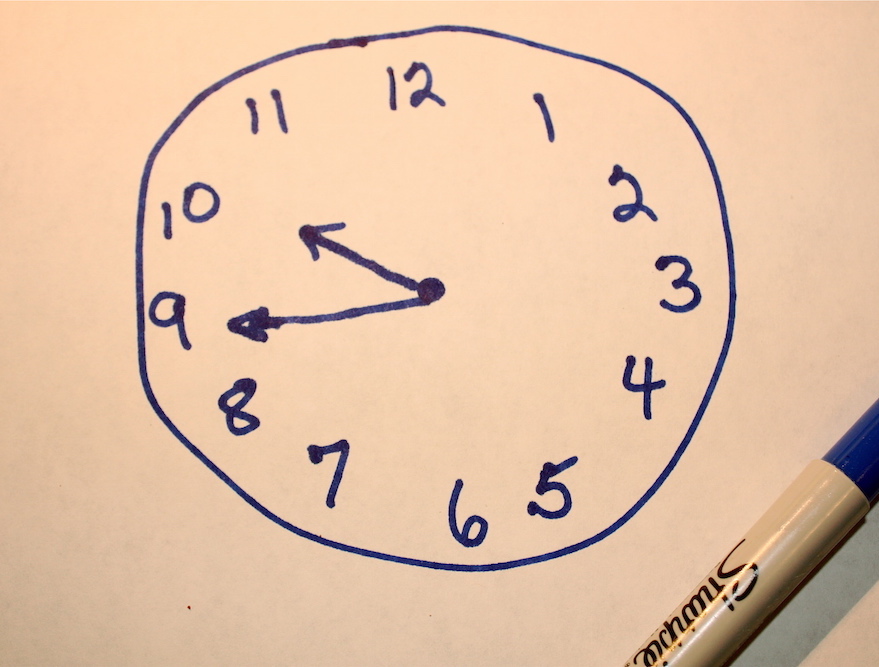
In this blog, I review a recent Cochrane systematic review on the efficacy of the Mini-Cog (Borson et al., 2005) in detecting dementia by Fage and colleagues (2014).

Methods
The authors (Fage et al., 2014) searched standard electronic databases, including MEDLINE and PsycINFO, whilst also looking through the reference lists of each relevant study for more studies. Studies were included if they used the Mini-Cog (PDF) as a cognitive diagnostic tool; included people with dementia in a community setting; and clearly explained how a diagnosis of dementia was made.
The authors scanned 110 studies after having removed duplicates, and excluded 107 studies based on their exclusion criteria.
Results
- The three included studies were all conducted by the creators of the Mini-Cog.
- In all studies, people were recruited from community samples.
- Two of the three studies interestingly excluded people with mild cognitive impairment, in many cases the stage before dementia, or people with possible dementia.
- The specificity and sensitivity of the Mini-Cog was found to be high, but subject to possible bias in the participant selection.

Strengths and limitations
This review follows standard guidelines of conducting a systematic review, in searching a broad range of databases for studies, as well as hand searches. This is linked with appropriate extraction methods. Considering the small number of studies resulting from the searches (only three inclusions), it may have been more appropriate for the authors to go back to the first searches and redo the searches for any setting.
Currently, this review only focuses on community settings. Whilst Chan et al. (2014) and Seitz et al. (2014) are in the process of redoing this systematic review for primary and secondary care settings, it may have been truly more appropriate to apply any setting. We shall see how many studies are turned up by the primary and secondary care reviews.
The other limitation of this review is not subject to the review itself, but to the limitations of the included studies. As the authors rightly highlight, two study samples had very high prevalences of dementia (44% and 52%). These high proportions are not common in the general community-dwelling older population, which means that participants were preselected. This could have biased the reported sensitivity and specificity of the Mini-Cog.

Summary
The Mini-Cog does not seem to be an effective alternative to currently-practised forms of dementia diagnosis. There is too little evidence available, and the evidence there is has only been produced by the creators of the Mini-Cog.
Comparing the Mini-Cog to other brief measures of global cognition, such as the Mini-Mental State Examination (MMSE), the Montreal Cognitive Assessment (MoCA) and the Addenbrooke’s Cognitive Examination III (ACE-III), the Mini-Cog appears too brief to be truly reliable in assessing dementia. The MMSE, MoCA and the ACE-III comprise a variety of different forms of cognition, for example asking people to repeat a sentence, to calculate, to write a couple of sentences or to remember an address after a ten-minute delay. Still, they only last between 10 to 15 minutes to administer each.
Although the efficacy of the Mini-Cog is currently being reviewed in primary and secondary care settings by the Cochrane Dementia and Cognitive Improvement Group (Chan et al., 2014; Seitz et al., 2014), it is unlikely that the Mini-Cog will replace current cognitive screening tools.
Indeed, if we are to address the government’s objective to improve dementia diagnosis, we must better understand the earliest symptoms of daily activity problems (Giebel, Challis, & Montaldi, 2014), or indeed (on a micro-level) detect the build-up of amyloid-beta oligomers in the brain earlier (Rushworth et al., 2014).

Links
Fage BA, Chan CCH, Gill SS, Noel-Storr AH, Herrmann N, Smailagic N, Nikolaou V, Seitz DP. Mini-Cog for the diagnosis of Alzheimer’s disease dementia and other dementias within a community setting. Cochrane Database of Systematic Reviews 2015, Issue 2. Art. No.: CD010860. DOI: 10.1002/14651858.CD010860.pub2.
Borson, S., Scanlan, J., Watanabe, J., et al. (2005). Simplifying detection of cognitive impairment: comparison of the Mini-Cog and Mini-Mental State Examination in a multiethnic sample. Journal of the American Geriatrics Society, 53, 871-874. [PubMed abstract]
Chan CCH, Fage BA, Smailagic N, Gill SS, Herrmann N, Nikolaou V, Seitz DP. Mini-Cog for the diagnosis of Alzheimer’s disease dementia and other dementias within a secondary care setting (Protocol). Cochrane Database of Systematic Reviews 2014, Issue 12. Art. No.: CD011414. DOI: 10.1002/14651858.CD011414.
Giebel, C.M., Challis, D., & Montaldi, D. (2014). A revised Interview for Deteriorations in Daily Living Activites in Dementia reveals the relationship between social activities and well-being. Dementia, doi: 10.1177/1471301214553614 [PubMed abstract]
Rushworth, J., Ahmed, A., Griffiths, H., Pollock, N., Hooper, N. & Millner, P (2014). A label-free electrical impedimetric biosensor for the specific detection of Alzheimer’s amyloid-beta oligomers. Biosens Bioelectron, 56, 83-90. [Abstract]
Seitz DP, Fage BA, Chan CCH, Gill SS, Herrmann N, Smailagic N, Nikolaou V. Mini-Cog for the diagnosis of Alzheimer’s disease dementia and other dementias within a primary care setting (Protocol). Cochrane Database of Systematic Reviews 2014, Issue 12. Art. No.: CD011415. DOI: 10.1002/14651858.CD011415.





A multitude of systematic reviews on dementia diagnosis
11 years agoThe Mental Elf & The Mini-Cog – Psychable
11 years agofelly500
11 years agothisisnix
11 years agogmcrotty
11 years agomuntma
11 years agoDrHubaEvaluator
11 years agoSuzanneShoker1
11 years agoChill4usCarers
11 years agoAnitaDavies1
11 years agoBCPFT
11 years agoHHLibService
11 years agoMODEMproject
11 years agoNHFTNHSLibrary
11 years agoGCBarnwell
11 years agoPSSRUManchester
11 years agoTrishaL8
11 years agoDocMartin68
11 years agoannatatton1
11 years agoDoaa Riad Ayoub
11 years agoMcgreevyJessie
11 years agoAdelinaCoHe
11 years agojllaidlaw
11 years agonicholaverstra1
11 years agoDrShirleyLock
11 years agoFageMD
11 years agoFageMD
11 years agoCECLibrary
11 years agoSNMSWResearch
11 years agotraliwro
11 years agoIntipton
11 years agoHAIL_tweets
11 years agoMental_Elf
11 years agoSUREteamCardiff
11 years agoClarissaGiebel
11 years agoClarissaGiebel
11 years agoSocialCareElf
11 years agoHet_Roberts
11 years agoMental_Elf
11 years agolypftlib
11 years agoThe Mental Elf
11 years agoMosaic Training Consultancy Ltd
11 years agoBTSUKLTD
11 years agoMental_Elf
11 years agoBeckytheOT
11 years agoptsdjedi
11 years agoClarissaGiebel
11 years agoMental_Elf
11 years agoClarissaGiebel
11 years agoPSSRUManchester
11 years agoClarissaGiebel
11 years agoClarissaGiebel
11 years agoClarissaGiebel
11 years agoSomaPsy_Nant
11 years agoIain_caldwell
11 years agotshakey
11 years agoLindaMilnes_UOL
11 years agoskyellis666
11 years agoRaluca Lucacel
11 years agoaghoury79
11 years agomishkasaurus
11 years agoBuffDavis
11 years agoeskbankbooks
11 years agobeatdementia
11 years ago