

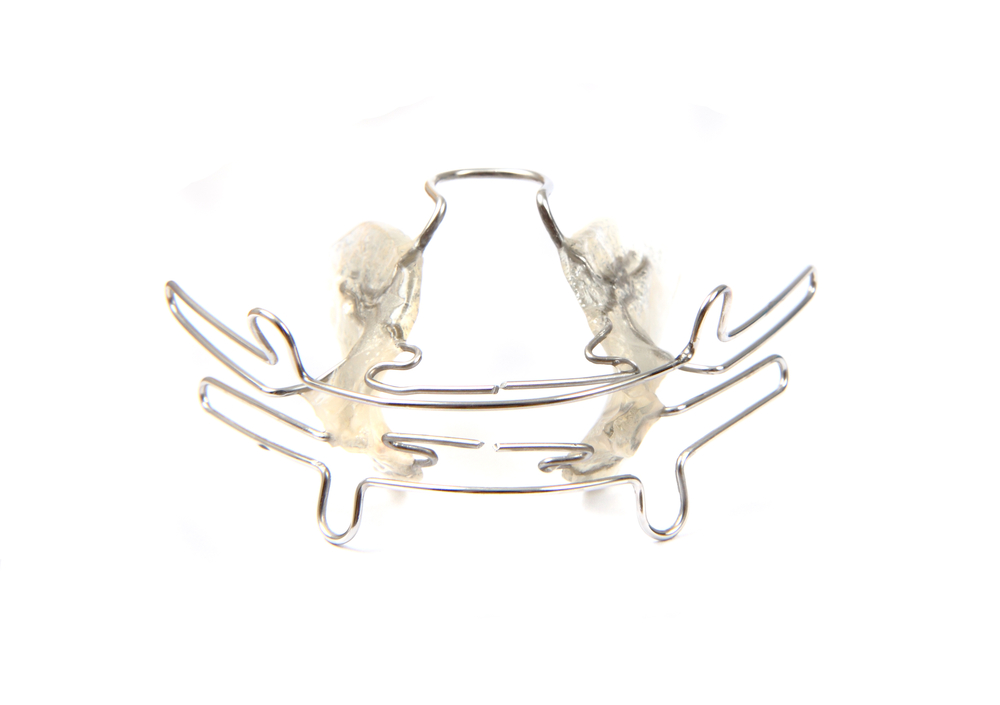

This is the latest update of a Cochrane review looking at the treatment of class II malocclusion. This is a common problem affecting about one in four of 12 year-olds in the UK. The aim of the review was to assess the effects of orthodontic treatment for prominent upper front teeth (Class II malocclusion) when this treatment is initiated when the child is seven to 11 years old compared to when they are in early adolescence, or when treatment uses different types of orthodontic braces.
Searches were conducted in the Cochrane Oral Health Group’s Trials Register, the Cochrane Central Register of Controlled Trials (CENTRAL), Medline and Embase with no restrictions regarding language or publication date. Randomised controlled trials (RCTs) of orthodontic treatments to correct prominent upper front teeth in children or adolescents under the age of 16 were included.
- 17 studies involving 721 participants were included. The overall quality of the evidence was low with only 2 of the 17 studies being assessed as at low risk of bias.
- The evidence suggests that providing orthodontic treatment, for children with prominent upper front teeth, in two phases appears to significantly reduce the incidence of damage to incisor teeth (middle four teeth at the top) as compared to treatment that is provided in one phase when the child is in early adolescence. There are no other advantages for providing a two-phase treatment i.e. early from age seven to 11 years and again in adolescence compared to one phase in adolescence.
- When functional appliance treatment is provided in early adolescence it appears that there are minor beneficial changes in skeletal pattern, however, these are probably not clinically significant. Similarly, the choice of functional appliance when compared to the Twin Block does not result in any advantageous effects.
The authors concluded
The evidence suggests that providing early orthodontic treatment for children with prominent upper front teeth is more effective in reducing the incidence of incisal trauma than providing one course of orthodontic treatment when the child is in early adolescence. There appears to be no other advantages for providing treatment early when compared to treatment in adolescence.
Comment
It is worth noting that the conclusions of this review have changed since the first version of the review, which highlights the value in the Cochrane process of updating the reviews. The earlier version published in 2007 did not identify any difference in the effectiveness of early or late treatment from Class II malocclusions. While this new update does show a benefit in terms of a reduction in incisal trauma it should be remembered that the overall quality of the available evidence is still low.
A blog about this review written by one of the authors (Kevin O’Brien) is also available.
Links
Thiruvenkatachari B, Harrison JE, Worthington HV, O’Brien KD. Orthodontic treatment for prominent upper front teeth (Class II malocclusion) in children. Cochrane Database of Systematic Reviews 2013, Issue 11. Art. No.: CD003452. DOI: 10.1002/14651858.CD003452.pub3.
Kevin O’Brien’s Orthodontic blog





Headgear treatment for Class II malocclusions? - National Elf Service
10 years agoAlonso Carrasco
10 years agoClass II malocclusion: an overview of reviews
11 years agoIncreased overjet: increased risk of dental trauma
11 years agoFunctional orthodontic appliances: effective in short-term
11 years agoFixed functional appliances for class II malocclusion - The Dental Elf
11 years agodentpraveen
12 years agoScottishDental
12 years agonicolainnes
12 years agoDreams_j
12 years agoSaudiDentalHyg
12 years agoLincolnOrtho
12 years agosmilesolution
12 years agoAlonso Carrasco
12 years agodentalcaroline
12 years agowetherbyortho
12 years agoOBrienK57
12 years agoLe_Dentist
12 years agoLe_Dentist
12 years ago