

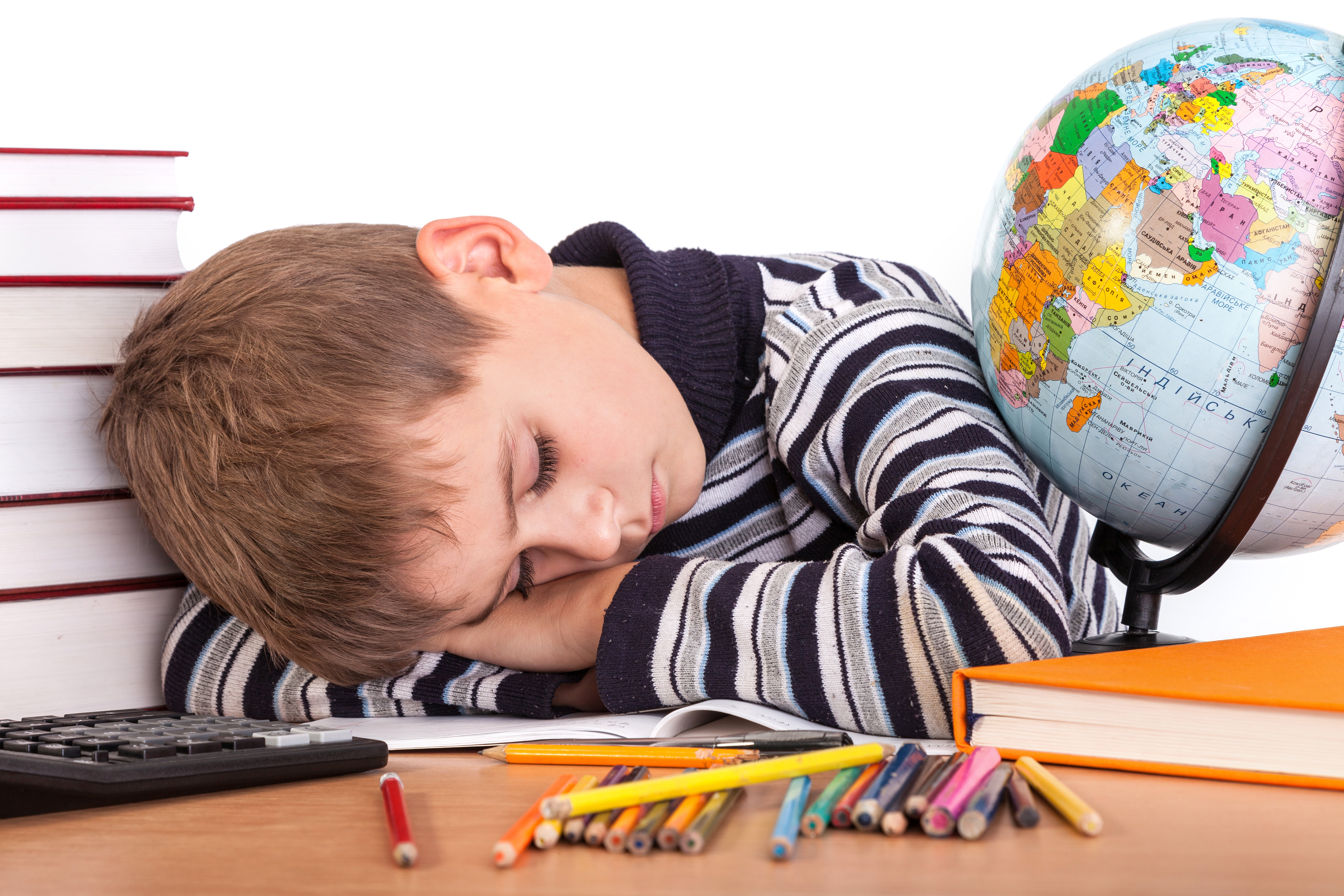

Good sleep is a crucial part of our physical and mental well-being. We typically spend about a third of our lives asleep but when we miss out on sleep, we can feel fatigued and struggle to concentrate. Sleep problems are generally quite common and have been reported as one of the most common health conditions in individuals with attention deficit hyperactivity disorder (ADHD).
It is possible that sleep disturbances make ADHD symptoms worse in affected children and adolescents or even result in ADHD-like behaviours. As such, it is important to consider treatment of sleep problems in children and adolescents with ADHD. Improving sleep quality has the potential to reduce ADHD problems and to have a positive impact on everyday life of the affected individuals, as well as their families.
Methods
In order to perform a clinical review of the research literature on the assessment, treatment and management of sleep problems in children with ADHD, the authors of a recent literature review searched a number of databases (PubMed, EMBASE, and Web of Knowledge) for relevant research. The literature search turned up 139 relevant articles, 22 of which directly assessed treatment of sleep problems in children with ADHD.
The authors summarised the literature and provided recommendations in terms of how sleep problems in ADHD should be assessed and treated. Where the reviewed articles presented evidence-based recommendations for treatment of sleep problems in ADHD, the authors assessed the quality of this using the SIGN criteria and presented recommendations with a note about the strength of this evidence. Where such empirical evidence was lacking, the authors presented their consensus view of possible recommendations. The Consensus Conference where these recommendations were agreed was supported by an unrestricted educational grant from Shire Pharmaceuticals.
-

This review stresses the importance of screening for sleep problems when initially assessing a child with ADHD.
Results
Sleep problems & possible risk factors
The most common types of problems reported included bedtime resistance, difficulties with falling asleep or waking up, night awakenings, sleep breathing problems and daytime sleepiness.
The authors report that possible causes of sleep problems may include specific sleep disorders (for example sleep apnea or “restless legs syndrome”), poor sleep routines, oppositional and defiant behaviours, anxiety or mood problems, medical conditions (for example asthma), side effects of ADHD medications or the ADHD symptoms themselves.
Recommendations for assessment
The authors make the following recommendations for clinical practice:
- Baseline screening for presence of sleep difficulties at the initial assessment of ADHD symptoms in a child. This could include use of screening questionnaires such as “BEARS” or the Children’s Sleep Habits Questionnaire
- If medication is prescribed, it is important that changes in sleep be monitored at follow-up appointments, as these may be side effects of the medication
- If any sleep problems are suspected, it is recommended that a 2-week sleep diary is used by the parents and/or young person to record sleeping habits
- If necessary, other tests could be used to follow-up and diagnose the problem, including:
- Polysomnography: recording of brain activity, body movement, breathing and heart rate during sleep
- Actigraphy: using a wristwatch-like device to monitor cycles of rest and physical activity throughout the day
- Infrared video camera: monitoring body movements during sleep (in the dark)
Recommendations for treatment
Before other methods are considered, the authors stress that it is important to try to implement healthy sleep practices, such as:
- Maintaining a regular routine for sleep
- Allowing sufficient time for sleep depending on the age of the child or young person
- Encouraging the child to do relaxing things before bedtime

Such behavioural strategies should ideally be adapted for children with ADHD (for example by providing the instructions for the routine one step at a time). Although such strategies may be necessary steps in improving sleep, the authors state that they may not be sufficient for all children.
If behavioural treatments are not effective, for example in cases of insomnia, use of orally-administered melatonin may be considered, as there are several drug trials showing the benefits of this medication. There is currently no robust evidence for the effectiveness of other medications.
If it is suspected that sleep problems are the side effects of medications, the authors point out that it could be worth trying alternative dosages, dose regimens, formulations, different medications, or administering melatonin alongside the other medication (recommendation based on clinical consensus of authors).
Co-occurring disorders (such as anxiety or oppositional behaviours), which may be affecting sleep need to also be considered and treated (recommendation based on clinical consensus of authors).
Specific sleep problems
- Circadian Rhythm Sleep Disorders: If a CRSD is diagnosed, there is some preliminary and weak evidence (from case reports) for the use of light therapy or chronotherapy, with stronger evidence (based on 2 randomised-controlled trials) for the use of melatonin.
- Sleep Disordered Breathing: The recommended treatment for this is adenotonsillectomy, which is an operation to remove both the adenoids and tonsils. The evidence for this treatment is moderate and comes from 2 non-randomised studies.
- Restless Legs Syndrome and Periodic Limb Movement Disorder: Beneficial treatments may include physical exercise and avoiding substances such as caffeine or alcohol. There is also some weak evidence from one study for the use of oral iron supplements.
Strengths and limitations
The authors did not include their search strategy in the review (apparently it’s available on request), so it’s hard to say whether or not their search was systematic and reliable. They also say that they decided not to include unpublished studies ”because, as pointed out by the Cochrane group, the inclusion of unpublished data may introduce bias”. In fact, the Cochrane handbook clearly states that “obtaining and including data from unpublished trials appears to be one obvious way of avoiding this problem [bias]”, although it also warns that “inclusion of data from unpublished studies can itself introduce bias” if the sample included is unrepresentative of all included studies.
The authors highlight a number of sleep problems and treatment options which could really benefit from further research. There is currently very little evidence for the effectiveness of many of the possible treatments, perhaps aside from melatonin, which appears to have been more widely researched in the context of ADHD.
Where the evidence was weak, they provide recommendations based on their clinical experience, which were agreed at a Consensus Conference supported by an unrestricted educational grant from Shire Pharmaceuticals, a company who produce drug treatments for ADHD among other things.
They also mention a number of ongoing RCTs into behavioural strategies in ADHD, which will be of interest once their results are published.
Conclusions
Sleep problems are very common in children and adolescents with ADHD and making an accurate diagnosis is important.
The authors highlight that:
Before addressing the specific sleep disorder/condition, we recommend the implementation of healthy sleep practices as the foundation of sleep problems management.
In addition to behavioural strategies, the most robust support comes from the use of orally-administered melatonin. To date, there is limited evidence for other medications and for non-pharmacological therapies (behavioural, light therapy or chronotherapy).
It appears that it is early days for this research area. Hopefully, as further research is carried out, appropriate treatments will be found for the many children with ADHD who suffer from sleep problems.
Links
Cortese S, Brown TE, Corkum P, Gruber R, O’Brien LM, Stein M, Weiss M, Owens J. Assessment and Management of Sleep Problems in Youths With Attention-Deficit/Hyperactivity Disorder. J Am Acad Child Adolesc Psychiatry. 2013 Aug;52(8):784-96. doi: 10.1016/j.jaac.2013.06.001.
Owens, J. A., & Dalzell, V. (2005). Use of the ‘BEARS’ sleep screening tool in a pediatric residents’ continuity clinic: a pilot study. Sleep medicine, 6(1), 63-69.
Owens, J. A., Spirito, A., & McGuinn, M. (2000). The Children’s Sleep Habits Questionnaire (CSHQ): psychometric properties of a survey instrument for school-aged children. SLEEP-NEW YORK-, 23(8), 1043-1052.
Wikipedia article on Polysomnography.
Wikipedia article on Actigraphy.





markwwilsonmd
12 years agolamandfin
12 years agoValerieIvens
12 years agoADHD_LANC
12 years agoSameiHuda
12 years agoManucAlves
12 years agoEarthJill
12 years agosullivan1980
12 years agokristiwolfe
12 years ago24HealthyLiving
12 years agoMental_Elf
12 years agodrrutterford
12 years ago121Therapy
12 years agoShelleyBonanno
12 years agoMindEdUK
12 years agohullodave
12 years agoMental_Elf
12 years agojoannamphd
12 years agomedivizor
12 years agogivoly
12 years agomedskep
12 years ago_stefleanne_
12 years agoaghoury79
12 years agoahdavud
12 years agoMedLinkNeurol
12 years agomedskep
12 years agoSarahMMcKay
12 years ago121Therapy
12 years ago121Therapy
12 years agoAnnHealthCare
12 years agoStu_Beresford
12 years agoandyhilldmu
12 years agoDrMariosAdamou
12 years agoecabibimft
12 years agoMental_Elf
12 years agoRidgewayPsycho
12 years agoraggie18
12 years agoroo_ju
12 years agodrrutterford
12 years agopnetworker
12 years agodrljbaldwin
12 years agocharlottie_rank
12 years agoGardenNeeds1
12 years agoLindaHaleyB
12 years agoBPSOfficial
12 years agocharitybegin1
12 years agoMental_Elf
12 years agoaddiction_genes
12 years agoTaraDeliberto
12 years agoBristolAdvocate
12 years agoMental_Elf
12 years agoMindEdUK
12 years agostressbustersUK
12 years agoMHNEtweets
12 years agoPCN_Expo
12 years agoFreddieByrne
12 years agoJHealthVisiting
12 years agoMental_Elf
12 years agolypftlib
12 years agoukidcp
12 years agoMental_Elf
12 years agobehlibrary
12 years agozippydjh
12 years agoWill Convery
12 years agoTuryaYogi
12 years agoKeithWinestein
12 years agofiona_lilly
12 years agoYoganomics
12 years agoYoga_Amsterdam
12 years agoaghoury79
12 years agoemmaclairep
12 years ago