



Smoking higher-potency cannabis may be a considerable risk factor for psychosis according to research conducted in South London (Di Forti, et al., 2015).
Cannabis is the most widely used illicit drug in the UK and previous research has suggested an association between use of the drug and psychosis, however the causal direction and underlying mechanism of this association are still unclear.
This recent case-control study published in Lancet Psychiatry, aimed to explore the link between higher THC (tetrahydrocannabinol) content and first episode psychosis in the community.
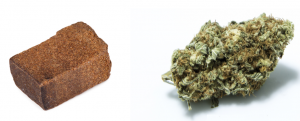
To compare the impact of THC content on first episode psychosis, participants were asked whether they mainly consumed skunk or hash. Analysis of seized cannabis suggests that skunk has THC content of between 12-16%, while hash has a much lower THC content ranging from 3-5% (Potter, Clark, & Brown, 2008; King & Hardwick, 2008).
Methods
The researchers used a cross-sectional case-control design. Patients presenting for first-episode psychosis were recruited from a clinic in the South London and Maudsley NHS Foundation Trust; patients who had an identifiable medical reason for the psychosis diagnosis were excluded. Control participants were recruited from the local area using leaflets, internet and newspaper adverts. There were 410 case-patients and 370 controls recruited.
Researchers gathered data on participants’ cannabis use in terms of lifetime history and frequency of use as well as type of cannabis used, i.e. skunk or hash. Participants were also asked about their use of other drugs including alcohol and tobacco, as well as providing demographic information.
Results
The case-patients and control participants were different in a couple of key areas (note: psychosis is more common in men and in ethnic minorities):
| Case patients | Control participants | |
| Male | 66% | 56% |
| Age | 27.1 years | 30.0 years |
| Caribbean or African ethnic origin | 57% | 30% |
| Completed high level of education | 57% | 90% |
| Ever been employed | 88% | 95% |
| Lifetime history of ever using cannabis | 67% | 63% |
Participants with first episode psychosis were more likely to:
- Use cannabis every day
- Use high-potency cannabis
- Have started using cannabis at 15 years or younger
- Use skunk every day
A logistic regression adjusted for age, gender, ethnic origin, number of cigarettes smoked, alcohol units, and lifetime use of illicit drugs, education and employment history showed that compared to participants who had never used cannabis:
- Participants who had ever used cannabis were not at increased risk of psychosis
- Participants who had used cannabis at age 15 were at moderately increased risk of psychotic disorder
- People who used cannabis or skunk everyday were roughly 3 times more likely to have diagnosis of psychotic disorder
A second logistic regression was carried out to explore the effects of a composite measure of cannabis exposure which combined data on the frequency of use and the type of cannabis used. Compared with participants who had never used cannabis:
- Individuals who mostly used hash (occasionally, weekends or daily) did not have any increased risk of psychosis
- Individuals who smoked skunk less than once a week were nearly twice as likely to be diagnosed with psychosis
- Individuals who smoked skunk at weekends were nearly three times as likely to be diagnosed with psychosis
- Individuals who smoked skunk daily were more than five times as likely to be diagnosed with psychosis
The population attributable factor (PAF) was calculated to estimate the proportion of disorder that would be prevented if the exposure were removed:
- 19.3% of psychotic disorders attributable to daily cannabis use
- 24.0% of psychotic disorders attributable to high potency cannabis use
- 16.0% of psychotic disorders attributable to skunk use every day

Conclusions
The results of this study support the theory that higher THC content is linked with a greater risk of psychosis, with daily use of skunk conferring the highest risk. Recruiting control participants from the same area as the case participants meant that the two groups were more likely to be matched on not only demographic factors but also in terms of the actual cannabis that both groups were consuming.
The study has some limits, such as the cross-sectional design which cannot be used to establish causality. Also the authors have not included any comparison between those who smoke hash and those who consume skunk so no conclusions can be drawn about the relative harm of hash.
Media reports about the study have mainly focussed on the finding that ‘24% of psychotic disorders are attributable to high potency cannabis use’. This figure was derived from a PAF calculation which assumes causality and does not allow for the inclusion of multiple, potentially interacting, risk factors. Crucially the PAF depends on both the prevalence of the risk factor and the odds ratio for the exposure; the PAF can be incredibly high if the risk factor is common in a given population.
In this case, the prevalence rate of lifetime cannabis use was over 60% in both participant groups. According to EMCDDA, the lifetime prevalence of cannabis use in the UK is 30% among adults aged 15-64, so it is arguable that this study sample is not representative of the rest of the UK. The authors themselves note that “the ready availability of high potency cannabis in south London might have resulted in a greater proportion of first onset psychosis cases being attributed to cannabis use than in previous studies”, which is a more accurate interpretation than media reports claiming that “1 in 4 of all new serious mental disorders” is attributable to skunk use.
Future studies looking at the relationship between cannabis and psychosis should also aim to differentiate high and low potency cannabis. Longitudinal cohort studies are particularly useful as they have the same advantages as a case-control design but data about substance use could be more reliable as ‘lifetime use’ can be gathered from multiple measurements collected at a number of time points across the lifetime.
Links
Primary study
Di Forti M. et al (2015). Proportion of patients in south London with first-episode psychosis attributable to use of high potency cannabis: a case-control study (PDF). The Lancet Psychiatry, 2(3), 233-238.
Other references
King L, & Hardwick S. (2008). Home Office Cannabis Potency Study (PDF). Home Office Scientific Development Branch.
Potter DJ, Clark P, & Brown MB. (2008). Potency of Delta(9)-THC and other cannabinoids in cannabis in England in 2005: Implications for psychoactivity and pharmacology (PDF). Journal of Forensic Sciences, 53(1), 90-94.





Adolescent cannabis use increases risk of an adult psychotic diagnosis
8 years agoCannabis use can lead to relapse in psychosis
8 years agoChildhood traumatic brain injuries predict risk of poor long-term outcomes
9 years agoCannabis: what do we know and what do we need to know?
10 years agoGT_Tees
11 years agoEDPDrugAlcohol
11 years agoadictdual
11 years agoadictdual
11 years agoMarioMifriz
11 years agoESPsychotherapy
11 years agoStuartEmery
11 years agoPeterFieldHypno
11 years agoYt22Mill
11 years agostuartdmethley
11 years agojay_mm1
11 years agoNORMLUK
11 years agoMiranda_dWD
11 years agoLondonCannabis
11 years agoMosaic Training Consultancy Ltd
11 years agoClarendonLink
11 years agoearthlinkev
11 years agoRelease_drugs
11 years agolypftlib
11 years agoCRI_Tweets
11 years agokokoromedical
11 years agoEmzieLou90
11 years agorichki55
11 years agoMunsingLaw
11 years agofelly500
11 years agoNelftMedEd
11 years agolhenderson231
11 years agolhenderson231
11 years agoemmastinton
11 years agocbtnorthwest
11 years agodrwaheedabbasi
11 years agomhequalities
11 years agopositivehydr8n
11 years agoLouis Marley
11 years agoAlisonBeck5
11 years agoASDanticsAK
11 years agoOPGSPsychology
11 years agohealthfoodpage1
11 years agochris_wheway1
11 years agoMental_Elf
11 years agogin9909
11 years agoian_hamilton_
11 years agoSammyBennett1
11 years agoaimz_lou88
11 years agojsnyder555
11 years agoJenKenward
11 years agoBipolarUKyouth
11 years agoCCreswell99
11 years agoNeedMoreCourage
11 years agoMindITHN
11 years agokbtpsykologen
11 years agoCaribdreams
11 years agoMental_Elf
11 years agolareponsedupsy
11 years agoBaxendenPhysio
11 years agojames_rsw
11 years agoserenderen
11 years agoD_Kocz
11 years agoMaggieRegan
11 years agoCrystal_P86
11 years agoTheCornerCRI
11 years agoNeurodoc12
11 years agoKeith_Laws
11 years agoTalentCoop
11 years agoread_eric
11 years agoMental_Elf
11 years agoHHLibService
11 years agoBristolTARG
11 years ago1620News
11 years agoBaldockClaire
11 years agoStephenWood8
11 years agoNelllor_
11 years agoNHFTNHSLibrary
11 years agoProfJimLucey
11 years agoMegEliz_
11 years agodawnsillett
11 years agoZoomlyKeepUp
11 years agoMental_Elf
11 years agorichki55
11 years agoAngie Lock
11 years agoOlivia Cialdi
11 years agosunnyc72allcock
11 years agoaghoury79
11 years agozante14081950
11 years agoiVivekMisra
11 years ago121Therapy
11 years agoCircleStudyUCL
11 years agorachelhudsonpsy
11 years ago