



I’ve been asked to speak at a conference in Manchester tomorrow, so I’ve decided to share some of my presentation and crowdsource a bit of feedback from you lovely Mental Elf readers.
The topic I’ve been asked to talk about is ‘New ways to engage with research evidence’. I’m really looking forward to hearing Mark Brown talk about ‘New ways of using digital technologies to deliver mental health support’, and also meeting up with and listening to Prof Karina Lovell, Dr Geraldine Strathdee and Prof Shôn Lewis. The conference is aimed at mental health nurses and researchers.
Evidence-Based Practice: why aren’t we doing it?
My plan is to begin by setting the scene and highlighting some of the barriers to being evidence-based practitioners. It’s 20 years since evidence-based medicine (EBM) first hit our shores (Sackett et al, 1996) and in that time we have seen this approach to practicing medicine move from a position of heresy to one of absolute orthodoxy. So how come we’re not all doing it?
A decade ago I was struck (in the billiard room) by Dr Glasziou with an Evidence Pipeline. I’ve never felt quite right since. It’s a simple idea, that there are seven stages along which evidence needs to travel, in order to reach patients. Even with good (i.e. 80%) adherence at each stage, the chances of evidence reaching practice is only about 21%.
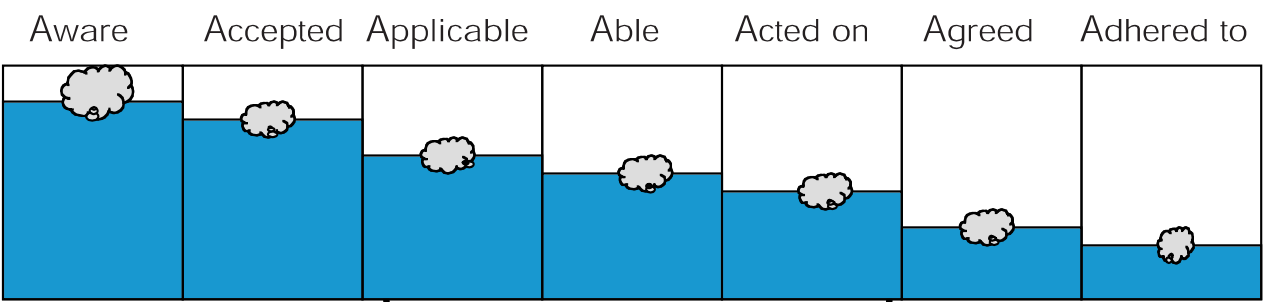
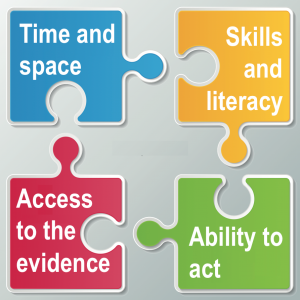
Our own recent White Paper has highlighted the avalanche of reliable research that buries all of us working in mental health every day (Badenoch et al, 2015). Clearly, finding relevant and reliable evidence remains a huge challenge, but just as important are lack of time, the motivation to engage with research, skills to appraise and understand evidence, and the wherewithal to use research in practice. This evidence-based practice malarkey is hard!
The conclusions of our White Paper were:
- The currency of our knowledge degrades over time
- Research is inaccessible to the majority who don’t have the skills to appraise it or use it in practice
- It’s impossible to keep up to date with the quantity of research now being produced
- We need accessible, usable and reliable summaries of new evidence
- Blogs and social media can help us find, use and discuss relevant evidence
You won’t be surprised to hear me extolling the virtues of blogging and tweeting as a great way to learn about new evidence, but it doesn’t end there.
Six top tips for engaging with research evidence
1. Get motivated
I don’t have time for all that academic medicine stuff
– Anonymous GPI love these elf blogs. I would read this in the car park before work
– Anonymous School Nurse
Engaging with evidence has to start with the right attitude and the right environment. It takes time and dedication to read, understand and use research in practice, and for many this is on top of a busy and stressful day job caring for patients. We need access to the best available evidence and paywalls still get in the way for many of us. We also need critical appraisal skills and many of us were never taught how to read a paper and fathom its strengths and weaknesses.
It’s challenging but ultimately extremely rewarding. My advice would be to get motivated and jump in by reading some blogs and reading/writing some tweets before you move on to the full text papers!
2. Be sociable
Being sociable online opens up so many new avenues of thought and adventure. You can build relationships, create networks and develop new skills so much easier if you are gregarious and accept the support of your peers. Of course it’s vital that you don’t restrict this sociability to people like you, who agree with your world view, read the same newspaper, vote for the same party etc. Filter bubbles should be avoided at all cost if you want to learn and grow. Communicating outside of you own bubble can be hard work, but as anyone involved in public engagement with research activities will tell you, it’s often the most enriching part of doing research.
Social media, especially Twitter, is such an easy place to strike up friendships and engage in conversation with people about health, wellbeing and research. It’s also an increasingly vital way of side-stepping the traditional news media and getting a more balanced view of what’s going on.
Check out the awesome WeCommunities Twitterversity resources if you want some help getting started.

3. Read critically
Our soundbite culture hates uncertainty, which makes it all the more important that we learn to acknowledge and express uncertainty ourselves. I’m a lifelong fan of the Critical Appraisal Skills Programme (CASP) and one of the things I learnt early on at their workshops was that it’s OK to say “I don’t know” or “this evidence doesn’t provide us with a complete answer”. That’s something that many of us struggle with, e.g. standing up in front of our peers and saying that we don’t understand the statistics in the paper we’re all reading.
So start by recognising the gaps in your knowledge and then learn how to read research papers critically – the CASP checklists are a great place to begin. If you tackle it step by step, you’ll be surprised how far you come. The good news is that we’re offering free Twitter-based critically appraising support with our new #WeCATS venture, in partnership with WeNurses, CASP and Cochrane UK.
4. Share your knowledge and experience
Blogging helps me think critically; not just when I blog, but whenever and whatever I read!
– Mark Smith, IAPT therapist & Mental Elf contributor
Some of the traditional ways of sharing your knowledge still work. Conference presentations, sermons from the pulpit, shouting at your friends down the pub. The problem of course is that our social hierarchy dictates which voice is expert, which is ordained, which is drunken. The democratising effect that social media has had on our society and our discussion about mental health is, for me at least, a total game-changer. The real experts (be they people with lived experience, health professionals or researchers) are now increasingly regarded as the experts.
I have been inspired and humbled by the number of people who have responded to our call for contributions to the Mental Elf and our other elves in the National Elf Service. People see the value of joining a community, writing blogs and tweets, starting conversations with a far wider range of individuals than the traditional publishing model allows. For many, this process may start with a simple Twitter account or a personal blog, but the principle is the same; put your head above the academic or NHS parapet, share your story and what you know.

5. Join expert discussions
Expert health discussions happen every minute of the day online, it’s just a case of finding the websites, blogs and social media conversations and having the confidence to join in. Increasingly though, we’re seeing discussions move away from the written word towards audio and video webinars. This development has been on the cards for many years, but the technology has frequently delivered much less than it’s promised.
Webinars, hangouts, campfires – whatever you call them, they’re here to stay, so here are a couple of examples in the mental health world that you might like to check out:
- Evidence-Based Mental Health: Expert Google Hangouts
Brought to you by the team behind the EBMH Journal, this regular series of expert debates is a great way to hear senior researchers talk openly about their work. - National Elf Service: Campfires
Our own foray into the world of video webinars, these regular expert discussions tackle mental health topics that we know matter to our readers. So far we’ve covered Tobacco and Schizophrenia and Suicide Prevention in Young People, which you can watch below.
https://www.youtube.com/watch?v=gy4SG7sp3uY
6. Embrace digital
It kind of goes without saying that you can’t engage with research in the ways I’ve described above without embracing digital technologies. The NHS Confederation report from last year ‘The future’s digital: mental health and technology‘ is a great summary of this area if you need persuading further. It’s not all good news, but it does set out a positive plan for leveraging digital technology to its full potential in mental health services and the wider NHS.
One simple way to embrace digital more on a personal level is to use podcasts and videos to keep up to date. Many of the leading mental health journals and websites are investing in multimedia summaries of their content, which you can dip into during your commute. Here are a couple of examples that I use regularly:
- The Lancet Psychiatry podcasts
- JAMA Psychiatry author interviews
- Health Talk mental health: personal experiences of mental health
What have I missed?
Please share your ultra-modern ways of engaging with research evidence:
- Do you up Periscope to find answers to all your clinical questions?
- Do you feed your evidence hunger with Feedly?
- Do you keep everything organised and at your fingertips with Mendeley or Evernote?
- Or do you simply hanker for a simpler time when you could walk into your library and idly leaf through the 30 volumes of Abridged Index Medicus?

For those of you who want a bit more detail, please have a read through my slides
Links
Evidence based medicine: what it is and what it isn’t.
Glasziou P. Haynes RB. The paths from research to improved health outcomes. Evid Based Nurs 2005;8:36-38
Badenoch D, Tomlin A. (2015) Keeping up to date with reliable mental health research: National Elf Service white paper (PDF). Minervation Ltd, Oxford.





EIPassociates
10 years agodr_shibley
10 years agogregciggsRNLD
10 years agoCarewatch_ES
10 years agoKayFSheldon
10 years agoJamesK889
10 years agoFelicityTHF
10 years agoNIHRCRN_nthames
10 years agoAppleppler
10 years agoCLibertas
10 years agoCLibertas
10 years agoNnikki_Duffy
10 years agoRoryMackenzie8
10 years agoNPNR 2015 review | Ben Hannigan's blog
10 years agodamson29
10 years agoCEwakefield
10 years agoAnthonyHerbert9
10 years agoDrNicolaWright
10 years agoCharleyBaker1
10 years agoAdelinaCoHe
10 years agoviclyons
10 years agoAlanHattonYeo
10 years agokespinar90
10 years agoSameiHuda
10 years agowood_michele
10 years agoAllyThornton27
10 years agopfrench123
10 years agobenhannigan
10 years agoD10Coff
10 years agoSallyHardys
10 years agoLizHughesDD
10 years agoLizHughesDD
10 years agoMental_Elf
10 years agolivinginhope
10 years agoniadla
10 years agoamusedmusings
10 years agoCarewatch_ES
10 years agoLizHughesDD
10 years agoESiblingProject
10 years agodavidrsomme
10 years ago3SpiritUKNZ
10 years agovashtilou
10 years agojasonnolan
10 years agotomegirl40
10 years agonchadborn
10 years agonikt50
10 years agonchadborn
10 years agopsychepi
10 years agonchadborn
10 years agonchadborn
10 years agoimeldahy
10 years agoshirleyayres
10 years agoMHlatelife
10 years agoigncioruiz
10 years agoAntoViral
10 years agoStuartDNeilson
10 years agoMexPsiq
10 years agoMexPsiq
10 years agoHenryParada_Rye
10 years agodbarrath
10 years agogunturmaram
10 years agomndsci
10 years agoSafewards
10 years agoD10Coff
10 years agoAlexIrvineYork
10 years agoJJonesatcity
10 years agobenhannigan
10 years agoJohnBaker_Leeds
10 years agoLPFTResearch
10 years agoMental_Elf
10 years agoDrJonathanWeiss
10 years agophilipmjmhn
10 years agoDrIanDawe
10 years agoSafewards
10 years agoUWSstuarttelfer
10 years agoDochkaH
10 years agoSalliMidgley
10 years agoJohn_J_McGrath
10 years agoLynRomeo_CSW
10 years agodeedeesmiles4u
10 years agoDMS25a
10 years agoAdam_Jhugroo
10 years agominifeet2
10 years agoAndreaDarzi
10 years agoEPPICentre
10 years agoSNF_SLPs
10 years agoAlexIrvineYork
10 years agoAlexIrvineYork
10 years agoJMcDonnell5
10 years agoMissCherBear
10 years agoSallyHardys
10 years agoHWDDconf
10 years agocityalan
10 years agoJohnBaker_Leeds
10 years agoIechydDaBangor
10 years agoVictoriaBetton
10 years agofrancesmacguire
10 years agoPH_Insight
10 years agomurphyal
10 years agoAmanda Collins-Eade
10 years agoNicola Davies
10 years agoHStonebank
10 years agoBowenPerryman
10 years agoBowenPerryman
10 years agoanniecoops
10 years agoCloudyMediaBlog
10 years agoCloudyMediaBlog
10 years agolearnhospice
10 years agoTheEvidenceDoc
10 years agoTheEvidenceDoc
10 years agoMarioJWeber
10 years agoBuffDavis
10 years agohtona_rus
10 years agoRachelHadland
10 years agoRachelHadland
10 years agoDrSoumyadeepB
10 years agohaining_s
10 years agohaining_s
10 years agohammerslibrary
10 years agoRachelHadland
10 years agohandylibrarian
10 years agohandylibrarian
10 years agodrabagnall
10 years agodrabagnall
10 years agoevidence_STAR
10 years agoHWDDconf
10 years agoHWDDconf
10 years agoTykeChick
10 years agoMMHSCT_Research
10 years agoYSJOT
10 years agoReinis_LV
10 years agoJulzRasmussen
10 years agodelightedmary
10 years agoBob_Gann
10 years agoCguerrero2013
10 years agoDannyMinkow
10 years agoTaraJLamont
10 years agoDrMikeLindsey
10 years agoBianca_Albers
10 years agoTaraJLamont
10 years agoAlbrownrigg
10 years agobrixtonbarb
10 years agorachelmcross
10 years agoNeedMoreCourage
10 years agohotSahs
10 years agoDan_Robotham
10 years agoResearchMedic
10 years agonitramsg
10 years agoBMJBestPractice
10 years agoStanKutcher
10 years agoBrandyRMaynard
10 years agoBABCP
10 years agodrmelhayes
10 years agosmickan
10 years agoKTatWaypoint
10 years agoTheDentalElf
10 years agoTheChildElf
10 years agoMichael Clark
10 years agojustcplusg
10 years agoHWDDconf
10 years agoSaima_Ali
10 years agoEcpdCarolyn
10 years agointensiveblog
10 years agoAlysColeKing
10 years agodgimdiez
10 years agoWoolpacks
10 years agoCaffeineAndHate
10 years agoscripe57
10 years agoBelindaJPlatt
10 years agopilipalapinc
10 years agoICU_Management
10 years ago121Therapy
10 years agomilosmum
10 years agoShawpsych
10 years agoMental_Elf
10 years agoMental_Elf
10 years agoBipolarBlogger
10 years agoayse_d
10 years agoRoenaRoena224
10 years agohullodave
10 years agosaraadams2009
10 years agoMental_Elf
10 years agosally_crowe
10 years agolibrary_sssft
10 years agoHuttenRebecca
10 years agoD10Coff
10 years agoStanKutcher
10 years agoThe Mental Elf
10 years agoMental_Elf
10 years agoTMichelleCannon
10 years agocecilia_brando
10 years agoshirleyayres
10 years agoclarkmike
10 years agoAnd_Cipriani
10 years agoMental_Elf
10 years agoMental_Elf
10 years agoMental_Elf
10 years agoMental_Elf
10 years agoMental_Elf
10 years agoiahcp
10 years agoIntl_Nurses
10 years agoCaroline Struthers
10 years agoCaroline Papi De Brún
10 years agoAndré Tomlin
10 years agoDrBillChen
10 years agoMental_Elf
10 years agoLisaHynes19
10 years agoiVivekMisra
10 years agoCharleyBaker1
10 years agoxtraspirit
10 years ago