


A major challenge in the treatment of depression is that only a proportion of people respond to the first treatment they try. For example, with antidepressants only 40% of people will see their symptoms fall to a level that can be considered a recovery. Trying further treatments after the first one does not work can be effective (STAR-D), but it leads to a substantial delay in people feeling better.
While severity of depression does predict response, there is no current way of predicting who will respond to a specific treatment. Whether to go for an antidepressant or a course of psychotherapy is a crucial day to day decision made by both sufferers and professionals. Being able to predict who responds, and perhaps more importantly who will not, would be a major advance in reducing the burden of depression. Other branches of medicine rely heavily on using pre-treatment tests to determine the best treatment for an individual and replicating this in mental health problems would be extremely helpful.
Brain imaging has the potential to be a tool that could predict response. As we have discussed before on the mental elf blog, depression is associated with changes in brain structure and function. Previous studies have shown that recovery is also associated with changes on brain imaging but this has not been tied to a specific treatment.
Methods
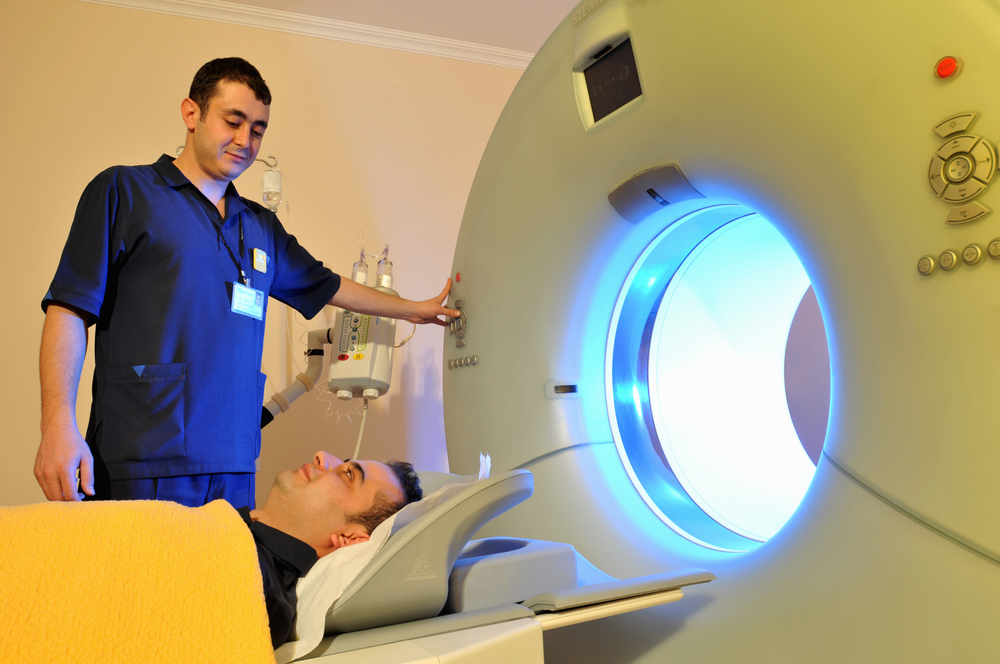
Researchers in America decided to use Positron Emission Tomography (PET) scanning to try and find out who would respond better to an antidepressant (escitalopram) or cognitive behavioural therapy (CBT) (McGrath, 2013). PET scanning uses a radioactive marker to measure the blood flow around the brain, a proxy measure for brain activity. In this study participants were asked to lie in the scanner for about 40 minutes and were not given any task to do during the scan. The scan occurred before any treatment was given and after a break from any previous treatment. 16 sessions of CBT were compared with 20-40mg of escitalopram, broadly in line with NICE guidance in the UK.
People who participated in the study had:
- A primary diagnosis of major depression
- A score of >18 on the Hamilton Depression Rating Scale (HDRS). This equates to an episode of at least moderate severity
- No suicidal ideation
- No serious physical health conditions eg chronic pain
- No current harmful use of any substances
- No history of a failure to respond to either of the interventions used in the study
In order to compare people who saw a recovery of their depressive episode (HDRS falling to below 7) to those who did not respond (<30% fall in the HDRS), people who saw only a partial response to the treatment (>30% fall but not to <7 on the HDRS) were not included in the primary analysis. This meant that of the 82 people who were randomised at the start of the study, only 38 people were included in this paper. The rate of recovery was the similar in the antidepressant group (12/30, 40%) and CBT (12/33, 36%), as was the rate of non-response (antidepressant 6/30 20%, CBT 9/33 27%).
Results

The researchers were looking for areas in the brain where the level of blood flow at baseline was different in those who responded to CBT versus escitalopram. Due to the problem of multiple comparisons in brain image analysis the setting of the significance level is crucial in trying to understand the importance of the results. Researchers try to match clinical or behavioural factors to thousands of small areas of the brain (voxels). That means that they need to be very careful about how to reduce the risk of false positives. In this study this was not done as robustly as it could have been done. Using a level of significance that meant there was a high likelihood of false positives they identified 6 regions of the brain. On further analysis only one area was potentially showing a more robust effect: the right insula. In this area:
- Responders to escitalopram had a higher level of blood flow than non-responders
- Responders to CBT had a lower level of blood flow than non-responders
Conclusions
The researchers concluded that the:
data suggests that insula metabolism alone may serve as a pretreatment biomarker to guide initial treatment selection
but that “prospective studies are needed to further evaluate” their findings.
Summary
-
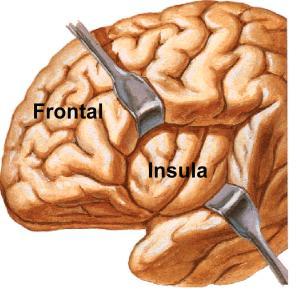
Changes to the function of the insula have been consistently implicated in depression at all stages of the illness This study provides a proof of the concept that brain imaging could be used to differentiate subsequent response to different treatments.
- Sharp-eyed Mental Elf regulars will have spotted that the insula has been discussed before in relation to depression. It is part of emotion regulating networks in the brain and changes to its function have been consistently implicated in depression at all stages of the illness.
- The participants in this study were very tightly selected and stratified, and the results are difficult to generalise to clinical practice in the UK.
- Whether people would be willing to have a routine scan that involves a small dose of radiation is unclear.
- Unfortunately, in contrast to some media reports of this article (Wired, 2013), it does not mean that brain scans will be used to determine treatment any time soon.
- Exciting pilot study, but more research please.
Links
McGrath CL, Kelley ME, Holtzheimer PE, et al. Toward a Neuroimaging Treatment Selection Biomarker for Major Depressive Disorder. JAMA Psychiatry. 2013;():1-9. doi:10.1001/jamapsychiatry.2013.143. [Abstract]
Study: brain scans indicate best individual treatment for depression. Wired.co.uk, 13 June 2013.





mark smith
12 years ago121Therapy
12 years agofleurzel
12 years agoangliacounsel
12 years agodrinksinthedark
12 years agoaghoury79
12 years agoDouglas Cooper
12 years agoMDDScore
12 years agokristinekirby
12 years agocarotomes
12 years agoMarkPow1
12 years agopsychjunkie3
12 years agoKernowsmith
12 years agoKernowsmith
12 years agodrinksinthedark
12 years agobenhannigan
12 years agoBPDFFS
12 years agoMental_Elf
12 years agoannaburhouse
12 years agoMental_Elf
12 years agoNHFTNHSLibrary
12 years agoDyskadores
12 years agoUoDMHN
12 years agoMental_Elf
12 years agoMental_Elf
12 years agoh_meryl
12 years agoLisa Crooks
12 years agohorse_diva
12 years agoMental_Elf
12 years agoRoslynByfield
12 years agoLindsaySian
12 years agoThe Mental Elf
12 years agoBroadbentAmy
12 years agoBroadbentAmy
12 years agoAlisonF101
12 years agopmreid86
12 years agotuppence8
12 years agotuppence8
12 years ago