The Mental Elf

The case for Chinese herbal medicine in the treatment of depression

More people are seeking alternatives to traditional mental health care and as a result, knowledge about the use of complementary therapies by people with mental illness is increasing – particularly for those experiencing anxiety and depression. A recent survey of women with depression revealed that there is a push for more “natural approaches” that match with the individual’s own values and beliefs. CAM (complementary and alternatives medicines) are also something people turn to when they are unhappy with their existing care – users are more likely to have received mental health and primary care treatment and to be dissatisfied with their overall healthcare when compared to non-users.

Numerous systematic reviews and research papers have been published on the effects of Western herbs, such as St John’s wort (Linde, Berner and Kriston Lin, 2008) in the treatment of depression, but Chinese herbs have received less attention. The aim of this paper was to assess the evidence on Chinese herbal medicine treatments for depression based on previous systematic reviews of trials in the Western literature.

The supplementary review located eight trials and positive results were reported almost universally. Limitations in methods and reporting, however, make it difficult to draw any firm conclusions.

Methods
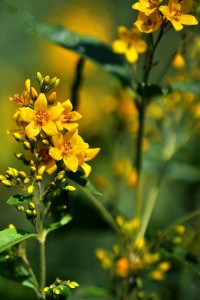
St John's Wort has been used as an alternative to conventional treatments for depression for many years in the UK
St John’s Wort has been used as an alternative to conventional treatments for depression for many years in the UK

Randomised controlled trials (RCTs) of the treatment of depression with Chinese herbal medicine were located by searching all of the major Western bibliographic databases. The review located eight trials, three of which were not included in previous reviews. A variety of herbal formulae (combination of herbs) were investigated including Hypericum (St John’s wort) and Xia Yao San.

Inclusion criteria:

  1. A diagnosis of clinical depression using conventional or traditional Chinese criteria
  2. Interventions using Chinese herbal formulae or single Chinese herbs
  3. Comparison included placebo, no treatment, or any active treatment
  4. Improvement in depression (partial or complete alleviation of symptoms)

Exclusion criteria:

  1. Chinese herbs combined with other complementary therapies
  2. Participants with depression associated with other conditions

RCTs were evaluated using two rating scales: the Jadad criteria and the Downs and Black checklist. The effects of the herbal formulae were assessed in seven of the trials by comparing scores on the Hamilton Rating Scale for Depression (HAM-D) before and after treatment. A range of self-report measures and clinical assessment were also used.

Results

It was not possible to combine results to present any meaningful statistics as the herbal formulae and control treatments used, trial duration, and trial design all differed to such an extent. Where changes in depression scores were measured, clinically significant reductions were reported within groups with active treatment – either Chinese herbs or antidepressants and between-group comparisons suggested that Chinese herbs:

  • Were more effective than antidepressants – particularly Xiao Yao San and its modifications
  • Were comparable to antidepressants
  • Did not increase effectiveness but reduced adverse effects or relapse rates when used as an additional therapy with antidepressants
  • Were more effective than placebo

Limitations
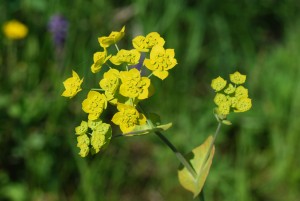
The root of the Bupleurum plant is used to make Xiao Yao San

There were some major limitations in this review. In the majority of trials the methodological quality was poor and all of the trials were either at risk of bias or the overall risk of bias was unclear:

  • It is unclear if the patients selected were representative of the population, as the recruitment process was not reported
  • Few, if any, studies provided information on whether intervention and control groups were well matched at baseline, which statistical tests were used and whether participants took the herbal formulae as required
  • All studies were described as randomised, but several did not describe how randomisation had been carried out
  • Blinding was not always possible and this may have introduced some bias on self-report measures

There are also problems interpreting the results of these trials:

  • Despite herbal formulae having a similar name, they often contain different herbs
  • In trials comparing Chinese herbs against antidepressants, it is unclear whether the benefits are a true difference as there was no power calculation
  • Little or no detail was provided on dropout, making it difficult to determine the extent to which the Chinese herbs caused reductions in depression
  • The longest duration in these trials was 12 weeks, making it impossible to establish long-term efficacy
  • All research to date has been conducted in China so it is difficult to translate the results into a Western healthcare context

Conclusion

The effectiveness of Chinese herbal medicine in depression could not be fully substantiated based on current evidence

Positive results were reported in all of the trials identified and in all but one of the systematic reviews, but despite promising results, particularly for Xia Yao San and its modifications, the effectiveness of Chinese herbal medicine in depression could not be fully substantiated based on current evidence.

The extent to which the results of the study can be used to determine whether Chinese herbs caused reductions in depression (internal validity) or can be generalised to other groups (external validity) is severely limited due to a lack of detail in the research studies. Further well-designed trials would be of interest!

Link

Butler L, Pilkington K. Chinese Herbal Medicine and Depression. Evidence-Based Complementary and Alternative Medicine Volume 2013, Article ID 739716, 14 pages.

Linde K, Berner MM, Kriston L. St John’s wort for major depression. Cochrane Database of Systematic Reviews 2008, Issue 4. Art. No.: CD000448. DOI: 10.1002/14651858.CD000448.pub3.


Add a comment
  • mo jel

    mo jel

    6 years ago
    how to treat a 46 year old woman has come you. 'frances' leads the hr department of a large company and lost her husband of 22 years just 8 months ago. owing to the responsibilities of her job role, she has been unable to greave adequately and as a result is suffering depression and finding the job, home life and her 19 year old son too much to handle. she has little or no time for socialising and has put on almost 2 stones in weight and started drinking every day to help her 'switch off and sleep'. her psoriasis has worsened and now covers both knees and one elbow. she admits that her eating habits have changed from family meals to convenience often in front of the tv and has lost interest in cooking and presenting since the death of her husband.a recent medical check up found that she is borderline diabetic and her liver function tests returned with elevated levels of ggt which indicate that the alcohol may be affecting her liver. she was prescribed anti-depressants, but has found that they have made her sluggish and disinterested in almost everything.the reason that she has come to you is that she has an interest in chinese medicine and recently read an arcticle about someone who used natural means to overcome depression and stop taking prescription drugs. frances has seen the medical check as a wake-up call, but is unsure how, or where to start.discuss the priotity of focus for treatment and justify your answers.
  • Happiness | Nourishing Ourselves Blog

    Happiness | Nourishing Ourselves Blog

    11 years ago
    […] Traditional Chinese Medicine uses herbs and acupuncture to address underlying imbalances in the body’s energetic organ meridian systems that can lead to depression. Source: The Case for Chinese Herbal Medicine in the Treatment of Depression […]
  • Happiness | Nourishing Ourselves

    Happiness | Nourishing Ourselves

    11 years ago
    […] Traditional Chinese Medicine uses herbs and acupuncture to address underlying imbalances in the body’s energetic organ meridian systems that can lead to depression. Source: The Case for Chinese Herbal Medicine in the Treatment of Depression […]
  • SysReviews

    SysReviews

    13 years ago
    RT @Mental_Elf: New paper summarises systematic reviews of Chinese herbal medicine treatments for #depression http://t.co/tRV6vNMKny
  • mhbef

    mhbef

    13 years ago
    RT @Mental_Elf: The case for Chinese herbal medicine in the treatment of depression http://t.co/tRV6vNMKny
  • mhbef

    mhbef

    13 years ago
    RT @HerHealthySelf: MT @Mental_Elf New paper summarises systematic reviews of Chinese herbal medicine treatments for #depression http://t.c…
  • AlesiaMPerkins

    AlesiaMPerkins

    13 years ago
    RT @Mental_Elf: Poor quality studies point to Chinese herbal treatments helping people with depression http://t.co/tRV6vNMKny
  • Iain_caldwell

    Iain_caldwell

    13 years ago
    The case for Chinese herbal medicine in the treatment of depression - http://t.co/Bv8cKt9HyX
  • FloBaing

    FloBaing

    13 years ago
    RT @HerHealthySelf: MT @Mental_Elf New paper summarises systematic reviews of Chinese herbal medicine treatments for #depression http://t.c…
  • Kernowsmith

    Kernowsmith

    13 years ago
    RT @Mental_Elf: Should people with #depression turn to Chinese herbs like Xiao Yao San? http://t.co/PqqEYoEGez
  • HerHealthySelf

    HerHealthySelf

    13 years ago
    MT @Mental_Elf New paper summarises systematic reviews of Chinese herbal medicine treatments for #depression http://t.co/JAk3uvbaSK #mh
  • KSLteam

    KSLteam

    13 years ago
    RT @Mental_Elf: Poor quality studies point to Chinese herbal treatments helping people with depression http://t.co/tRV6vNMKny
  • Vince1905

    Vince1905

    13 years ago
    Chinese herbal medicine for depression http://t.co/RAXjVmqHBP Garbage in, Garbage out. + there's an alt med publication bias in china.
  • BigAmbitionsCIC

    BigAmbitionsCIC

    13 years ago
    RT @Mental_Elf: Should people with #depression turn to Chinese herbs like Xiao Yao San? http://t.co/PqqEYoEGez
  • Mental_Elf

    Mental_Elf

    13 years ago
    Should people with #depression turn to Chinese herbs like Xiao Yao San? http://t.co/PqqEYoEGez
  • FloBaing

    FloBaing

    13 years ago
    RT @Mental_Elf: The case for Chinese herbal medicine in the treatment of depression http://t.co/tRV6vNMKny
  • RDFallis

    RDFallis

    13 years ago
    RT @Mental_Elf: Poor quality studies point to Chinese herbal treatments helping people with depression http://t.co/tRV6vNMKny
  • carotomes

    carotomes

    13 years ago
    Poor quality studies of Chinese herbal depression treatments: bias can't be eliminated, better research design needed http://t.co/doWviZoNDB
  • NodeSystems

    NodeSystems

    13 years ago
    RT @Mental_Elf: Poor quality studies point to Chinese herbal treatments helping people with depression http://t.co/tRV6vNMKny
  • mad_gav

    mad_gav

    13 years ago
    RT @Mental_Elf: Poor quality studies point to Chinese herbal treatments helping people with depression http://t.co/tRV6vNMKny
  • hullodave

    hullodave

    13 years ago
    Poor quality studies indicate herbal treatments help with depression but don't really tell us much due poor quality. http://t.co/RI6JKHYrln
  • BPSOfficial

    BPSOfficial

    13 years ago
    RT @Mental_Elf: Poor quality studies point to Chinese herbal treatments helping people with depression http://t.co/tRV6vNMKny
  • Mental_Elf

    Mental_Elf

    13 years ago
    Poor quality studies point to Chinese herbal treatments helping people with depression http://t.co/tRV6vNMKny
  • NWPA_

    NWPA_

    13 years ago
    The effectiveness of Chinese herbal medicine in depression could not be fully substantiated based on current evidence http://t.co/tc5l0sbQti
  • Mental_Elf

    Mental_Elf

    13 years ago
    The effectiveness of Chinese herbal medicine in #depression can't be fully substantiated by current evidence http://t.co/PqqEYoEGez
  • samirshah

    samirshah

    13 years ago
    Promising but inconclusive results for #XiaYaoSan in #depression @Mental_Elf: systematic reviews of Chinese medicine http://t.co/BxwiRWjden
  • DrJessamy

    DrJessamy

    13 years ago
    RT @Mental_Elf: Another great blog from @DrJessamy This time on #depression and #AlternativeTherapy http://t.co/PqqEYoEGez #ChineseHerbal