
The Mental Elf

Better together: how collaborative working can improve outcomes for patients with depression and diabetes

The link between depression and diabetes mellitus (DM) is well established. Around 20% of patients with DM meet diagnostic criteria for depression. The National Institute for Health and Care Excellence (NICE) issued guidance impressing the importance of diagnosing and treating depression in long-term conditions such as DM (NICE, 2009). However, depression in the presence of physical illness is often missed and under treated.

One way of improving this situation could be through collaborative care (CC). The NICE guidelines CG91 state that CC should form part of a well-developed stepped-care programme for people with moderate to severe depression and a long-term condition. CC requires joint working between the patient and healthcare professional to identify problems and agree goals for interventions.
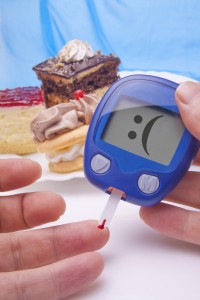
Around 20% of patients with diabetes meet the diagnostic criteria for depression

It is recommended that CC models comprise of:

  • Case management (supported by a senior mental health professional),
  • Multi-professional collaboration (between primary and secondary physical health services and specialist mental health),
  • A range of evidence-based interventions,
  • And long term coordination of care and follow-up.

A research group from China, have evaluated CC for depression and diabetes in their recent systematic review and meta-analysis (Huang, 2013).

Methods

A literature search of randomised controlled trails (RCTs) was conducted using the appropriate biomedical databases (Medline, Embase, Cochrane and PsychINFO) and references were screened from retrieved articles. Most inclusion criteria were broad (such as age) but participants required a diagnosis of depression (or a history of treatment with an antidepressant) and a diagnosis of DM.

The outcomes of interest evaluated at 6 and 12 months were;

  • depression treatment response (a 50% or more decrease in the Hopkins Symptom Check-List-20 score from baseline);
  • depression remission (a Hopkins Symptom Check-List-20 score of less than 0.5;
  • HbA1c;
  • antidepressant and/or oral DM medication adherence (percentage of prescribed doses taken with a threshold of 80%).

Mean differences (MDs) were calculated for HbA1c values and relative risks (RR) for depression outcomes and medication adherence. Either a random effect or fixed effects model was used to calculate the pooled effects of the RCTs.

Results

Two authors screened the search results. Out of 1462 citations 8 studies were included in the meta-analysis. RCT duration varied between 13-30 months.

Depression outcomes

4 trials reported:

  • A significant increased treatment response in the CC group (RR = 1.96, 95% CI = 1.38 to 2.78)
  • A significant beneficial effect of CC at 6 (RR = 1.64, 95% CI = 1.28 to 2.10) and 12 months follow-up (RR = 1.42, 95% CI = 1.14 to 1.76)

2 trials reported:

A significant A significant improvement in adherence to antidepressant and oral DM medications were found in the collaborative care group.
Antidepressant adherence was significantly better in the collaborative care group
  • A significant increase in depression remission with CC at 6 months (RR = 1.33, 95% CI = 1.01 to 1.75)
  • A non-significant increase in depression remission with CC at 12 months (RR = 1.20, 95% CI = 0.93 to 1.55)

4 trials reported:

  • A significant improvement in adherence to antidepressant medication in the CC group (RR = 1.79, 95% CI = 1.19 to 2.69)

Diabetes Mellitus outcomes

5 trials reported

  • A (non-significant) pooled effect of a reduction in HbA1c in favour of CC (MD = -0.13 95% CI = -0.46 to 0.19).

4 trials reported:

  • A non-significant reduction in HbA1c in the CC group at 6 (MD = -0.06, 95% CI = -0.24 to 0.12) and 12 months (MD= -0.07, 95% CI = -0.28 to 0.13).

2 trials reported:

  • A significant improvement of adherence to oral DM medications associated with CC (RR= 2.18, 95% CI= 1.61 to 2.96)

Limitations

  • All studies were from the United States where care is often provided through insurance and there is a high prevalence of DM and obesity. Therefore results may not be representative of the rest of the world.
  • For obvious reasons, patients were aware of treatment allocation. This could have introduced some bias.
  • There was heterogeneity between RCTs, although the results of the larger studies were all similar.

Conclusions

The authors concluded that

Collaborative care significantly improved depression and diabetes outcomes, comparing with usual care.

However, the majority of diabetes outcomes were not significant (the confidence intervals around the HbA1c result were not statistically significant, and the point estimates were not clinically significant), so we would disagree with the conclusions drawn here by the reviewers.

This was a largely well conducted and comprehensive summary of the published evidence, but the review was let down by poor reporting which overstates the impact of collaborative care on diabetes outcomes. Having said that, the authors do address some of the commonly encountered problems in this type of research in testing for bias and heterogeneity.
Collaborative care significantly improved depression and diabetes outcomes, comparing with usual care.
Collaborative care significantly improved depression outcomes, compared with usual care

The King’s Fund recently produced a document discussing the problems of co-morbidity of physical and mental health conditions (Naylor, 2012). It identified that health care costs are increased by at least 45% for each person with a long-term condition and co-morbid mental health problem. The extra costs result in part from increased use of Emergency Care, longer inpatient stays, more frequent admission and higher prescribing rates.

This featured article did not explore the economic evaluation of collaborative care versus care as usual in people with DM and depression.

Other studies have indicated that CC for depression is cost effective because of reduced healthcare utilization or improved functioning (Jacob, 2012). The evidence is limited for CC for DM and depression, and is mostly US-based. It would be really interesting to see how this model works in the National Health Service.

Links

Huang Y. et al Collaborative care for patients with depression and diabetes mellitus: a systematic review and meta-analysisBMC Psychiatry 2013, 13:260.

Depression with a chronic physical health problem (CG91). NICE, 2009.

Naylor, C. et al Long-term conditions and mental health: the cost of co-morbidities (PDF). The King’s Fund, 2012.

Jacob, V. et al Economics of collaborative care for management of depressive disorders: a community guide systematic review (PDF).  Am J Prev Med 2012;42(5):539 –549.

Add a comment
  • The effect of depression and diabetes on the risk of dementia

    The effect of depression and diabetes on the risk of dementia

    10 years ago
    […] factor for diabetes, depression being an increased risk for all cause mortality in diabetes, how collaborative care can improve outcomes in depression and diabetes, whether it is cost effective to treat depression in diabetes and most recently diabetes being a […]
  • aghoury79

    aghoury79

    12 years ago
    Mental Elf: Better together: how collaborative working can improve outcomes for patients with depression and... http://t.co/qoKjYtbnO3
  • Nicola Davies

    Nicola Davies

    12 years ago
    Nicola Davies liked this on Facebook.
  • PSYCHMH

    PSYCHMH

    12 years ago
    RT @Mental_Elf: Around 20% of patients with diabetes meet the diagnostic criteria for depression http://t.co/01MWdquscD
  • D_Kocz

    D_Kocz

    12 years ago
    RT @Mental_Elf: Around 20% of patients with diabetes meet the diagnostic criteria for depression http://t.co/01MWdquscD
  • Annabel_C_Price

    Annabel_C_Price

    12 years ago
    RT @Mental_Elf: Don't miss: Better together: how collaborative working can improve outcomes for patients with depression and diabetes http:…
  • tracey_vick

    tracey_vick

    12 years ago
    RT @Mental_Elf: Don't miss: Better together: how collaborative working can improve outcomes for patients with depression and diabetes http:…
  • russell50

    russell50

    12 years ago
    RT @Mental_Elf: Don't miss: Better together: how collaborative working can improve outcomes for patients with depression and diabetes http:…
  • BrainCongress

    BrainCongress

    12 years ago
    RT @Mental_Elf: Don't miss: Better together: how collaborative working can improve outcomes for patients with depression and diabetes http:…
  • Mental_Elf

    Mental_Elf

    12 years ago
    Don't miss: Better together: how collaborative working can improve outcomes for patients with depression and diabetes http://t.co/01MWdquscD
  • HBFTpartnership

    HBFTpartnership

    12 years ago
    This interesting article concluded that "Collaborative care significantly improved depression and diabetes... http://t.co/PSOk40ZZ32
  • eapsych

    eapsych

    12 years ago
    RT @Mental_Elf: Around 20% of patients with diabetes meet the diagnostic criteria for depression http://t.co/01MWdquscD
  • June Dunnett

    June Dunnett

    12 years ago
    June Dunnett liked this on Facebook.
  • lypftlib

    lypftlib

    12 years ago
    RT @Mental_Elf: Better together: how collaborative working can improve outcomes for patients with depression and diabetes http://t.co/alnOP…
  • BwoodHighland

    BwoodHighland

    12 years ago
    how collaborative working can improve outcomes for patients with depression and diabetes via @Mental_Elf http://t.co/9G0VRKHNZT
  • bmhmag

    bmhmag

    12 years ago
    @Mental_Elf I see these figures regularly and am curious about #depression linked to diabetes specifically or chronic illness generally.
  • marhmor

    marhmor

    12 years ago
    RT @Mental_Elf: Around 20% of patients with diabetes meet the diagnostic criteria for depression http://t.co/01MWdquscD
  • waddellae

    waddellae

    12 years ago
    RT @Mental_Elf: Around 20% of patients with diabetes meet the diagnostic criteria for depression http://t.co/01MWdquscD
  • HHLibService

    HHLibService

    12 years ago
    RT @Mental_Elf: Around 20% of patients with diabetes meet the diagnostic criteria for depression http://t.co/01MWdquscD
  • ali_pals

    ali_pals

    12 years ago
    RT @Mental_Elf: Around 20% of patients with diabetes meet the diagnostic criteria for depression http://t.co/01MWdquscD
  • CausewayPaulL

    CausewayPaulL

    12 years ago
    RT @Mental_Elf: Around 20% of patients with diabetes meet the diagnostic criteria for depression http://t.co/01MWdquscD
  • ImagineIndep01

    ImagineIndep01

    12 years ago
    RT @Mental_Elf: Around 20% of patients with diabetes meet the diagnostic criteria for depression http://t.co/01MWdquscD
  • Mental_Elf

    Mental_Elf

    12 years ago
    Around 20% of patients with diabetes meet the diagnostic criteria for depression http://t.co/01MWdquscD
  • Lydia Watson

    Lydia Watson

    12 years ago
    Lydia Watson liked this on Facebook.
  • Douglas Badenoch

    Douglas Badenoch

    12 years ago
    Hi Amy The Diabetes Elf calling. Many thanks for posting this important review. As you say, so many people with diabetes also struggle with depression and it can be a real vicious circle. I wanted to ask you a couple of things about the review. What did you think about the fact that glycaemic control didn't improve? I wondered if the studies were too short or underpowered, but the HbA1c results are not impressive on their own. I wondered if this might also be due to the likelihood of people with less well controlled diabetes being more likely to have depression. What do you think? I also wondered how well the literature search picked up everything that might come under the heading "collaborative care". I don't know many practitioners who would admit to providing "uncollaborative care", so I suspect that there might be lots of other models of care that work in a similar way. As we know, databases are not all that good at indexing alternative models of care, so maybe there is other research out there that they missed. Do you think this could be the case here? Is there other stuff that they could have missed? Thanks again for posting this blog.
  • Dara O'Shea

    Dara O'Shea

    12 years ago
    Dara O'Shea liked this on Facebook.
  • Mental_Elf

    Mental_Elf

    12 years ago
    @ag2460 highlights a systematic review of collaborative care for treating co-morbid #diabetes & #depression http://t.co/01MWdquscD
  • The Mental Elf

    The Mental Elf

    12 years ago
    The Mental Elf liked this on Facebook.
  • ali_pals

    ali_pals

    12 years ago
    RT @Mental_Elf: Better together: how collaborative working can improve outcomes for patients with depression and diabetes http://t.co/alnOP…
  • Leona Allan

    Leona Allan

    12 years ago
    Leona Allan liked this on Facebook.
  • niadla

    niadla

    12 years ago
    RT @Mental_Elf: Better together: how collaborative working can improve outcomes for patients with depression and diabetes http://t.co/alnOP…
  • aghoury79

    aghoury79

    12 years ago
    Better together: how collaborative working can improve outcomes for patients with depression and diabetes: The... http://t.co/wv28NCCXPp