

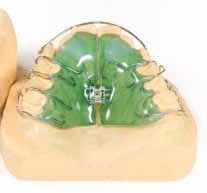

Posterior cross-bite is a common malocclusion and a number of approaches to address this with maxillary expansion have been developed. These can be broadly divided into rapid maxillary expansion (RME) and slow maxillary expansion (SME). The aim of this review was to compare the effectiveness of RME and SME for transverse maxillary discrepancy.
Searches were conducted in PubMed, Embase, Web of Science, CENTRAL, ProQuest Dissertations & Theses, ClinicalTrial.gov, and SIGLE with no language restrictions. Both randomized controlled trial (RCT) and non-RCT were eligible for inclusion. Study selection, quality assessment and data abstraction was conducted independently by two authors. Primary outcomes include the changes of maxillary intermolar widths and maxillary intercanine widths. Secondary outcomes were the changes of maxillary interpremolar widths and mandibular intermolar widths.
- 14 studies involving 1048 patients were included ( 2 RCTs , 12 controlled clinical trials )
- 2 studies were considered to be high quality, 9 medium quality and 3 low quality.
- Four outcomes (maxillary intermolar width, maxillary intercanine width, maxillary interpremolar width, and mandibular intermolar width) during three time periods (expansion, retention, and net change) were statistically pooled.
The authors concluded
SME is effective in expanding maxillary arch, while we cannot determine its effectiveness in mandibular arch expansion. RME is effective in expanding both maxillary and mandibular arches. Furthermore, SME is superior to RME in expanding molar region of maxillary arch, while similar with RME in mandibular arch
Comment
Both SME and RME showed improvements over controls. However only a small number of studies (3 studies for two outcomes, 2 for other outcomes) directly compared RME with SME. As the authors point out there is a limited number of high quality studies available to address this question and these issues could be compounded by challenges in measuring some of the parameter used.
Links
Zhou Y, Long H, Ye N, Xue J, Yang X, Liao L, Lai W. The effectiveness of non-surgical maxillary expansion: a meta-analysis. Eur J Orthod. 2013 Jul 4. [Epub ahead of print] PubMed PMID: 23828862.
Original protocol of the review (CRD42012003473)





Alonso Carrasco
10 years agoTiago Marques
10 years agoMarcos Santana
10 years agoMarcos Santana
11 years agoTheDentalElf
12 years agoAlonso Carrasco
12 years agoTiago Marques
12 years agowetherbyortho
12 years agoOBrienK57
12 years agowetherbyortho
12 years ago