Derek Richards

Profile photo of Derek Richards
Derek Richards is a specialist in dental public health, Director of the Centre for Evidence-Based Dentistry and Specialist Advisor to the Scottish Dental Clinical Effectiveness Programme (SDCEP) Development Team. A former editor of the Evidence-Based Dentistry Journal and chief blogger for the Dental Elf website until December 2023. Derek has been involved with a wide range of evidence-based initiatives both nationally and internationally since 1994. Derek retired from the NHS in 2019 remaining as a part-time senior lecturer at Dundee Dental School until the end of 2023.
Website

Follow me here –

Early childhood caries – maternal factors and early colonization of oral bacteria

shutterstock_93474835

The American Academy of Pediatric Dentistry define Early childhood caries (ECC) as the presence of one or more decayed (cavitated or non-cavitated lesions), missing (due to caries), or filled tooth surfaces in any primary tooth in a child younger than 71 months of age. This aim of this review was twofold to assess the relationship [read the full story…]

Trial shows biannual application of silver diamine fluoride better than annual application at arresting caries

shutterstock_90529192

There has been a recent surge of interest in use of sliver-fluoride regimens for caries control as sadly dental caries is still a significant problem worldwide.  The aim of this trial was to compare the effectiveness of annual topical application of silver diamine fluoride (SDF) solution, semi-annual topical application of SDF solution, and annual application [read the full story…]

Study suggests short-term benefit for flapless placement of implants

shutterstock_79298812-implant placement

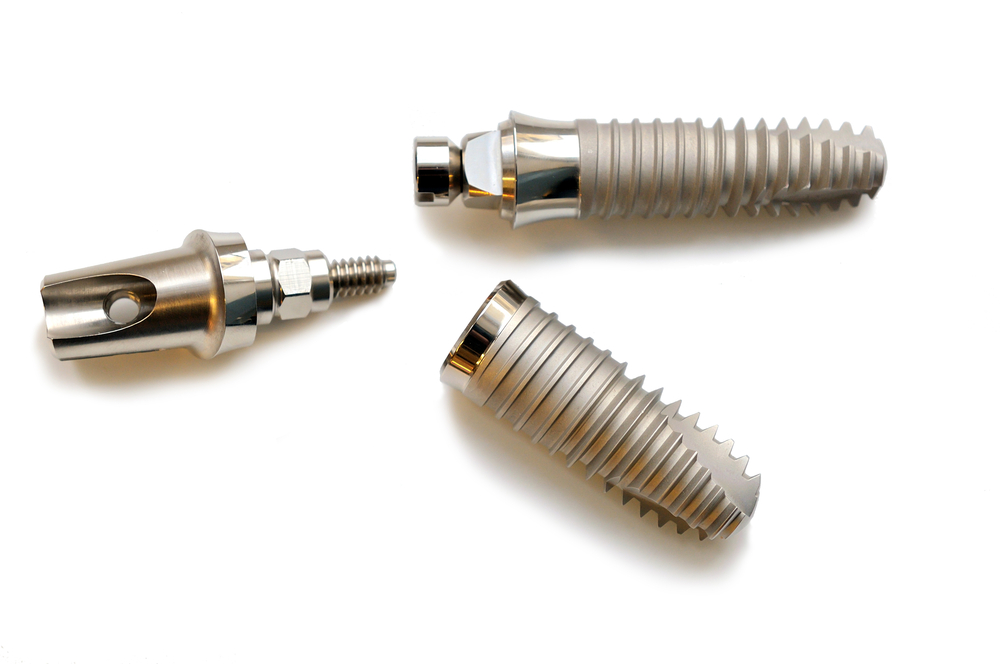
While flapless placement of dental implants is considered to have advantages over flap based procedures there are potential disadvantages in the ability to visualise anatomic structures, contour bone and readily irrigate to prevent osseous damage.  The aim of this study was to compare the placement of flapped vs. flapless dental implants utilizing clinical, radiographic, microbiological, [read the full story…]

Study suggest that 5% of all teeth have a periapical radiolucency

shutterstock_2296216-root canal xray

In yesterday’s blog we looked at the outcomes of one versus two visit root canal treatment . Today we are looking at a review which seeks to identify what the prevalence of periapical radiolucencies  and non-surgical root treatment is in the population. The authors searched the MEDLINE and EMBASE databases with hand searching of the [read the full story…]

One or two visit root canal treatment –new study finds little difference

shutterstock_70416955-root canal treatment

Root canal treatment (RoCT) is commonly performed dental procedure. This  usually follows irreversible pulpitis and necrosis of the dental pulp caused as a result of caries, or dental trauma. The aim of this study was to evaluate the outcome of single- versus 2-visit root canal treatment of teeth with apical periodontitis after a 2-year follow-up [read the full story…]

Weak evidence found similar performance for upright and tilted implants in the maxilla

shutterstock_70384249

This review by Menini et al aimed to evaluate the prognosis of immediately loaded full-arch prostheses supported by both upright and tilted implants in the maxillae, after at least 1 yr. of function. The authors searched the PubMed, Cochrane Central Register of Controlled Trials (CENTRAL), and EMBASE databases for human studies that included participants of [read the full story…]

Oral Health Care of People with Learning Disabilities – updated guidance

shutterstock_104583155

Updated Clinical Guidelines and Integrated Care Pathways for the Oral Health Care of People with Learning Disabilities are now available from the British Society for Disability and Oral Health (BSDH). These guidelines were originally a joint
 initiative between the Development Group
 for Community Dental Practice of the Faculty of Dental Surgery of The Royal College [read the full story…]

Implementation of an oral health care protocol led to short term improvements in care home residents

shutterstock_106616348

With an increasing proportion of the population living longer and retaining their teeth into old age ensuring that they are maintained in good oral health is important. However,the literature indicates that the oral health of older people in care homes is poor.  The aim of this study was to assess the effectiveness of an Oral [read the full story…]

Conscious Sedation in Dentistry – guideline updated

sdcep

The Scottish Dental Clinical Effectiveness Programme (SDCEP) has recently published its updated guidance on conscious sedation in dentistry. The guideline was initially published in 2006. The aim of the guidance is to to promote good clinical practice through recommendations for the provision of conscious sedation in dentistry that is both safe and effective. It is [read the full story…]

Limited evidence that a flapless approach to implant placement in posterior maxilla is effective

shutterstock_67927216

Flapless approaches to implant placement use rotary burs or a tissue punch to gain access to bone without flap elevation. The theory being that the vascular supply and surrounding soft tissue are well preserved. Flapless surgery is however considered to have a number of limitations, e.g. poor control of precise drilling; inability to preserve keratinized [read the full story…]