

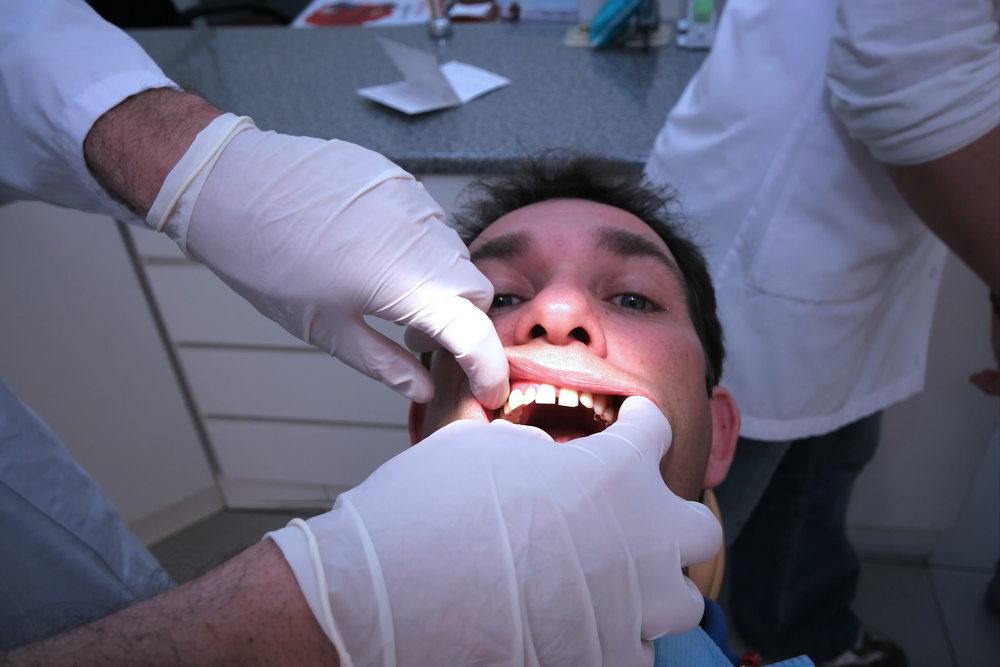

Non-carious cervical lesions (NCCLs) are saucer or wedge-shaped defects that appear along the cementum-enamel junction as a result of gradual loss of dental tissues in the absence of caries. Their aetiology has not been fully clarified. NCCLs are restored using adhesive materials glass-ionomers and their resin-modified version, poly-acid modified composites (known as ‘compomers’), composite and self-adhesive composites. The aim of this review was to evaluate the clinical effectiveness of contemporary adhesives for the restoration of NCCLs in terms of restoration retention as a function of time (annual failure rate, AFR).
A search was conducted in Medline and the abstracts of International Association of Dental Research without language restriction. Reference lists of eligible trials and relevant review articles were also checked. Randomized and non-randomized controlled clinical trials (RCT’s) comparing the clinical effectiveness of two or more adhesives and/or combinations of these in NCCLs were considered. Two reviewers conducted study selection and data abstraction independently. Materials with adhesive potential were categorized into 6 main classes: 3-step etch & rinse adhesives (3E&Ra’s), 2-step etch & rinse adhesives (2E & Ra’s), 2-step self-etch adhesives (2SEa’s), 1-step self-etch adhesives (1SEa’s), glass-ionomers (GI’s) and self-adhesive composites (SAC’s). 2SEa and 1SEa can be sub-divided into ‘mild’ and ‘intermediately strong’ adhesives.
- 87 Class-V clinical trials met the inclusion criteria. For 15 only an abstract was available.
- 78 were short-term (18 months to 3 years), 18 medium-term (3–5 years) and 10 long-term( >5 years)
- 78 adhesive materials were tested.
- The most frequently tested adhesive materials were the 2E&Ra’s (65) and 1SEa’s (63), followed by the 3E&Ra’s (37), 2SEa’s (34) and GI’s (32). There were no trials for SAC’s
- The lowest AFR scores were recorded for GIs.
| AFR Score | ||
| mean | SD | |
| GI | 2.0 | 1.4 |
| 2SEa_m | 2.5 | 1.5 |
| 3E&Ra | 3.1 | 2.0 |
| 1SEa_m | 3.6 | 4.3 |
| 1SEa_s | 5.4 | 4.8 |
| 2E&R | 5.8 | 4.9 |
| 2SEa_s | 8.4 | 7.9 |
- selective enamel etching did not significantly influence the retention rate of SEa (AFR SEa_etch=0.43 (0.49), AFR SEa_non-etch=1.43 (1.77).
The authors concluded
This systematic review allowed us to draw some clear conclusions with regard to clinical effectiveness of adhesives in NCCLs. First, the chemical bonding potential of adhesives is important for the quality and durability of the bond in NCCLs, as the best results in clinical bonding effectiveness were obtained by the GI and milder types of SEa’s. By introducing 1SEA m, a clear improvement in bonding effectiveness was noticed for these all-in-one adhesives, so that more recent versions are almost comparable with more proven multi-step golden standard approaches. 3E&Ra’s also still show favorable bonding efficiency, while inadequate bonding effectiveness was noticed for 2E&Ra’s and SEa s. In addition to the best adhesive strategy, the dentist should select a product with a good proven clinical performance, as there is wide variation among adhesives of the same adhesive approach.
Comment
Although the search strategy for this review could be considered to be limited a large number of studies have been identified. However, no formal assessment of study quality is presented. The authors also highlight a number of methodological weaknesses in the studies, for example less than 50% the trials provided information about recall rates. We have previously reported another review in this area by Santos et al (Dental Elf 15th April 2014. That review searched a wider range of databases and included fewer studies. That review also found a lower risk of loss of NCCL restorations with glass ionomers.
Links
Peumans M, De Munck J, Mine A, Van Meerbeek B. Clinical effectiveness of contemporary adhesives for the restoration of non-carious cervical lesions. A systematic review. Dent Mater. 2014 Aug 1. pii: S0109-5641(14)00191-2. doi: 10.1016/j.dental.2014.07.007. [Epub ahead of print] Review. PubMed PMID: 25091726.




Alonso Carrasco
10 years agoTiago Marques
10 years agoNatalia Alejandra
10 years agoJuan Castro Catalan
10 years agoFrancisco Rocha
10 years agoMarcos Santana
10 years agoEDTA conditioning improved cervical restoration retention
10 years agoCervical composite restorations: bevel or not?
11 years agoMarcos Santana
11 years agoFrancisco De Almeida Rocha
11 years agoAlonso Carrasco
11 years agoTiago Marques
11 years agoChris Lee
11 years agoNatalia Alejandra
11 years agoJuan Castro Catalan
11 years agoMoragMacLarty
11 years agoSaudiDent
11 years agodr_aljohani
11 years agoPeriodoncia20
11 years ago