The Mental Elf

Antidepressants vs placebo for depression: forget the gap

In an recent review in World Psychiatry, Khan and Brown (2015) look at antidepressants for depression and trace a few of the possible causes responsible for the apparent narrowing of the drug-placebo gap.

The authors start by observing that over the last two decades the widely held notion that antidepressants worked for 70% of depressed patients and placebos for 30% has largely been superseded. The origin of this statistic lies within the first studies on imipramine and early clinical trials with tricyclic antidepressants, which included severely depressed patients, such as hospitalised depressed patients with a melancholic pattern of symptoms.

DSM-III: a broad diagnostic category for major depressive disorder

Khan and Brown (2015) pinpoint to the introduction of the Diagnostic and Statistical Manual of Mental Disorders (DSM)-III as a turning point in reducing the distance between antidepressants and placebos. As an atheoretical system, which minimised the differences between various depression subtypes (which had been the focus of research so far) and over-imposed a broad diagnostic category called major depressive disorder, the DSM-III made it possible that a significantly larger number of individuals could now be categorised as depressed. Since literally millions of individuals had now “become” depressed (and not just the very severe cases from the first trials), depression was now a fertile ground for pharmaceutical companies to start exploiting. As Khan and Brown (2015) put it

the American Psychiatric Association, sponsor of the DSM-III, unintentionally expanded the market for antidepressants.

(I retain my doubts about the unintentional part).

The diagnostic category of major depressive disorder introduced in DSM-III significantly increased the number of depressed people who could be prescribed antidepressants worldwide.

Development of SSRIs and SNRIs

There then followed an explosion of drug development research that saw the rise of new categories of drugs (selective serotonin reuptake inhibitors (SSRIs) and serotonin and norepinephrine reuptake inhibitors (SNRIs)). New analysis of the public domain data of the US Food and Drug Administration (FDA) found that 40% was a more accurate estimation for the magnitude of symptom reduction with antidepressants, as compared to 30% achieved with placebo (Khan et al., 2000).

On the other hand, another analysis (Walsh et al., 2002) of published clinical reports of antidepressants showed that the degree of treatment response with placebo had been increasing over the last thirty years.

Expectation bias

Another factor identified by Khan and Brown (2015) refers to the impact of the expectation bias. In a recent analysis (Khan et al., 2012) they compared antidepressant trial data from non-pharmaceutical industry sources to industry data (obtained from the FDA Freedom of Information Act) and evaluated the magnitude of symptom reduction with all treatments, as well as their active and passive controls, such as placebo. Two interesting sets of results emerged:

  1. First, the size of symptom reduction for the placebo pill was higher in the trials not sponsored by the pharmaceutical industry.
  2. Second, in trials where investigators, staff and patients were blinded to the trial design and execution, symptom reduction was smaller for all treatments and control conditions considered, and differences between treatments and controls were also reduced. In fact, patients assigned to all of the treatments, whether considered active or designed as control conditions, showed symptom reduction that was strikingly similar to that observed with placebo. In other words, blinding of investigators and patients effectively wiped out differences between treatments, control and placebo. Interestingly, for the treatment and control conditions where blinding was impossible (combined pharmacotherapy and psychotherapy, and respectively waiting list), the degree of symptom reduction compared to placebo was higher. Compared to placebo, combined treatment showed a superior response and waiting list an inferior one, as if, the authors noted:

clinicians and depressed patients continued to fulfil expectations of each treatment based on prior assumptions.

Another study (Sinyor et al., 2010) indicated that the number of drug and placebo arms in a trial influenced the apparent therapeutic effects of the drugs, when this number was known to clinicians and patients. If the probability to be exposed to placebo was reduced, the therapeutic effects were higher for both the antidepressant and placebo.

Blinding of investigators and patients in depression studies effectively wiped out differences between treatments.

Understanding and supporting natural recovery

Citing experimental data supporting the almost ubiquitous nature of placebo effects across chronic conditions with a fluctuating course, and noting that while differences between existing treatments for depression are small, rates of spontaneous remission are comparably high. We wondered in a recent commentary (Cuijpers and Cristea, 2015) whether a placebo effect might in fact explain most, if not all, the variability among treatments for depression. As a consequence, we suggested research might veer away from trying to discover new, specific treatments for depression and instead focus on trying to understand and support natural recovery.

Penalising well designed trials

Finally, Khan and Brown (2015) identify regulatory decisions by bodies such as the FDA and the European Medicines Agency (EMA) as another relevant, yet largely under-appreciated factor. They detail how given their main focus is avoiding possible false positives, these regulating bodies set up requirements and favour trials that may not have the best design and development, in terms of outcome measures, data analysis methods, or number of treatment arms. This further exacerbates difficulties and confusion in interpreting data from these trials.

Conclusion

The authors conclude their review with a bleak but honest estimation regarding the effect sizes of current antidepressant trials:

The effect size of current antidepressant trials that include patients with major depressive episode is approximately 0.30 (modest), and this fact needs to be heeded for future antidepressant trials.
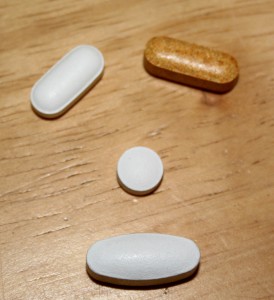
Recent research finds no difference between antidepressants and placebo in terms of depression symptom reduction.

Links

Primary paper

Khan A, Brown WA. (2015) Antidepressants versus placebo in major depression: an overview. World Psychiatry Off. J. World Psychiatr. Assoc. WPA.

Other references

Cuijpers, P., Cristea, I.A., 2015. What if a placebo effect explained all the activity of depression treatments? World Psychiatry Off. J. World Psychiatr. Assoc. WPA 14, 310–311. doi:10.1002/wps.20249

Khan, A., Faucett, J., Lichtenberg, P., Kirsch, I., Brown, W.A., 2012. A systematic review of comparative efficacy of treatments and controls for depression. PloS One 7, e41778. doi:10.1371/journal.pone.0041778

Khan, A., Warner, H.A., Brown, W.A., 2000. Symptom reduction and suicide risk in patients treated with placebo in antidepressant clinical trials: an analysis of the Food and Drug Administration database. Arch. Gen. Psychiatry 57, 311–317. [PubMed abstract]

Sinyor, M., Levitt, A.J., Cheung, A.H., Schaffer, A., Kiss, A., Dowlati, Y., Lanctôt, K.L., 2010. Does inclusion of a placebo arm influence response to active antidepressant treatment in randomized controlled trials? Results from pooled and meta-analyses. J. Clin. Psychiatry 71, 270–279. doi:10.4088/JCP.08r04516blu [PubMed abstract]

Walsh, B.T., Seidman, S.N., Sysko, R., Gould, M., 2002. Placebo response in studies of major depression: variable, substantial, and growing (PDF). JAMA 287, 1840–1847.

Photo credits

Add a comment
  • Post Of The Week – Saturday 21st November, 2015 | DHSB/DHSG Psychology Research Digest

    Post Of The Week – Saturday 21st November, 2015 | DHSB/DHSG Psychology Research Digest

    10 years ago
    […] http://www.nationalelfservice.net/mental-health/depression/antidepressants-vs-placebo-for-depression… […]
  • eapxprtsoftware

    eapxprtsoftware

    10 years ago
    Antidepressants vs placebo for depression: forget the gap https://t.co/fOYWidCCKZ
  • Antonietta3021

    Antonietta3021

    10 years ago
    RT @MadameOrrocks: Why the apparent decline in anitdepressant-placebo gap? Estimates of depression reduction effects fall frm 70 to 30% htt…
  • MadameOrrocks

    MadameOrrocks

    10 years ago
    Why the apparent decline in anitdepressant-placebo gap? Estimates of depression reduction effects fall frm 70 to 30% https://t.co/pSqZH8g9l1
  • indigorhythms

    indigorhythms

    10 years ago
    Antidepressants vs placebo for depression: forget the gap https://t.co/Lfnr6xVYqX via @sharethis
  • LCTherapies

    LCTherapies

    10 years ago
    RT @Mental_Elf: Antidepressants vs placebo for depression: forget the gap https://t.co/FfboLksllv
  • QualitasRes

    QualitasRes

    10 years ago
    Antidepressants vs placebo for depression: forget the gap https://t.co/edgjA2H0kl via @sharethis
  • OTBeth131

    OTBeth131

    10 years ago
    RT @Mental_Elf: Should we stop looking for new depression treatments & instead focus on understanding & supporting natural recovery? https:…
  • SympoPsychiatry

    SympoPsychiatry

    10 years ago
    Antidepressants vs placebo for depression: forget the gap. https://t.co/alqjNs2Sun by @Mental_Elf #TopShared24hrs #2
  • dxrevisionwatch

    dxrevisionwatch

    10 years ago
    @Mental_Elf @UoHHealthSocSci "increase the likelihood of a meaningful recovery..." Curious to know what is understood by term.
  • dxrevisionwatch

    dxrevisionwatch

    10 years ago
    @Mental_Elf @UoHHealthSocSci "The main therapy offered for mental health service users is psychotropic medication, that can..."
  • dxrevisionwatch

    dxrevisionwatch

    10 years ago
    @Mental_Elf This report https://t.co/AU7korweiN which @UoHHealthSocSci T'd
  • Mental_Elf

    Mental_Elf

    10 years ago
    @dxrevisionwatch @UoHHealthSocSci Which commentary? Do you mean @Zia_Julia's blog from yesterday? https://t.co/FfboLkJWK5
  • StAnnsHospital

    StAnnsHospital

    10 years ago
    RT @Mental_Elf: Should we stop looking for new depression treatments & instead focus on understanding & supporting natural recovery? https:…
  • PSSRUManchester

    PSSRUManchester

    10 years ago
    RT @Mental_Elf: Should we stop looking for new depression treatments & instead focus on understanding & supporting natural recovery? https:…
  • tadhg50

    tadhg50

    10 years ago
    Antidepressants vs placebo for depression: forget the gap https://t.co/h61009YGaO via sharethis Interesting article!
  • cathynoble0602

    cathynoble0602

    10 years ago
    RT @Mental_Elf: Should we stop looking for new depression treatments & instead focus on understanding & supporting natural recovery? https:…
  • Laynielouxu

    Laynielouxu

    10 years ago
    RT @Mental_Elf: Should we stop looking for new depression treatments & instead focus on understanding & supporting natural recovery? https:…
  • V_Epokhe

    V_Epokhe

    10 years ago
    Antidepressants vs placebo for depression: forget the gap https://t.co/ZTVZSOb8yv vía @sharethis
  • Charmian Anne Møller-Olsen

    Charmian Anne Møller-Olsen

    10 years ago
    Charmian Anne Møller-Olsen liked this on Facebook.
  • AlvearMfs

    AlvearMfs

    10 years ago
    RT @cgblanch1: Una revisión concluye que NO hay diferencias entre antidepresivos y placebo en reducción de síntomas en la depresión https:/…
  • vsernapsicologo

    vsernapsicologo

    10 years ago
    RT @cgblanch1: Una revisión concluye que NO hay diferencias entre antidepresivos y placebo en reducción de síntomas en la depresión https:/…
  • jose_valdecasas

    jose_valdecasas

    10 years ago
    RT @Mental_Elf: Don't miss: Antidepressants vs placebo for depression: forget the gap https://t.co/FfboLkJWK5 #EBP
  • endless_psych

    endless_psych

    10 years ago
    RT @Mental_Elf: Antidepressants vs placebo for depression: forget the gap https://t.co/FfboLksllv
  • mariawolters

    mariawolters

    10 years ago
    RT @Mental_Elf: Antidepressants vs placebo for depression: forget the gap https://t.co/FfboLksllv
  • WeSchoolNurses

    WeSchoolNurses

    10 years ago
    RT @Mental_Elf: Don't miss: Antidepressants vs placebo for depression: forget the gap https://t.co/FfboLkJWK5 #EBP
  • drmfirdosi

    drmfirdosi

    10 years ago
    RT @Mental_Elf: Don't miss: Antidepressants vs placebo for depression: forget the gap https://t.co/FfboLkJWK5 #EBP
  • DavidC1985

    DavidC1985

    10 years ago
    RT @Mental_Elf: Don't miss: Antidepressants vs placebo for depression: forget the gap https://t.co/FfboLkJWK5 #EBP
  • Mental_Elf

    Mental_Elf

    10 years ago
    Don't miss: Antidepressants vs placebo for depression: forget the gap https://t.co/FfboLkJWK5 #EBP
  • LiamJGilligan

    LiamJGilligan

    10 years ago
    RT @Mental_Elf: Blinding of investigators & patients in depression studies effectively wiped out differences between treatments https://t.c…
  • bengilchrist

    bengilchrist

    10 years ago
    RT @Mental_Elf: Should we stop looking for new depression treatments & instead focus on understanding & supporting natural recovery? https:…
  • MigraineAgain

    MigraineAgain

    10 years ago
    RT @Mental_Elf: Should we stop looking for new depression treatments & instead focus on understanding & supporting natural recovery? https:…
  • PHRCLeeds

    PHRCLeeds

    10 years ago
    RT @Mental_Elf: Should we stop looking for new depression treatments & instead focus on understanding & supporting natural recovery? https:…
  • juliereeves1205

    juliereeves1205

    10 years ago
    RT @Mental_Elf: Should we stop looking for new depression treatments & instead focus on understanding & supporting natural recovery? https:…
  • FinolaK

    FinolaK

    10 years ago
    RT @Mental_Elf: Should we stop looking for new depression treatments & instead focus on understanding & supporting natural recovery? https:…
  • AssureWellbeing

    AssureWellbeing

    10 years ago
    RT @Mental_Elf: Antidepressants vs placebo for depression: forget the gap https://t.co/FfboLksllv
  • The Mental Elf

    The Mental Elf

    10 years ago
    The Mental Elf liked this on Facebook.
  • Pam King

    Pam King

    10 years ago
    Pam King liked this on Facebook.
  • KayFSheldon

    KayFSheldon

    10 years ago
    RT @Mental_Elf: Today @Zia_Julia on why there's no diff btwn antidepressants & placebo in terms of depression symptom reduction https://t.c…
  • psq_ibiza

    psq_ibiza

    10 years ago
    RT @cgblanch1: Una revisión concluye que NO hay diferencias entre antidepresivos y placebo en reducción de síntomas en la depresión https:/…
  • saltamares

    saltamares

    10 years ago
    RT @cgblanch1: Una revisión concluye que NO hay diferencias entre antidepresivos y placebo en reducción de síntomas en la depresión https:/…
  • jose_valdecasas

    jose_valdecasas

    10 years ago
    RT @cgblanch1: Una revisión concluye que NO hay diferencias entre antidepresivos y placebo en reducción de síntomas en la depresión https:/…
  • pizarroruiz

    pizarroruiz

    10 years ago
    RT @cgblanch1: Una revisión concluye que NO hay diferencias entre antidepresivos y placebo en reducción de síntomas en la depresión https:/…
  • chrislambwell

    chrislambwell

    10 years ago
    RT @Mental_Elf: Antidepressants vs placebo for depression: forget the gap https://t.co/FfboLksllv
  • chrislambwell

    chrislambwell

    10 years ago
    RT @Mental_Elf: "The effect size of current antidepressant trials that include pts w major depressive episode is approximately 0.30" https:…
  • cgblanch1

    cgblanch1

    10 years ago
    Una revisión concluye que NO hay diferencias entre antidepresivos y placebo en reducción de síntomas en la depresión https://t.co/Ufxv7JVUB5
  • C_2me

    C_2me

    10 years ago
    RT @Mental_Elf: "The effect size of current antidepressant trials that include pts w major depressive episode is approximately 0.30" https:…
  • christoclifford

    christoclifford

    10 years ago
    RT @Mental_Elf: "The effect size of current antidepressant trials that include pts w major depressive episode is approximately 0.30" https:…
  • DrIanDawe

    DrIanDawe

    10 years ago
    RT @Mental_Elf: "The effect size of current antidepressant trials that include pts w major depressive episode is approximately 0.30" https:…
  • luna_immobile

    luna_immobile

    10 years ago
    #Antidepressants vs placebo for #depression: forget the gap https://t.co/dfs4loB3tx via @sharethis
  • david_colquhoun

    david_colquhoun

    10 years ago
    @Mental_Elf if that
  • Mental_Elf

    Mental_Elf

    10 years ago
    "The effect size of current antidepressant trials that include pts w major depressive episode is approximately 0.30" https://t.co/FfboLkJWK5
  • DawnFoxDavies

    DawnFoxDavies

    10 years ago
    RT @Mental_Elf: How much can expectation bias skew the results of antidepressant trials? https://t.co/FfboLksllv
  • LeahFHardy

    LeahFHardy

    10 years ago
    RT @Mental_Elf: Today @Zia_Julia on why there's no diff btwn antidepressants & placebo in terms of depression symptom reduction https://t.c…
  • bebsmith

    bebsmith

    10 years ago
    RT @Mental_Elf: Antidepressants vs placebo for depression: forget the gap https://t.co/FfboLksllv
  • Hampshire Healthcare Library Service

    Hampshire Healthcare Library Service

    10 years ago
    Hampshire Healthcare Library Service liked this on Facebook.
  • Rasha Hosni Ali

    Rasha Hosni Ali

    10 years ago
    Rasha Hosni Ali liked this on Facebook.
  • HuttenRebecca

    HuttenRebecca

    10 years ago
    Antidepressants vs placebo for depression: forget the gap https://t.co/vkcSef8Zf7 via @theoldreader
  • HHLibService

    HHLibService

    10 years ago
    Antidepressants vs placebo for depression: forget the gap https://t.co/sAcTYMQnhK
  • CatalyseC

    CatalyseC

    10 years ago
    RT @Mental_Elf: Antidepressants vs placebo for depression: forget the gap https://t.co/FfboLksllv
  • Bibi Senthi

    Bibi Senthi

    10 years ago
    Bibi Senthi liked this on Facebook.
  • Zia_Julia

    Zia_Julia

    10 years ago
    My new @Mental_Elf post Antidepressants vs place 4 depression: forget the gap https://t.co/7jHPDGHmNC
  • patmmc2

    patmmc2

    10 years ago
    RT @Mental_Elf: Antidepressants vs placebo for depression: forget the gap https://t.co/FfboLksllv
  • John Cosgrove

    John Cosgrove

    10 years ago
    So which is it? Patient selection or placebo effect? If the former, then we all simply need to turn back the diagnostic clock to pre-DSM-III. If the latter, then as you say, we must redeploy resources away from drugs. I can see many patients being unhappy with the idea that there is no pill for their ill, however.
  • psychwatch2

    psychwatch2

    10 years ago
    RT @Mental_Elf: Antidepressants vs placebo for depression: forget the gap https://t.co/FfboLksllv
  • Bethan Davies

    Bethan Davies

    10 years ago
    Bethan Davies liked this on Facebook.
  • Erica Richmond

    Erica Richmond

    10 years ago
    Erica Richmond liked this on Facebook.
  • Benjamin Hall

    Benjamin Hall

    10 years ago
    Benjamin Hall liked this on Facebook.
  • Benjamin Hall

    Benjamin Hall

    10 years ago
    So if the drugs don't work, can they make you worse?
  • VJSharethis

    VJSharethis

    10 years ago
    RT mark_bolstridge: Antidepressants vs placebo for depression: forget the gap https://t.co/57dLPuqjbh via sharethis
  • jlpatient77

    jlpatient77

    10 years ago
    RT @mark_bolstridge: Antidepressants vs placebo for depression: forget the gap https://t.co/TBzB5YBQq1 via @sharethis
  • P101RK

    P101RK

    10 years ago
    RT @Mental_Elf: Antidepressants vs placebo for depression: forget the gap https://t.co/FfboLksllv
  • mark_bolstridge

    mark_bolstridge

    10 years ago
    Antidepressants vs placebo for depression: forget the gap https://t.co/TBzB5YBQq1 via @sharethis
  • Sarah Annetts

    Sarah Annetts

    10 years ago
    Sarah Annetts liked this on Facebook.
  • kate_elizabeth

    kate_elizabeth

    10 years ago
    RT @Mental_Elf: Antidepressants vs placebo for depression: forget the gap https://t.co/FfboLksllv
  • bsspsychology

    bsspsychology

    10 years ago
    RT @Mental_Elf: Antidepressants vs placebo for depression: forget the gap https://t.co/FfboLksllv
  • Jasmine Dawn Dixon

    Jasmine Dawn Dixon

    10 years ago
    Jasmine Dawn Dixon liked this on Facebook.
  • facebookguide2

    facebookguide2

    10 years ago
    RT iVivekMisra Antidepressants vs placebo for depression: forget the gap https://t.co/QGvNKiIadm #MentalHealth https://t.co/JwcmUaqO4f
  • lucy19

    lucy19

    10 years ago
    RT @Mental_Elf: Antidepressants vs placebo for depression: forget the gap https://t.co/FfboLksllv
  • Marmarescobar

    Marmarescobar

    10 years ago
    RT @Mental_Elf: Antidepressants vs placebo for depression: forget the gap https://t.co/FfboLksllv
  • iVivekMisra

    iVivekMisra

    10 years ago
    Antidepressants vs placebo for depression: forget the gap https://t.co/7m3sDjCFep #MentalHealth https://t.co/RElwj1H4B8