



Bipolar disorder features as one of the top ten disabling disorders for working age adults. There are numerous risks including suicide, increased mortality and reduced social functioning associated with the disorder.
Key to enabling recovery is preventing acute episodes from occurring, with each episode increasing the risk of future ones. Therefore ensuring long-term maintenance treatment for bipolar disorder is critical.
Methods
The authors (53 psychiatrists from across the world) conducted a systematic search of the literature which aimed to identify biological treatments only. It is not clear how many papers contributed to the final 65 page report.
The review focused mainly on Bipolar 1, although Bipolar 2 and rapid cycling was included, other similar disorders such as schizoaffective disorders were excluded. The search included Medline, Embase, Web of Science, Cochrane, Treatment guidelines, and hand searching and updated a previous 2004 publication (Grunze et al. 2004).
Each identified paper was ranked according to methodological rigor, and then the evidence of effectiveness graded across 8 clinical domains, such as, safety, tolerability, suicide prevention, and effectiveness.
Meta-analysis was not possible, due to heterogeneous samples, differing definitions of remission and inconsistent outcome measurement.
The final ratings were adapted following a consensus exercise of 53 psychiatrists, although it is not clear how this process changed the rankings and final report.
Results
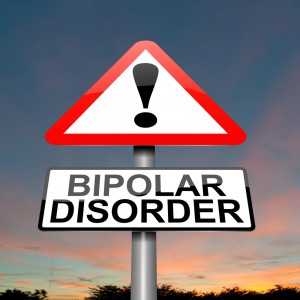
- 21 different treatments emerged from the papers reviewed
- The majority of the biological treatments were drugs
- Lithium appeared to have the most robust evidence base as a long-term treatment
- Six medications received the highest recommendation in two of the domains (Aripiprazole, Lamotrigine, Lithium, Olanzapine, Quetiapine, Risperidone)
- Two of these drugs (Risperidone and Olanzapine) had their evidence downgraded due to safety issues (side-effects)
- Older typical antipsychotics and antidepressants were combined into two single groups due to lack of trial evidence
- ECT and Omega-3 were also identified as possible interventions, although they lacked evidence
Conclusions
The authors concluded:
We identified six medications with the two highest recommendation grades, based on their evidence for different aspects of bipolar disorder maintenance treatment in diverse patient population. None of these medications can fully cover all areas and patient groups equally well; so we are pleased to see that the number of alternatives has grown since the first edition of this guideline in 2004 (Grunze et al. 2004). We also notice that despite the development of promising alternatives, lithium is still a top standard for the long-term treatment of bipolar disorder.
Other thoughts
This is a useful report which aims to synthesise studies of long-term treatments, it should be used in conjunction with an earlier published reports which focused on the treatment of acute exacerbations of bipolar disorder (Grunze et al., 2009 and 2010). The evidence base for each drug across the 8 domains is summarised in considerable detail. NICE (2006) in their own guidance recommended Lithium, Olanzapine and Valporate for the long-term treatment of bipolar disorder. Valporate was not one of the highest recommended treatments in this report, and has serious adverse effects in women of child-bearing age.

More sophisticated research is needed to evaluate long-term treatments for bipolar disorder, most current studies fail to apply standardise outcome measures, treatments and are of small samples. The report provides a detailed discussion of the pitfalls of current research in this area. Notably, remission is a poorly defined concept for research but also in clinical work, recovery is even less well defined as a concept in bipolar disorder. There needs to be considerably more discussion and agreement of outcome measurement in long term studies.
Although there was insufficient evidence of single antidepressants/typical antipsychotics, this continues to be widely used in clinical practice. These drugs groups need to be subjected to longitudinal studies of efficacy and acceptability with bipolar disorder as they have with other disorder such as psychosis.
Links
- Grunze H, Vieta E, Goodwin GM, Bowden C, Licht RW, Möller HJ and Kasper S. The World Federation of Societies of Biological Psychiatry (WFSBP) Guidelines for the Biological Treatment of Bipolar Disorders: Update 2012 on the long-term treatment of bipolar disorder The World Journal of Biological Psychiatry 2013; 14(3): 154-219.
- Grunze H, Vieta E, Goodwin GM, Bowden C, Licht RW, Möller HJ and Kasper S. WFSBP Task Force on Treatment Guidelines for Bipolar Disorders. The World Federation of Societies of Biological Psychiatry (WFSBP) Guidelines for the Biological Treatment of Bipolar Disorders: Update 2009 on the Treatment of Acute Mania The World Journal of Biological Psychiatry 2009 10:2, 85-116
- Grunze H, Vieta E, Goodwin GM, Bowden C, Licht RW, Möller HJ and Kasper S. The World Federation of Societies of Biological Psychiatry (WFSBP) Guidelines for the Biological Treatment of Bipolar Disorders: Update 2010 on the treatment of acute bipolar depression. The World Journal of Biological Psychiatry 2010; 11(2): 81-109.
- Bipolar disorder: The management of bipolar disorder in adults, children and adolescents, in primary and secondary care (PDF). NICE guideline, CG38, Jul 2006.




DrMariosAdamou
13 years agoMaryP58
13 years agomaturin007
13 years agojesustorres2595
13 years agopierssturley
13 years agoldiazammo
13 years agoin_psych
13 years agoMental_Elf
13 years agoMineral_Hill
13 years agolapsangsusie
13 years agoJohnBaker_UoM
13 years agoRethinkCarers
13 years agoJohnBaker_UoM
13 years agolapsangsusie
13 years agolapsangsusie
13 years agoMental_Elf
13 years agobsspsychology
13 years agoSeerLen
13 years agoSeerLen
13 years agoSeerLen
13 years agoWBmeded
13 years agoangliacounsel
13 years agojen_unwin
13 years agoAVoiceNotHeard
13 years agoMental_Elf
13 years ago444blackcat
13 years agoMental_Elf
13 years agoleah_michal
13 years agoSteve Ayer
13 years agoVayiaPolyzoidou
13 years agolelongmore
13 years agoFranWorley
13 years agogeddesjohnr
13 years agogeddesjohnr
13 years agoRandomSalmon
13 years agoLauren Crilly
13 years ago'Sue Mario
13 years agoAnna-marie Matczak
13 years agoBeck_Dly
13 years agoKittiiKitty
13 years agoIamRedFraggIe
13 years agoMental_Elf
13 years agojennywenzer
13 years agoslamtwigops
13 years agoDrDJSmith
13 years agoAnita Luck
13 years agoLithiumLibGirl
13 years agojennywrenness
13 years agoStephenWood8
13 years agoNHSWatch
13 years agoMental_Elf
13 years agobenhannigan
13 years agoMarcus Chrapot
13 years agoThe Mental Elf
13 years agoCaroline Tomes
13 years agoJohnBaker_UoM
13 years agopmreid86
13 years agoaghoury79
13 years ago