Derek Richards

Profile photo of Derek Richards
Derek Richards is a specialist in dental public health, Director of the Centre for Evidence-Based Dentistry and Specialist Advisor to the Scottish Dental Clinical Effectiveness Programme (SDCEP) Development Team. A former editor of the Evidence-Based Dentistry Journal and chief blogger for the Dental Elf website until December 2023. Derek has been involved with a wide range of evidence-based initiatives both nationally and internationally since 1994. Derek retired from the NHS in 2019 remaining as a part-time senior lecturer at Dundee Dental School until the end of 2023.
Website

Follow me here –

Preoperative ibuprofen and acetaminophen did not improve inferior alveolar nerve anaesthesia success in patients with pulpitis.

shutterstock_70250746-assorted pills

The inferior alveolar nerve block (IANB)  does not always result in successful pulpal anaesthesia with studies noting failure rates between  44% and 81%.  Previous studies have suggested that preoperative medication might increase the success rate of the IANB.  The aim of this study was to determine the effect of the administration of the combination of [read the full story…]

Phentolamine use results in a faster return-to-normal soft-tissue function and sensation after local anaesthesia

shutterstock_17571817- injection

Soft-tissue numbness after local anaesthesia is considerably longer than pulpal anaesthesia and the duration of the typical dental appointment. This often impacts on patients normal daily activities.  The aim of this randomized, single-blind study was to evaluate the reversal of soft-tissue anaesthesia using phentolamine in asymptomatic endodontic patients. Adults patients requiring endodontic therapy in a [read the full story…]

Rapid maxillary expansion with Haas-type and Hyrax-type expanders

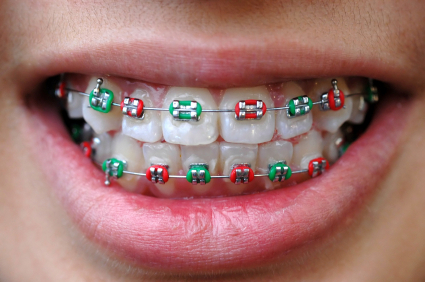
Upper orthodontic appliance

First described over 100 years ago, rapid maxillary expansion (RME) is a method used to correct a transverse maxillary deficiency.  The aim of this study was to evaluate and compare the immediate effects of RME in the transverse plane with Haas-type and Hyrax-type expanders by using cone-beam computed tomography. The authors randomised 33 subjects (mean [read the full story…]

Hall Technique for carious primary molars outperformed standard restorations at 5 years

shutterstock_3275732-caries -9-10yr old

In the Hall Technique  carious primary molars are managed by sealing decay under preformed metal crowns without any caries removal, tooth preparation, or local anaesthesia.  The aim of the study was to compare the clinical/radiographic failure rates of the Hall Technique (HT) against General Dental Practitioners’ (GDPs) standard (control) restorations. This split-mouth study involved 132 [read the full story…]

Study suggests people with depression and anxiety have lower use of oral health services and greater tooth loss

Depression

A previous systematic review has shown that ‘‘People with severe mental illnesses like schizophrenia or bipolar disorder are over three times more likely to lose their teeth’.   Another large cross-sectional study from the USA has now been published that looks at the associations among depression, anxiety, use of oral health services, and tooth loss. This [read the full story…]

Compliant high risk children benefited from twice weekly supervised high fluoride gel brushing programme

shutterstock_26227375 toothbrushes and toothpaste

Despite continuing improvements in dental health considerable inequalities remain with highest levels of disease amongst children living in the most materially disadvantaged areas. The main aim this study was to assess the caries-preventive efficacy of  a 2 years  twice weekly supervised brushingprogramme using a self-applied gel containing 12,500 ppm fluoride on schooldays compared with weekly [read the full story…]

Are single dose oral medications for post root treatment pain relief effective?

shutterstock_70250746-assorted pills

The pain associated with root canal treatment is a major source of fear for patients. Pre treatment, treatment, and post treatment pain is anticipated, experienced, remembered, and shared by patients. The aim of this trail was to compare the effects of single doses of three oral medications on postoperative pain following instrumentation of root canals [read the full story…]

Using ice chips reduces oral mucositis in patients undergoing chemotherapy

shutterstock_12720943-mouthwash

Cancer treatment is increasingly effective but is associated with short and long term side effects. Oral side effects remain a major source of illness despite the use of a variety of agents to prevent them. One of these side effects is oral mucositis (mouth ulcers). The aim of this study was to assess the effect [read the full story…]

Very low quality evidence for the efficacy of most neurosurgical procedures for trigeminal neuralgia

shutterstock_36617959

The trigeminal nerve is the fifth cranial nerve and one of the largest in the head. It provides sensation to the face and  is called trigeminal because it splits into three main branches. When neuralgia (nerve pain) occurs in the trigeminal nerve it causes severe and sudden face pain. It has an incidence rate of [read the full story…]

Motivational interview is a promising approach for improving plaque control in patients with periodontal disease

iStock_000016834391XSmall couple finger pointing at computer screen square

The aim of this study was to assess whether an original motivational interview addressing the five dimensions of Leventhal’s self-regulation theory performed better than conventional basic instruction to improve compliance with plaque control among patients with periodontitis. Participants were randomly allocated to either an experimental group (motivational interview in addition  to standard treatment programme) or [read the full story…]