Derek Richards

Profile photo of Derek Richards
Derek Richards is a specialist in dental public health, Director of the Centre for Evidence-Based Dentistry and Specialist Advisor to the Scottish Dental Clinical Effectiveness Programme (SDCEP) Development Team. A former editor of the Evidence-Based Dentistry Journal and chief blogger for the Dental Elf website until December 2023. Derek has been involved with a wide range of evidence-based initiatives both nationally and internationally since 1994. Derek retired from the NHS in 2019 remaining as a part-time senior lecturer at Dundee Dental School until the end of 2023.

Website

Follow me here –

Combination therapies performed better than single ones for treating periodontal bony defects, but additional benefits were small

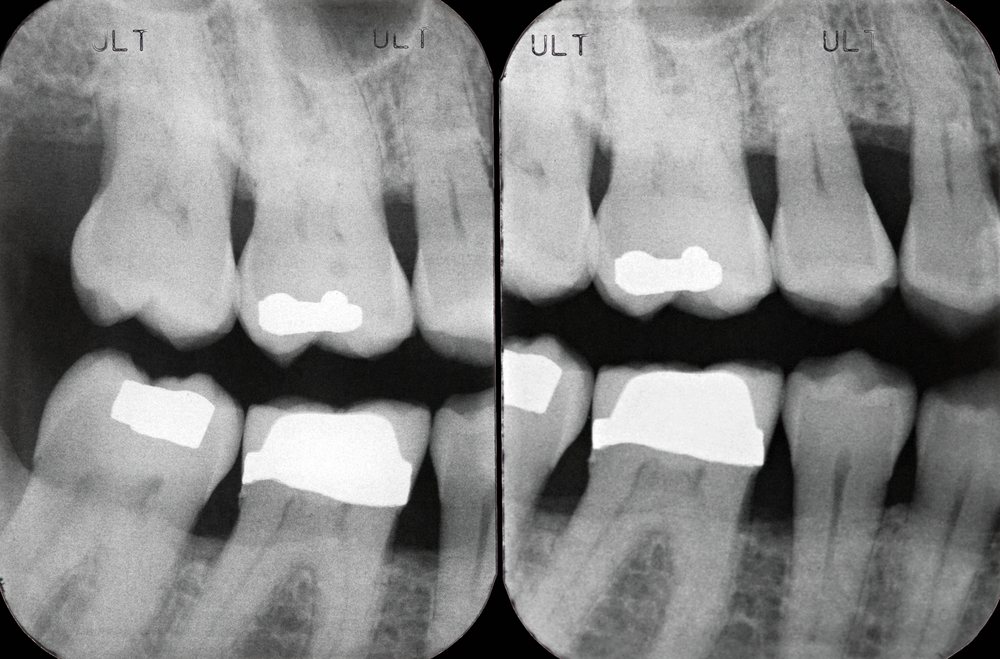
shutterstock_5410882 dentist x-ray

A range of regenerative treatments have been used for the  treatment of periodontal infrabony defects. Guided tissue regeneration (GTR) and enamel matrix derivatives (EMD) are two popular treatment and they have both been used in combination with other treatment.   This network meta-analysis was conducted to assess the potential effects of the various combinations. Unlike a [read the full story…]

Better outcomes with metronidazole and amoxicillin as an adjunct to full mouth disinfection for patients with aggressive periodontitis

shutterstock_2092494 Dentist and assistant are examining you the patient

About 1 in 1000 susceptible patients suffers from aggressive periodontitis. Sufferers have more rapid  gingival attachment loss with some losing more that half their bony support by 35. This can be localised  to a small number of teeth or more generalised.  The aim of this study was to evaluate the adjunctive clinical and microbiological effects [read the full story…]

Promising results from minimal intervention approach to proximal caries in young adults.

shutterstock_27438694

There is increasing interest in non-surgical approaches to the management of dental caries to preserve tooth structure.  The aim of this study was to compare the effect of infiltrating vs. sealing proximal caries lesions against placebo after 3 years. The study was a split mouth design conducted in young adults in Colombia.  Individuals with 3 [read the full story…]

Robust studies needed to evaluate topical agents available to treat HIV related oral ulcers

Logo of The Cochrane Collaboration

HIV/AIDS is currently the leading cause of death in adults in Africa and the sixth leading cause of death worldwide. In HIV infected adults, oral ulcers occur more frequently, last longer, and produce more painful symptoms than in immunocompetent people.  The aim of this review was to evaluate the efficacy and side effects of topical [read the full story…]

Bone substitutes with autogenous bone show similar short term results to autogenous bone alone for maxillary sinus floor elevation

shutterstock_5410882 dentist x-ray

Maxillary sinus floor elevation is commonly performed to create sufficient bone fraction to enable the placement of dental implants. The aim of this review was to assess the bone fraction and implant survival rate and to determine whether the bone fraction is affected by the grafting material or growth factor applied. The Medline and the [read the full story…]

Limited evidence for the surgical management of temporomandibular joint ankylosis

shutterstock_36617959

Treatment for temporomandibular joint (TMJ) ankylosis include gap arthroplasty (GA) and resection of the ankylosis and reconstruction of the ramus–condyle unit with a costochondral graft or prosthetic joint. The aim of this review was to assess whether GA  or and resection of the ankylosis and reconstruction of the ramus–condyle unit with a costochondral graft produced [read the full story…]

Hall technique for managing carious primary molars shows good long term outcomes.

Photograph of carious teeth

There is a growing literature supporting caries management options where caries is sealed in beneath restorations or sealants. The aim of this trial to compare long-term (at 5 yrs) outcomes for carious primary molars managed by GDPs’ standard conventional restorative methods (control) with the Hall Technique in general dental practice.   The outcomes at 2 years [read the full story…]

Some evidence to support adjunctive amoxicillin and metronidazole for treatment of chronic periodontitis

shutterstock_29890228

Chronic periodontitis affects between 5-20% of the population. Scaling and root planing (SRP) is one of the most effective methods of treatment. The aim of this review was to assess whether  the adjunct of amoxicillin and metronidazole (AMX/MET) to SRP increased its effectiveness compared to SRP alone. The authors searched eight databases and hand-searched a [read the full story…]

No good evidence for treatments for neurosensory deficit after third molar surgery

shutterstock_37849495 -impacted wisdom teeth

The removal of lower third molars is a very common surgical procedure. Neurosensory deficits ranging from anaesthesia, hypoesthesia, hyperesthesia, or dysaesthesia are a recognised adverse outcomes and have been reported in prevalence ranging from 0.1% to 22% for lingual nerve (LN) and 0.26% to 8.4% for inferior alveolar nerve (IAN). The aim of this review [read the full story…]

Weak evidence for honey in prevention of oral mucositis for cancer patients radiotherapy

shutterstock_49898071-MRI Scanner

Oral mucositis is a common side effect of  the treatment of malignancy with chemotherapy or radiotherapy. Two Cochrane reviews (see below) have looked more broadly at interventions for  prevention and treatment of this unpleasant side effect of treatment.  The aim of this review was to assess the protective effect of honey in head and neck [read the full story…]