

The Social Care Elf

Easter/Spring special: can pets help with long term conditions?

Spring and Easter is the time when thoughts turn to our furry, feathered and woolly friends. Everywhere we go (yes even in city farms, for erstwhile urban elves), there are chicks, lambs and baby bunnies bouncing and chirping about. The online world is no exception. When internet creator Tim Berners-Lee was asked the one thing he never imagined his invention would be used for, he replied: ‘Kittens’. So it’s no surprise that the animal-loving British find pets supportive when they experience ill-health or are living with an impairment or long term condition.

Despite the fact that animals figure highly in many aspects of life, from the internet to seasonal festivals, health and social care research does not always pay attention to the type and quality of relationships disabled people, carers or those with long term conditions have with their pets.

This qualitative study by Ryan and Ziebland (2015) aimed to give both insight into how pets feature in the narratives of people with long term conditions and into how researchers may, or may not, pick up on the importance of relationships with animals during the interview process.

Tim Berners-Lee contemplates the sheer number of kittens on the internet.

Method

The authors undertook a secondary analysis of 61 in-depth videoed interviews from a larger collection of 231 interviews about patient experience. Interviews involved people with Parkinson’s disease, autism, heart failure or stroke and carers of people with dementia or multiple sclerosis. The original interviews explored people’s experiences of living with, or caring for someone with, a long term condition (University of Oxford, no date).

For this secondary analysis, a sub sample of 61 interviews were examined to assess the place of pets in people’s accounts of their health or caring experiences.

The authors looked at the place of pets in people's experience and narratives of illness or caring.
The authors looked at the place of pets in people’s experience and narratives of illness or caring.

Findings

The authors came up with two types of finding. One was about how the researchers carrying out the interviews responded to the presence of a pet during the interview or in the person’s account. The other was about the role of pets for some people managing, or caring for someone with, a long term condition.

Generally, the topic of pets was brought up spontaneously by the participants but many researchers did not pursue it. Sometimes pets came into the room or made noise during the interview and this was recorded as an ‘interruption’ and often the pet was removed. However, when the researcher did encourage the participant to talk about their pet, additional, rich data was obtained.

'Don't leave me out!'
‘Don’t leave me out!’

The data obtained through the secondary analysis of the place of pets in the participants’ health narratives revealed several important points about the perception and role of pets in relation to managing long term conditions or caring for a person with one.

Animals (particularly dogs) were often positioned as family members or ‘social actors’ in people’s stories and often appeared in accounts of crisis or episodes of acute illness. Pets were ‘central to the social and emotional’ components of the recounted experience and its interpretation.

Many participants expressed positive experiences of pets in their illness narratives. These included

  • help for getting them out of the house, getting physical exercise or for monitoring their health
  • providing structure and a daily routine
  • companionship and access to social interaction and friendship (particularly through dog walking)
  • unique support through bereavement or for pain management
  • communication and companionship to relieve social isolation for people with autism.

Overall, the authors found that in interviews participants

described their pets as the motivating force for returning home, getting out and exercising, and as important companions in their everyday lives.

shutterstock_165066560
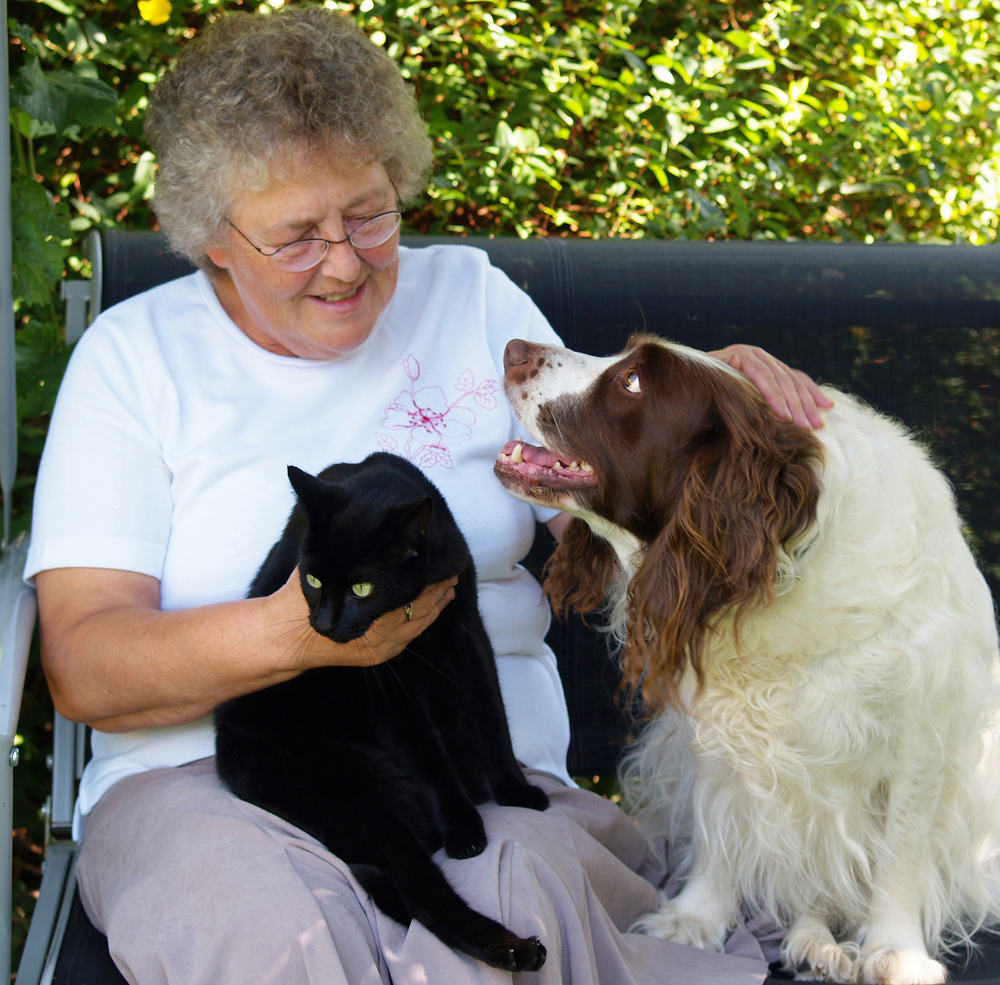
Pets can help people to manage their health and interpret or recount their experiences but researchers might not pick this up in interviews.

Conclusion

The authors conclude that their findings demonstrate

the multifaceted nature of people’s relationships with pets, and the embedded and embodied ways in which human-nonhuman interactions are played out in narratives of chronic illness.

Summing up

This study offers further understanding into how pets can help people to manage long term conditions or caring responsibilities and interpret or recount their experiences. However, it also suggests that researchers conducting interviews may exclude or fail to follow up participant cues about pets in their narratives.

There are some limitations in that we don’t have a real idea of the profile of the 61 participants, so their gender, age, ethnicity and so on. This information was presumably available and would have been useful for exploring the findings further. It would also have been interesting to have some further analysis of the different researcher interview techniques and skills, with some additional comment on how this type of qualitative research is best conducted so that the participant’s full narrative, with all actors, including pets, is enabled in the interview process.

Findings suggest that researchers and social care workers doing assessment and care planning should be sensitive to the role of pets for people living with long term conditions, as they can be seen as social actors in the person’s narrative as well as having important roles in managing illness, impairment or caring responsibilities.

Including pets can result in extra goodies.
Including pets can result in extra goodies for everyone.

Link

Ryan, S. & Ziebland S. (2015) On interviewing people with pets: reflections from qualitative research on people with long-term conditions Sociology of Health & Illness 37 (1) pp.67–80 [Full Text]

References

University of Oxford (no date) Healthtalk Online.

Add a comment
  • Pets are mostly good for our mental health

    Pets are mostly good for our mental health

    7 years ago
    […] Sarah Carr writing about how pets can help people living with long-term conditions […]
  • Michael Clark

    Michael Clark

    11 years ago
    Michael Clark liked this on Facebook.
  • careopinion

    careopinion

    11 years ago
    RT @HWOldham: Cats, dogs & Easter bunnies: the important pets of people living with long term conditions via @SocialCareElf http://t.co/ELx…
  • kentautistic

    kentautistic

    11 years ago
    Easter/Spring special: can pets help with long term conditions? http://t.co/0gdrqUQwh2
  • HWOldham

    HWOldham

    11 years ago
    Cats, dogs & Easter bunnies: the important pets of people living with long term conditions via @SocialCareElf http://t.co/ELxcx2A1LA
  • HealthwatchTame

    HealthwatchTame

    11 years ago
    Cats, dogs & Easter bunnies: the important pets of people living with long term conditions via @SocialCareElf http://t.co/7Mmbq5UcK3
  • AnastaciaTohill

    AnastaciaTohill

    11 years ago
    RT @Mental_Elf: Cats, dogs & Easter bunnies: the important pets of people living with long term conditions @SocialCareElf http://t.co/dHCAF…
  • Mwharvey

    Mwharvey

    11 years ago
    Can pets help with long term conditions? http://t.co/VGdirJRDP7 via @sharethis
  • powkewoman

    powkewoman

    11 years ago
    RT @SocialCareElf: Easter/Spring special: can pets help with long term conditions? http://t.co/ZCPJdWNXRt
  • SocialCareElf

    SocialCareElf

    11 years ago
    C'mon chaps! Today's special seasonal blog includes an Easter bunny! http://t.co/ZCPJdWNXRt
  • eperry100

    eperry100

    11 years ago
    RT @Mental_Elf: Cats, dogs & Easter bunnies: the important pets of people living with long term conditions @SocialCareElf http://t.co/dHCAF…
  • h_m17

    h_m17

    11 years ago
    RT @NewcombLibrary: Can pets help with long term conditions? http://t.co/SrVciMjP6B @SocialCareElf #research http://t.co/FduOvh8xjh
  • PSSRU_LSE

    PSSRU_LSE

    11 years ago
    RT @SocialCareElf: Pets and people with #autism. Delve into our blog today & the Open Access research paper for #AutismDay2015 http://t.co/…
  • LSE_SCEIP

    LSE_SCEIP

    11 years ago
    RT @SocialCareElf: Pets and people with #autism. Delve into our blog today & the Open Access research paper for #AutismDay2015 http://t.co/…
  • NIHRSSCR

    NIHRSSCR

    11 years ago
    RT @SocialCareElf: Pets and people with #autism. Delve into our blog today & the Open Access research paper for #AutismDay2015 http://t.co/…
  • HHLibService

    HHLibService

    11 years ago
    Easter/Spring special: can pets help with long term conditions? http://t.co/BzUwf7mpgj
  • betharoohardy

    betharoohardy

    11 years ago
    RT @SocialCareElf: Easter/Spring special: can pets help with long term conditions? http://t.co/ZCPJdWNXRt @Co4CC @TLAP1 @HSAUK
  • SchrebersSister

    SchrebersSister

    11 years ago
    RT @Aspirantdiva: What a winning combination - @SchrebersSister discusses @sarasiobhan @suezieblandresearch for @SocialCareElf http://t.co/…
  • jmcefalas

    jmcefalas

    11 years ago
    RT @Aspirantdiva: What a winning combination - @SchrebersSister discusses @sarasiobhan @suezieblandresearch for @SocialCareElf http://t.co/…
  • mroutled

    mroutled

    11 years ago
    RT @SocialCareElf: Easter/Spring special: can pets help with long term conditions? http://t.co/ZCPJdWNXRt @Co4CC @TLAP1 @HSAUK
  • AlresfordBear

    AlresfordBear

    11 years ago
    RT @Aspirantdiva: What a winning combination - @SchrebersSister discusses @sarasiobhan @suezieblandresearch for @SocialCareElf http://t.co/…
  • Aspirantdiva

    Aspirantdiva

    11 years ago
    Whoops - in my excitement lack did not insert space after @suezieblandresearch in last tweet about @SocialCareElf http://t.co/xZCcbnzyrL …
  • MistySea164

    MistySea164

    11 years ago
    RT @SocialCareElf: Pets and people with #autism. Delve into our blog today & the Open Access research paper for #AutismDay2015 http://t.co/…
  • SocialCareElf

    SocialCareElf

    11 years ago
    RT @Aspirantdiva: What a winning combination - @SchrebersSister discusses @sarasiobhan @suezieblandresearch for @SocialCareElf http://t.co/…
  • SocialCareElf

    SocialCareElf

    11 years ago
    Pets and people with #autism. Delve into our blog today & the Open Access research paper for #AutismDay2015 http://t.co/ZCPJdWNXRt
  • Aspirantdiva

    Aspirantdiva

    11 years ago
    What a winning combination - @SchrebersSister discusses @sarasiobhan @suezieblandresearch for @SocialCareElf http://t.co/xZCcbnzyrL
  • CECLibrary

    CECLibrary

    11 years ago
    RT @SocialCareElf: Easter/Spring special: can pets help with long term conditions? http://t.co/ZCPJdWNXRt @Co4CC @TLAP1 @HSAUK
  • BerniceTigheRD

    BerniceTigheRD

    11 years ago
    RT @Mental_Elf: Cats, dogs & Easter bunnies: the important pets of people living with long term conditions @SocialCareElf http://t.co/dHCAF…
  • IntegAdv

    IntegAdv

    11 years ago
    RT @Mental_Elf: Cats, dogs & Easter bunnies: the important pets of people living with long term conditions @SocialCareElf http://t.co/dHCAF…
  • SocialCareElf

    SocialCareElf

    11 years ago
    RT @NewcombLibrary: Can pets help with long term conditions? http://t.co/SrVciMjP6B @SocialCareElf #research http://t.co/FduOvh8xjh
  • LKSoulsby

    LKSoulsby

    11 years ago
    RT @Mental_Elf: Cats, dogs & Easter bunnies: the important pets of people living with long term conditions @SocialCareElf http://t.co/dHCAF…
  • The Social Care Elf

    The Social Care Elf

    11 years ago
    The Social Care Elf liked this on Facebook.
  • sueziebland

    sueziebland

    11 years ago
    RT @sarasiobhan: “@SocialCareElf: Easter/Spring special: can pets help with long term conditions? http://t.co/QQ11keohgc” Woof woof. @suez…
  • DesKellyOBE

    DesKellyOBE

    11 years ago
    RT @SocialCareElf: Easter/Spring special: can pets help with long term conditions? http://t.co/ZCPJdWNXRt @Co4CC @TLAP1 @HSAUK
  • Claire89_LD

    Claire89_LD

    11 years ago
    RT @Mental_Elf: Cats, dogs & Easter bunnies: the important pets of people living with long term conditions @SocialCareElf http://t.co/dHCAF…
  • NewcombLibrary

    NewcombLibrary

    11 years ago
    Can pets help with long term conditions? http://t.co/SrVciMjP6B @SocialCareElf #research http://t.co/FduOvh8xjh
  • SocialCareElf

    SocialCareElf

    11 years ago
    Easter/Spring special: can pets help with long term conditions? http://t.co/ZCPJdWNXRt @Co4CC @TLAP1 @HSAUK
  • ESPsychotherapy

    ESPsychotherapy

    11 years ago
    RT @Mental_Elf: Cats, dogs & Easter bunnies: the important pets of people living with long term conditions @SocialCareElf http://t.co/dHCAF…
  • SocialCareElf

    SocialCareElf

    11 years ago
    RT @Mental_Elf: Cats, dogs & Easter bunnies: the important pets of people living with long term conditions @SocialCareElf http://t.co/dHCAF…
  • SocialCareElf

    SocialCareElf

    11 years ago
    RT @sarasiobhan: “@SocialCareElf: Easter/Spring special: can pets help with long term conditions? http://t.co/QQ11keohgc” Woof woof. @suez…
  • Mental_Elf

    Mental_Elf

    11 years ago
    Cats, dogs & Easter bunnies: the important pets of people living with long term conditions @SocialCareElf http://t.co/dHCAFDNMcZ
  • Wisegrannie

    Wisegrannie

    11 years ago
    RT @sarasiobhan: “@SocialCareElf: Easter/Spring special: can pets help with long term conditions? http://t.co/QQ11keohgc” Woof woof. @suez…
  • sarasiobhan

    sarasiobhan

    11 years ago
    “@SocialCareElf: Easter/Spring special: can pets help with long term conditions? http://t.co/QQ11keohgc” Woof woof. @sueziebland
  • Michael Clark

    Michael Clark

    11 years ago
    Michael Clark liked this on Facebook.
  • Intipton

    Intipton

    11 years ago
    RT @SocialCareElf: Easter/Spring special: can pets help with long term conditions? http://t.co/ZCPJdWNXRt