


Background
Cost pressures on adult social care budgets continue, with evidence to the Select Committee on Public Service and Demographic Change suggesting that 85% of councils are implementing eligibility thresholds at ‘substantial’ or ‘critical’ needs.
Adults with learning disabilities who are in receipt of adult social care support may need support for substantial periods and person centred planning approaches, introduced into national policy through the implementation of the Valuing People White Paper, are at the heart of ensuring the best fit between individual needs and service support.
Whilst regular short term review is crucial for ensuring that services remain relevant, long term planning is needed to ensure people can move towards their life goals.
Method
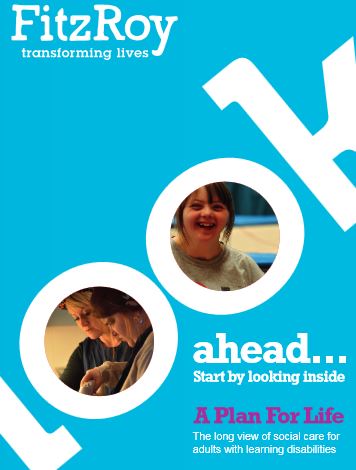
However, a recent report suggests that many local authorities are ignoring this approach in favour of short term, and the paper suggests, more costly responses. FitzRoy, the charity supporting people with learning disabilities has just published the results of a survey of 100 of the 152 Local Authorities in England looking at life planning.
Fitzroy commissioned opinion research amongst 100 chief executives, heads of adult social care and commissioning managers in local authorities in England. Whilst the questionnaire was designed by FitzRoy, the interviews were conducted by an independent research company
Results
What they found was that whilst Local Authorities (LA) believed that placement stability and quality of life sere important outcomes, (87% believed these should be measured) 40% did not have a formal measure of placement stability. Where this existed, it was in in some cases described as an annual review with a social worker.
Despite quality of life being a key outcome for people, 19% of authorities stated that quality of life did not influence their assessment of services
In relation to the impact on costs, it was clear that the majority of local authorities were aware of the longer term impact on costs of this short term view. Over 80% stated that short-term planning resulted in higher long-term care costs and greater care needs and 60% recognised that short-term planning resulted in emergency care decisions.
A major concern raised by the findings of this survey is that over 80% of local authorities agreed with the statement that too many adults with learning disabilities are currently unable to live a happy, independent life.
The findings suggest that far from being driven by a responsibility to ensure high quality supports for people to fulfil their potential and contribute to their society, the vast majority of authorities state that cost is an influencing factor with over 70% suggesting this is ‘disproportionately influential’ in their consideration of support.
The researchers found evidence however of willingness to take on the challenges of longer term planning. Many authorities were keen to have clearer central guidance on this issue.
Nearly 90% suggested that long-term planning offered ‘the single greatest opportunity to improve quality of life’.
The report authors point out that whilst local authorities are familiar with the concept of quality of service and service excellence, this is not the same as measuring quality of life and that there is potential for confusion if no clear definitions of well-being are available.
When asking about the requirements in the Care Bill for Local authorities to promote individual well-being, 36% were not aware of the requirement and 25% did feel prepared to fulfil this duty.
Conclusion
Despite the concerns raised, the researchers did find a good understanding of the issues and a willingness to change practices if resources allowed. Anna Galliford, Chief Executive of FitzRoy, stated that local government had reached a “crisis point in social care for adults with learning disabilities,” but that with the “ new governing framework due to come into force, there really is no better time for the government to make a change”
Link
A Plan For Life: The long view of social care for adults with learning disabilities, FitzRoy





Jen Shrek
11 years agoCarole Shaer
11 years agoAuroraOptions1
12 years agoCarole Shaer
12 years agobase_tweets
12 years agoHHLibService
12 years agoELHAP
12 years agoCBFdn
12 years agoEasyReadDave
12 years agoJen Shrek
12 years agothecouch999
12 years ago