

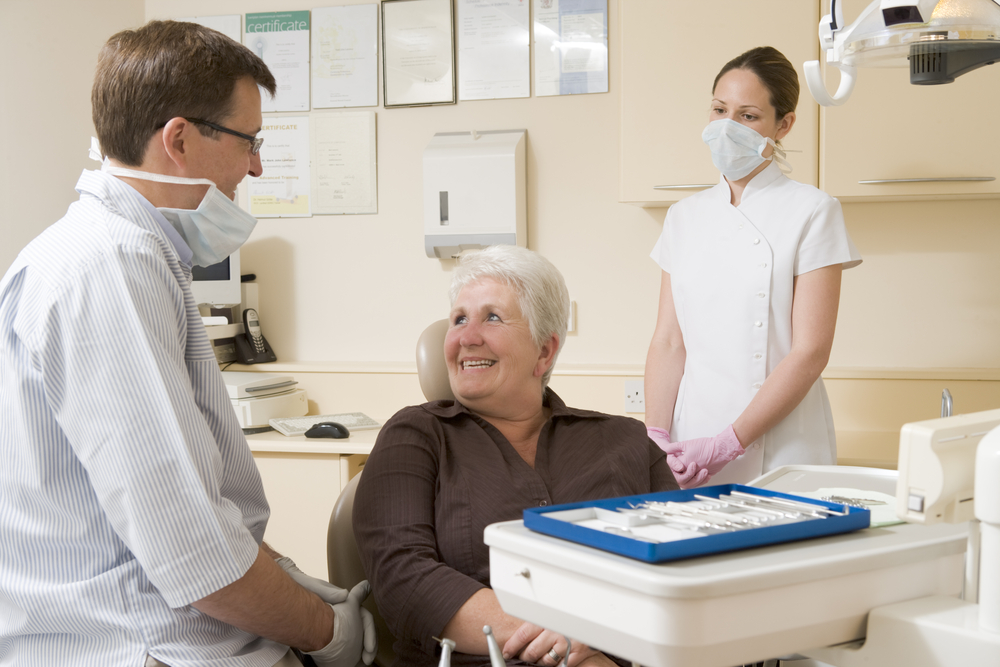

Regular dental examinations are considered an important element of preventive dental care. The aim of this cohort study was to assess the impact of routine dental attendance between the ages of 50 – 65 in relation to major tooth loss and Oral Health related Quality of life (OHRQoL)
In 1992 all 50-year-olds in two Swedish counties were invited to participate. Data was collected by questionnaire at 4 time points at age 50 and again after 5, 10, and 15 years.
- At baseline out of a total population (N = 8888), 6346 responded (71.4%). Response rates at 5, 10 and 15 years were 74.3% (6,513/8,764), 75.0% (6372/8500), and 73.1% (6078/ 8313).
- A total of 47.0% of the participants reported long-term routine attendance.
- Individuals of foreign country origin, unmarried, and those who perceived difficult access to dental care were less likely to be routine dental attenders
- Routine dental attendance decreased from 69.1% at age 50-64.2% at age 65.
- Adjusted logistic regression analyses revealed that those reporting long-term routine attendance were 0.3 (95% CI 0.2-0.5) times less likely than their counterparts who were non-routine attenders to report oral impacts.
- According to generalized estimating equations (GEE), those who reported long-term routine attendance were 0.6 (95% CI 0.4-0.7) times less likely than non-routine attenders to have major tooth loss across the survey years. The effect of long-term routine attendance on OHRQoL was stronger in public than in private dental healthcare attenders.
The authors concluded
Routine dental attendance decreased from age 50 to 65 years in the Swedish cohort investigated. Long-term routine dental attendance throughout middle and early older age reduced major tooth loss across time and OHRQoL at age 65 years, supporting the principle of encouraging routine dental checkups.
Comment
While regular dental examinations are recommended there is still debate around their frequency. Although, since the publication of the NICE guidance on dental recall in 2004 there has been a move towards risk-based frequency intervals rather than a fixed 6-monthly period. There was limited direct evidence available at the time of the NICE publications so studies like this and the on going INTERVAL trial will be helpful. All the information was recorded using questionnaires (Unell 1999 and Ekbäck et al 2009) so was self-reported and the 5-years data collection point raises the potential for recall bias. The authors also highlight that this particular cohort may not of been representative of Sweden as a whole. Sweden also as a high dentist to patient ratio and low disease levels so the findings may not more generalisable.
Links
Astrøm AN, Ekback G, Ordell S, Nasir E. Long-term routine dental attendance: influence on tooth loss and oral health-related quality of life in Swedish older adults. Community Dent Oral Epidemiol. 2014 Apr 9. doi: 10.1111/cdoe.12105. [Epub ahead of print] PubMed PMID: 24712734.
NICE Dental recall: Recall interval between routine dental examinations
Unell L. On oral disease, illness and impairment among 50-year-olds in two Swedish counties. Swed Dent J Suppl. 1999;135:1-45. Review. PubMed PMID: 10380282.
Ekbäck G, Astrøm AN, Klock K, Ordell S, Unell L. Variation in subjective oral health indicators of 65-year-olds in Norway and Sweden. Acta Odontol Scand. 2009;67(4):222-32. doi: 10.1080/00016350902908780. PubMed PMID: 19391050.





Francisco De Almeida Rocha
11 years agoTiago Marques
11 years agoAlonso Carrasco
11 years agoScottish Dental
11 years agoUofTDentLib
11 years agoDrDominicTrepel
11 years agoTheElfEconomist
11 years agoMarco Cornejovalle
11 years agoRipleyFamilyDen
11 years agoLifestyleElf
11 years agoJoseph_V_Russo
11 years agopully8
11 years agoHelenMcAvoy2
11 years ago121Therapy
11 years agoMental_Elf
11 years agoPeriodoncia20
11 years agoMangerBakes
11 years agocarlopoggio
11 years agoCarlosAGuim
11 years agofriendlydentist
11 years ago