
The Learning Disabilities Elf

Postural care pathway for people with learning disabilities

Many people with learning disabilities have additional physical issues that affect their mobility. For many, postural support can be critical in reducing pain, discomfort and creating the optimum situation for getting the best out of life.

Postural care is defined as support to protect someone’s body shape by using the right equipment and positioning techniques. This can be done to both protect and also to help restore body shape.

How many people might need postural support?

Although it is very difficult to know how many people with learning disabilities might need this support, we do know that there are approximately 16,000 adults with profound intellectual and multiple disabilities in England now and that this number is estimated to increase by on average 1.8% each year to 2026 (Mansell 2010)

This group of people will have complex physical disabilities including movement difficulties and a lack of control over their body posture all of which puts them most at risk of developing body shape distortions.

Policy context and recommendations

Raising Our Sights, Jim Mansell’s 2010 review, identified postural support as a key issue and recommended that NHS bodies should ensure they provide health services to adults with profound intellectual and multiple disabilities which focus on the protection of body shape.
(Recommendation 12)

Recent NICE guidelines on spasticity management for children and young adults also recommended timely access to postural equipment including sleeping and sitting systems.

The recent Confidential Inquiry into Premature Deaths recognised people with learning disabilities as a high-risk group for deaths from respiratory problems and recommended that Clinical Commissioning groups should ensure they commission expert, preventative services including include proactive postural Care support.
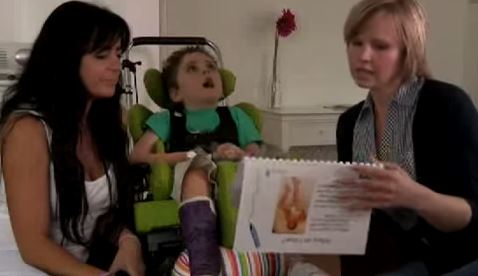
The provision of postural care services is patchy but new care pathway sets out approach
The provision of postural care services is patchy but this new care pathway sets out an approach.

Postural Care Pathway

However, within the context of this policy framework the provision of postural care services is patchy. Here at the Elf, we wanted to draw attention to a care pathway that has been developed by Postural Care, a Community Interest Company involved in promoting awareness of the issues and also developing and delivering training.

This has been developed with recognition that postural care is a 24 hour responsibility and consequently it is most likely that family members or direct support staff will be the people responsible for putting it into practice.

The pathway itself is divided into 5 steps

  1. Identification of the need for Postural Care for an individual and identification of those involved in support.
  2. Description of the current situation and the first measurement of body symmetry using The Goldsmith Indices®  and the coproduction of a plan with all those involved
  3. Stocktake of knowledge, confidence and competence of those involved
  4. Identification of whether person has access to equipment needed and planning for access if required.
  5. Variance measurement and if appropriate, provision of ongoing support

(The Goldsmith indices are a series of measurements of body symmetry. These measurements, to be seen as valid must be carried out by qualified measurers who have achieved a Postural Care CIC level 3 award in using the indices.)

Each step in the pathway is broken down into a series of questions which guide those supporting the person in identifying a way forward and recording the work they are doing.

Step one is both an assessment of need as well as a stocktake of personal resources to help. Interestingly, the second step focuses very clearly on co-producing a plan. As postural care is 24 hour responsibility, it is important for everybody who may be involved in delivering the plan to be involved in its development so they understand its rationale and feel confident and competent in its delivery.

Confidence and competence is a key component of the third step, where family expertise is recognised and valued. However, it is important that everybody involved in delivering the plan is competent in postural care. This is where Postural Care the company offer QCF (Qualification Credit Framework) accredited training courses to address this issue.

The courses offered however, must be understood in the context of how approaches and techniques will be used with individuals and it is here that the knowledge of the person held by family members and direct support staff is key.

The final step of the process recognises that as the need for postural care will be ongoing, it is usually not appropriate for people to be ‘discharged’ from support , but the expectation is that as the pathway is worked through and appropriate equipment and postural support strategies are put in place, levels of professional support will reduce, although person led monitoring should lead to re-engagement at any stage of the pathway should the need arise.

Conclusion and comment

It is clear that postural care is a critical part of securing a good quality of life for people with learning disabilities who have restricted movement. There is good evidence of the impact of poor postural care leading to health complications including scoliosis, respiratory problems, digestion difficulties etc.

The Postural Care Action Group,  a network of agencies concerned with improving practice has pointed out that the provision of appropriate support is patchy across the country, with examples of good practice, but also concerns about a complete lack of support in some areas.

The postural care pathway seems to be a good first step in setting out a clear approach to assessing need, working with those involved and developing strategies for support.

It would be good to hear from anybody currently supporting people with postural care needs about their experiences and also whether this pathway helps them in their situation. You can get in touch by commenting on this post, or through the feedback button at the top of this page.
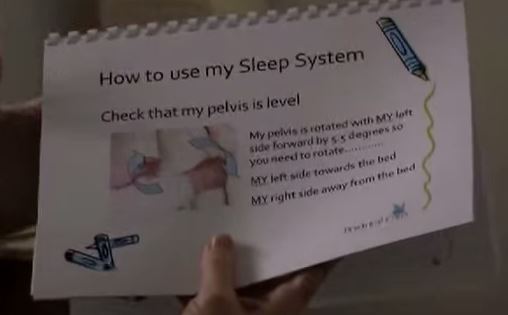
Will this care pathway improve the provision of services and supports?

Links

Clayton S, Goldsmith J and Goldsmith L. It’s My Life, Postural Care Pathway (PDF). Postural Care Community Interest Company

Raising our sights: services for adults with profound intellectual and multiple disabilities, Mansell J, 2010, Department of Health

Spasticity in children and young People, NICE Guideline CG145.

Add a comment
  • Jen Shrek

    Jen Shrek

    11 years ago
    Jen Shrek liked this on Facebook.
  • Sara-Marie Evans

    Sara-Marie Evans

    11 years ago
    Sara-Marie Evans liked this on Facebook.
  • Sean Ledington

    Sean Ledington

    11 years ago
    Sean Ledington liked this on Facebook.
  • Maureen Phillip

    Maureen Phillip

    11 years ago
    Maureen Phillip liked this on Facebook.
  • Ian Penfold

    Ian Penfold

    11 years ago
    Ian Penfold liked this on Facebook.
  • Korinna Eaton

    Korinna Eaton

    11 years ago
    Korinna Eaton liked this on Facebook.
  • Deb Oliveri

    Deb Oliveri

    11 years ago
    I have just found out that my adult son has scoliosis. The care provider/GP and local hospital have known for 13 years but not shared this with me. Staff have been allowed to buy him unsuitable armchairs with his benefits even though they are not medically trained. It is also missing as info in his care plan. How do I complain about this whilst giving my son the postural support he needs. He is solely LA funded, could he be partly funded by Continuing health care.?
    • 1 reply
    • John Northfield
      John Northfield 11 years ago
      Hi Deb, thanks for getting in touch. This sounds like a terrible situation for your son and certainly needs to be addressed as soon as possible in terms of postural care. Your local community learning disability team should be able to help. In terms of complaining about this, the care provider organisation should have a complaints procedure, and any member of staff should be able to get you a copy so you see what steps to take. The same would be true of any NHS services. Your local Clinical Commissioning Group (CCG) is responsible for commissioning services. You can find their details or on the NHS choices website - http://www.nhs.uk/service-search just type in clinical commissioning group and then your postcode. There should also be Patient Advice and Liaison Service (PALS) available to help with hospital services and you should be able to find out about them here http://www.nhs.uk/Service-Search/patient-advice-and-liaison-services-(pals)/LocationSearch/363 With regard to continuing health care funding, thisw ill require a local assessment and there is a page about this on the NHS UK website http://www.nhs.uk/chq/pages/2392.aspx with link to information about the assessment process. Perhaps other Elf readers may also have some advice? Hope that helps, john
      • Debra
        Debra 11 years ago
        Hi John, Many thanks for your reply, it was helpful and I have started taking the appropriate action. Thanks to Sarah Clayton I shall be better informed in the future.
  • CCareStandards

    CCareStandards

    11 years ago
    RT @LearningDisElf: Postural care pathway for people with learning disabilities http://t.co/9Oyltg6lz4
  • rawhomemade

    rawhomemade

    11 years ago
    RT @LearningDisElf: Postural care pathway for people with learning disabilities http://t.co/9Oyltg6lz4
  • kentautistic

    kentautistic

    11 years ago
    Postural care pathway for people with learning disabilities http://t.co/zRQ6nZGvEl via @sharethis
  • NorthwayRuth

    NorthwayRuth

    11 years ago
    RT @LearningDisElf: Will the new @Posturalcare pathway improve provision of services & support for people with learning disabilities? http:…
  • GwenMoulster

    GwenMoulster

    11 years ago
    RT @LearningDisElf: Will the new @Posturalcare pathway improve provision of services & support for people with learning disabilities? http:…
  • MencapQuality

    MencapQuality

    11 years ago
    @LearningDisElf article about postural care pathways http://t.co/eQAq7BKhO3
  • nina77458312

    nina77458312

    11 years ago
    @LearningDisElf please sign and share my petition,many thks, http://t.co/6WfnVwrN91
  • beverleyfs1

    beverleyfs1

    11 years ago
    RT @LearningDisElf: Don't miss: Postural care pathway for people with learning disabilities http://t.co/avFIz3v4c8
  • InclusionNorth

    InclusionNorth

    11 years ago
    RT @LearningDisElf: Don't miss: Postural care pathway for people with learning disabilities http://t.co/avFIz3v4c8
  • 1985Deanne

    1985Deanne

    11 years ago
    RT @LearningDisElf: Postural care services for ppl w/ learning disabilities are patchy, but new pathway from @Posturalcare looks to help ht…
  • Posturalcare

    Posturalcare

    11 years ago
    RT @LearningDisElf: Postural care services for ppl w/ learning disabilities are patchy, but new pathway from @Posturalcare looks to help ht…
  • Posturalcare

    Posturalcare

    11 years ago
    @LearningDisElf Not unless services are made more accountable - state of equipment provision for children shocking http://t.co/FAE9Ekcuyx
  • Posturalcare

    Posturalcare

    11 years ago
    RT @LearningDisElf: Will the new @Posturalcare pathway improve provision of services & support for people with learning disabilities? http:…
  • Sarah Clayton

    Sarah Clayton

    11 years ago
    Thanks so much for sharing this - we are further ahead in the UK than anywhere else in the world but we still have such a long way to go. There have been superb results in Wakefield that have been shared since 2010, at the time no-one aged 0-19 had hip dislocation, it is currently one child - but these results are not the norm... rather they are very much the exception :-(
    • 1 reply
    • John Northfield
      John Northfield 11 years ago
      Hi Sarah, delighted to share the work - sounds like some really good work in Wakefield. It would be good to keep in touch with this as it's a really important area of work. We don't have a great deal on the Elf site about postural care at present, but if there are specific recent papers that you think we should have a look at (or indeed you might want to write about yourself!!) please do let us know, john
  • LearningDisElf

    LearningDisElf

    11 years ago
    Don't miss: Postural care pathway for people with learning disabilities http://t.co/avFIz3v4c8
  • ElijahsHopeCIC

    ElijahsHopeCIC

    11 years ago
    Postural care pathway for people with learning disabilities - The Learning Disabilities Elf http://t.co/r4IYCxcGXx
  • HftFamilyCarers

    HftFamilyCarers

    11 years ago
    RT @LearningDisElf: Will the new @Posturalcare pathway improve provision of services & support for people with learning disabilities? http:…
  • LearningDisElf

    LearningDisElf

    11 years ago
    Will the new @Posturalcare pathway improve provision of services & support for people with learning disabilities? http://t.co/avFIz3v4c8
  • Maureen Phillip

    Maureen Phillip

    11 years ago
    Maureen Phillip liked this on Facebook.
  • Ian Penfold

    Ian Penfold

    11 years ago
    Ian Penfold liked this on Facebook.
  • Korinna Eaton

    Korinna Eaton

    11 years ago
    Korinna Eaton liked this on Facebook.
  • IPenfold

    IPenfold

    11 years ago
    Postural care pathway for people with learning disabilities http://t.co/gZsUj1srd5 via @sharethis
  • LearningDisElf

    LearningDisElf

    11 years ago
    We mention the Postural Care Action Group http://t.co/I3uu5OWUSN in our blog today http://t.co/avFIz3v4c8 #PosturalCare
  • Yorkshireman11

    Yorkshireman11

    11 years ago
    RT @LDCcommunity: Many people with learning disabilities have additional physical issues that affect their mobility. For many,... http://t.…
  • LDCcommunity

    LDCcommunity

    11 years ago
    Many people with learning disabilities have additional physical issues that affect their mobility. For many,... http://t.co/6iQf1licqX
  • HHLibService

    HHLibService

    11 years ago
    Postural care pathway for people with learning disabilities http://t.co/3FAwieJjei
  • chrishattoncedr

    chrishattoncedr

    11 years ago
    RT @LearningDisElf: Postural care services for ppl w/ learning disabilities are patchy, but new pathway from @Posturalcare looks to help ht…
  • BPSOfficial

    BPSOfficial

    11 years ago
    RT @LearningDisElf: Postural care services for ppl w/ learning disabilities are patchy, but new pathway from @Posturalcare looks to help ht…
  • LearningDisElf

    LearningDisElf

    11 years ago
    Postural care services for ppl w/ learning disabilities are patchy, but new pathway from @Posturalcare looks to help http://t.co/avFIz3v4c8
  • IndepAdvocate

    IndepAdvocate

    11 years ago
    @LearningDisElf ...and postural care important in prevention and treatment of #pressureulcers Essential for relatives and carers to know
    • 1 reply
    • WELDBlog
      WELDBlog 11 years ago
      @IndepAdvocate yes indeed - picked up by NIHR into patient safety issues in hospital as well where the findings suggested that - clinical settings may not have the right equipment, there may be delays in getting equipment such as special mattresses and general nursing staff may not be familiar with methods for turning patients or may wrongly assume that carers would be able assess and take care of the patient’s pressure area care. See: http://www.thelearningdisabilitieself.net/2014/02/21/vulnerabilities-of-people-with-learning-disabilities-continue-to-compromise-their-safety-in-nhs-hospitals/ john
  • IndepAdvocate

    IndepAdvocate

    11 years ago
    RT @LearningDisElf: Postural care pathway for people with learning disabilities http://t.co/9Oyltg6lz4
  • Sean Ledington

    Sean Ledington

    11 years ago
    Sean Ledington liked this on Facebook.
  • A2AEoE

    A2AEoE

    11 years ago
    RT @LearningDisElf: Postural care pathway for people with learning disabilities http://t.co/9Oyltg6lz4
  • Paulitig

    Paulitig

    11 years ago
    RT @LearningDisElf: Postural care pathway for people with learning disabilities http://t.co/9Oyltg6lz4
  • SouthdownHA

    SouthdownHA

    11 years ago
    RT @LearningDisElf: Postural care pathway for people with learning disabilities http://t.co/9Oyltg6lz4
  • Jen Shrek

    Jen Shrek

    11 years ago
    Jen Shrek liked this on Facebook.
  • Sara-Marie Evans

    Sara-Marie Evans

    11 years ago
    Sara-Marie Evans liked this on Facebook.
  • Ren_Francis

    Ren_Francis

    11 years ago
    RT @LearningDisElf: Postural care pathway for people with learning disabilities http://t.co/9Oyltg6lz4
  • ihal_talk

    ihal_talk

    11 years ago
    RT @LearningDisElf: Postural care pathway for people with learning disabilities http://t.co/9Oyltg6lz4
  • nancygedge

    nancygedge

    11 years ago
    RT @LearningDisElf: Postural care pathway for people with learning disabilities http://t.co/9Oyltg6lz4